


PM Modi Turns 76: 10 Major Schemes And Programmes Of His Government
The CSR Journal Magazine

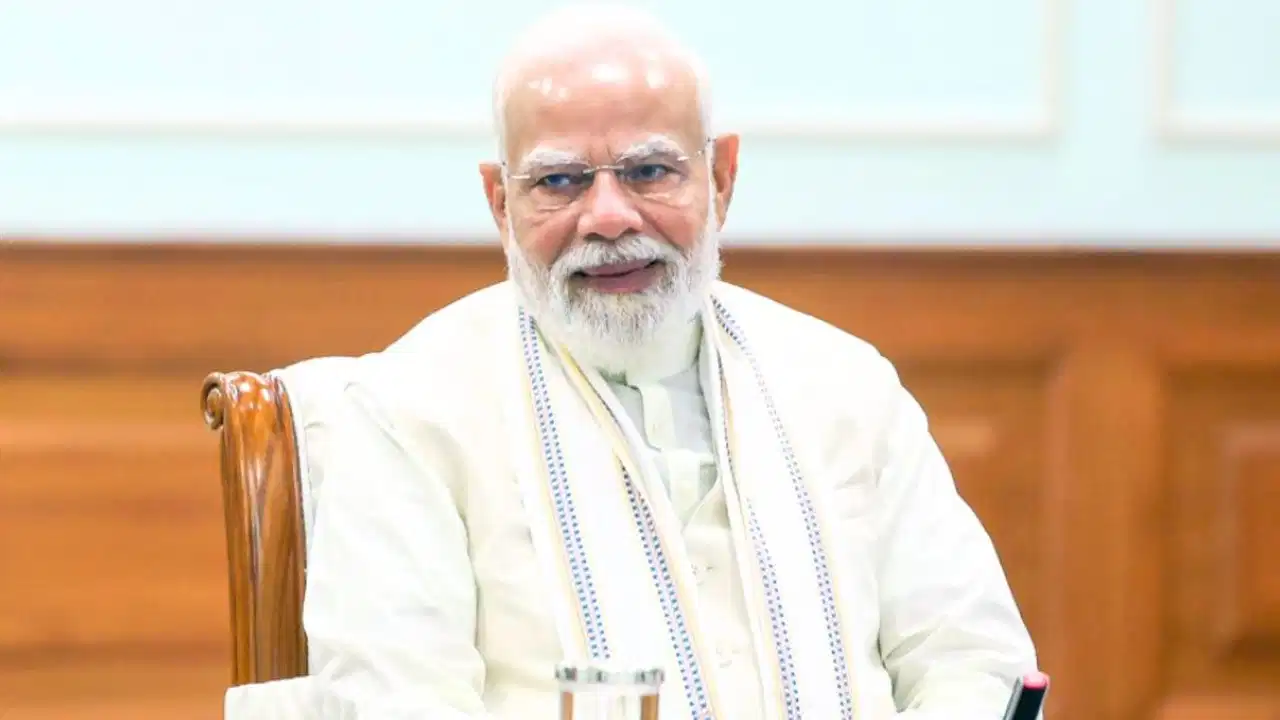
Prime Minister Narendra Modi turned 76 on Thursday as the Bharatiya Janata Party launched the month-long ‘Seva Sankalp Abhiyan’ to mark 25 years of his public service. The campaign, running from September 17 to October 17, includes blood donation camps, exhibitions, seminars and public outreach programmes across the country.

Modi’s tenure in public office began with his appointment as Gujarat chief minister in October 2001, followed by his election as prime minister in 2014. Over the years, governments led by him at the Centre have introduced or expanded programmes spanning financial inclusion, sanitation, cooking fuel, housing, healthcare, drinking water, farmer support, digital payments, small-business credit and manufacturing.

1. Pradhan Mantri Jan Dhan Yojana

Pradhan Mantri Jan Dhan Yojana (PMJDY), launched in August 2014, was among the earliest flagship initiatives of the Modi government. It was designed to bring households that had traditionally remained outside the formal banking system into mainstream financial services.

The programme became a key component of the government’s JAM architecture, linking Jan Dhan bank accounts with Aadhaar and mobile connectivity. This infrastructure has subsequently been used for direct benefit transfers, insurance and pension-linked programmes.

The government said more than 19 crore accounts had been opened within a little over a year of the scheme’s launch, highlighting the scale of the initial financial-inclusion drive.

2. Swachh Bharat Mission

Launched on October 2, 2014, the Swachh Bharat Mission became one of the most prominent mass campaigns of the Modi government, initially focusing on sanitation and the elimination of open defecation.

The programme involved the construction of household and community toilets across rural and urban areas. Its focus subsequently broadened to sustaining sanitation outcomes, solid-waste management and wastewater management.

Government figures cited in the mission’s official material say more than 100 million household toilets were constructed during its initial phase, while more than six lakh villages were declared open-defecation free.

In urban areas, the programme has increasingly focused on source segregation, waste processing and liquid-waste management.

3. Pradhan Mantri Ujjwala Yojana

The Pradhan Mantri Ujjwala Yojana (PMUY) was launched in May 2016 to provide deposit-free LPG connections to women from poor households. The programme sought to encourage a shift away from traditional cooking fuels such as firewood towards cleaner cooking energy.

The government said the scheme crossed its original target of eight crore connections ahead of schedule. A subsequent expansion approved 75 lakh additional connections, taking the targeted beneficiary base to 10.35 crore. As of July 2025, the government reported around 10.33 crore PMUY connections.

The programme has also expanded its focus from providing LPG connections to addressing the affordability of refills. For 2025-26, the government approved a targeted subsidy of Rs 300 per 14.2-kg cylinder for eligible Ujjwala consumers, for up to nine refills a year.

4. Pradhan Mantri Awas Yojana

Pradhan Mantri Awas Yojana (PMAY) was launched in 2015-16 to provide housing assistance to eligible families and support the construction of homes equipped with basic amenities.

The programme has two principal components: PMAY-Gramin for rural households and PMAY-Urban for cities.

According to government figures, 4.21 crore houses had been completed for eligible poor families under the housing schemes over their first 10 years. In 2024, the Centre approved assistance for three crore additional rural and urban houses. For the rural component, PMAY-G was subsequently approved for 2024-25 to 2028-29, including support for another two crore pucca houses.

The housing programme has also been designed to converge with other welfare initiatives, including electricity, LPG, toilets and tap-water connections.

5. Ayushman Bharat

Healthcare became another major component of the government’s welfare architecture with the launch of Ayushman Bharat in 2018. Its flagship insurance component, the Pradhan Mantri Jan Arogya Yojana (PM-JAY), provides health assurance of up to Rs 5 lakh per family per year for secondary and tertiary hospitalisation to eligible beneficiaries.

The government currently describes AB-PMJAY as covering 55 crore individuals across 12.34 crore families. It says the scheme has facilitated 7.37 crore hospital admissions, with women accounting for 49 per cent of beneficiaries in those admissions.

The programme was expanded in 2024 to cover all citizens aged 70 and above, irrespective of income. The expansion is estimated to cover around six crore senior citizens from 4.5 crore families.

6. Jal Jeevan Mission

Launched in 2019, the Jal Jeevan Mission was designed to provide functional household tap-water connections to rural homes under the ‘Har Ghar Jal’ goal.

The government says only 3.23 crore rural households, or 17 per cent, had tap-water connections when the mission began. By 2026, the number had risen to around 15.80 crore households, equivalent to 81.61 per cent of the 19.36 crore rural households identified by states and Union Territories.

In March 2026, the Union Cabinet extended and restructured the programme as JJM 2.0 until December 2028, with a total outlay of Rs 8.69 lakh crore. The revised approach places greater emphasis on the sustainability and maintenance of water-supply systems rather than only creating infrastructure.

7. PM-KISAN

The Pradhan Mantri Kisan Samman Nidhi (PM-KISAN) was launched in 2019 to provide direct income support to eligible landholding farmer families. Under the scheme, eligible farmers receive Rs 6,000 annually through three instalments transferred directly into their bank accounts. The Union government approved its continuation from 2026-27 to 2030-31 with a financial outlay of Rs 3.15 lakh crore.

The government said more than Rs 4.47 lakh crore had been transferred directly to farmers through 23 instalments. The programme uses the government’s wider direct benefit transfer and digital-verification infrastructure to transfer assistance directly to beneficiaries.

8. Digital India And UPI

Digital India, launched in 2015, has focused on expanding digital infrastructure, online public services and access to technology. One of its most visible developments has been the rapid growth of digital payments through the Unified Payments Interface (UPI), which was launched in 2016.

UPI completed a decade in August 2026. Prime Minister Modi said the platform recorded more than 2,400 crore transactions during August alone, reflecting the scale of digital payments in everyday commerce.

The digital push has also been closely connected with Jan Dhan accounts, Aadhaar-based identification and direct benefit transfers, creating an integrated system for digital financial services and government payments.

9. Pradhan Mantri MUDRA Yojana

The Pradhan Mantri MUDRA Yojana, launched in 2015, was created to provide institutional credit to micro and small entrepreneurs who traditionally had limited access to formal loans. Credit is provided under different categories based on the size and stage of an enterprise.

In a 2026 address in Parliament, Modi said more than Rs 30 lakh crore had been disbursed through MUDRA loans without collateral. The government has also highlighted the participation of women among beneficiaries.

MUDRA forms part of the government’s broader approach towards self-employment, entrepreneurship and expanding access to formal credit for small businesses.

10. Make In India

Make In India, launched in September 2014, differs from the other initiatives on this list as it is primarily a policy and investment campaign rather than a single welfare scheme. It was intended to encourage manufacturing, attract investment and position India as a production base across sectors.

The campaign was followed by measures aimed at strengthening domestic manufacturing and supply chains, including Production Linked Incentive schemes introduced across multiple sectors.

Its broader policy objective has increasingly been linked with the government’s Atmanirbhar Bharat push, which seeks to reduce excessive dependence on imports while expanding domestic manufacturing capacity and exports.

A Broad Policy Architecture

Taken together, these programmes cover several of the major areas of the Modi government’s welfare and development agenda, from financial inclusion, sanitation and cooking fuel to housing, healthcare, drinking water and farmer support. Digital infrastructure, small-business credit and manufacturing have formed other significant components.

The government’s official Governance Track Record presents these initiatives as part of a wider approach centred on welfare delivery, infrastructure development and technology-led governance.

The BJP’s month-long Seva Sankalp Abhiyan, launched as Modi turns 76 and marks 25 years in public office, places these programmes within the broader public narrative around his years in state and central government.

Long or Short, get news the way you like. No ads. No redirections. Download Newspin and Stay Alert, The CSR Journal Mobile app, for fast, crisp, clean updates!

App Store –  https://apps.apple.com/in/app/newspin/id6746449540 

Google Play Store – https://play.google.com/store/apps/details?id=com.inventifweb.newspin&pcampaignid=web_share

Latest News

Popular Videos
