


Pakistan Food Crisis: Skyrocketing Prices Force Families to Cut Meal Size and Variety
The CSR Journal Magazine

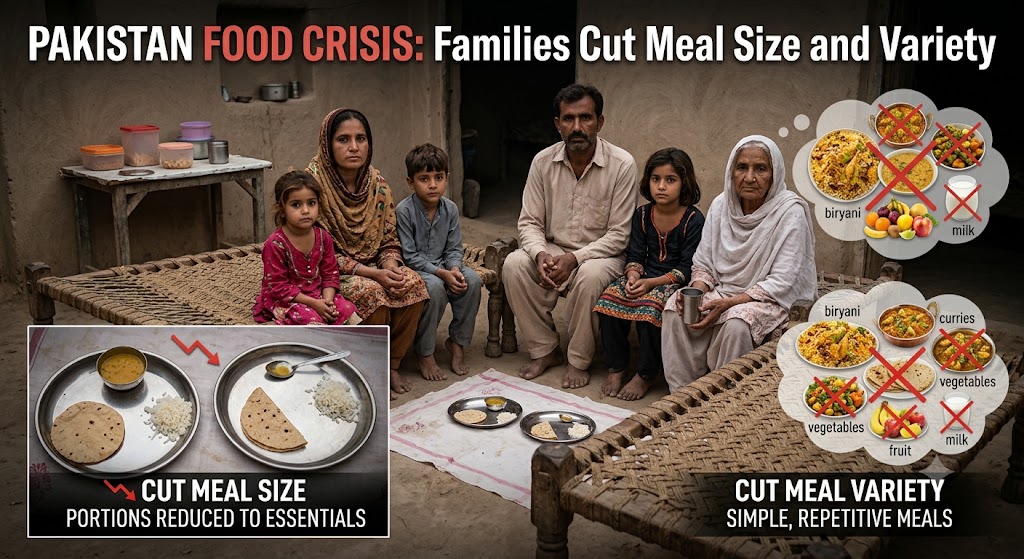
Pakistan’s food crisis is increasingly defined by the affordability of essential items, as households are compelled to reduce both the quantity and variety of their food intake. Recent data from the Pakistan Bureau of Statistics (PBS) highlights a significant decline in consumption across nearly all major food categories over the past six years. This trend is evident in both urban and rural populations, with families cutting back on staples such as wheat, rice, meat, milk, and tea.

The severity of food insecurity in the country is illustrated by statistics showing an increase in households classified as “moderate to severely food insecure,” which rose from 15.92 per cent in 2019 to 24.35 per cent by 2025. Notably, the percentage of households experiencing severe food insecurity more than doubled during this period, growing from 2.37 per cent to 5.04 per cent. Consequently, over a quarter of all households are now grappling with hunger and malnutrition.

Changing Dietary Patterns Among Families

The impact of the crisis is evident in the daily diets of families. Households are reportedly preparing smaller portions of rice, making less bread, and reducing meat consumption. Additionally, the amount of milk available for children has decreased, alongside a notable decline in tea consumption. Interestingly, vanaspati ghee stands out as an exception, with monthly consumption rising by 81 per cent, from 690 grams to 1.25 kg.

This overarching pattern of reduced food intake spans multiple categories, suggesting that families are navigating a complex set of circumstances wherein choices about what to eat are influenced by financial constraints rather than the availability of food itself. The economic situation has compelled families to focus on what they can afford over the nutritional value of their meals.

The shift in consumption habits underlines a broader issue within the nation, as Pakistan – traditionally viewed as an agricultural economy – has become a net food importer since at least 2021. The increasing reliance on food imports is linked to rising food prices and inflation, further straining household budgets and limiting access to diverse, nutritious diets.

Food Insecurity Across Urban and Rural Areas

The consequences of diminished food consumption are far-reaching. Sustained reductions in both the quantity and quality of food intake pose substantial concerns for future generations. The worsening statistics on severe food insecurity serve as a warning about the potential for long-term health and nutritional issues in the population.

The growing divide between food availability and affordability is particularly troubling. Even when food remains accessible in markets, many households are unable to purchase it without compromising on quality or quantity. The consumption data underscore a pressing dilemma for Pakistan: while food production is critical, it is futile if an increasing segment of the population cannot afford a nutritionally adequate diet.

Long or Short, get news the way you like. No ads. No redirections. Download Newspin and Stay Alert, The CSR Journal Mobile app, for fast, crisp, clean updates!

App Store –  https://apps.apple.com/in/app/newspin/id6746449540 

Google Play Store – https://play.google.com/store/apps/details?id=com.inventifweb.newspin&pcampaignid=web_share

Latest News

Popular Videos
