


NHRC Chief V Ramasubramanian Highlights Challenges Facing CJI Office
The CSR Journal Magazine

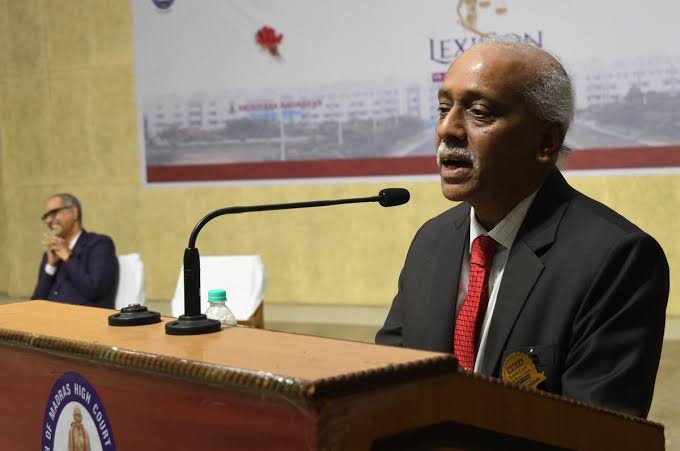
The chairperson of the National Human Rights Commission (NHRC), Justice V Ramasubramanian (retd), stated on Monday that the office of the Chief Justice of India (CJI) experiences an ongoing “Agni Pariksha”, or test of fire, every moment. He noted that this scrutiny does not always stem from noble intentions.

Ramasubramanian made these comments during an event commemorating the NHRC’s 33rd anniversary, which was attended by Chief Justice Surya Kant as the chief guest. According to him, the CJI’s office has evolved into one of the most critical and powerful positions in the country, while also being remarkably vulnerable.

He expressed appreciation for the CJI’s willingness to attend the anniversary celebration, especially given the current demands for his time. Ramasubramanian’s remarks received a light-hearted response from those present at the event, including the CJI, as they acknowledged the challenges the judiciary faces.

Evolution of Human Rights Perspectives

Reflecting on the NHRC’s establishment on October 12, 1993, Ramasubramanian emphasised the significant strides made in promoting and protecting human rights over the past 33 years. He remarked that the perspective on human rights has transformed from a simplistic viewpoint of citizen versus state to a more nuanced understanding that includes the roles played by non-state actors, especially in the digital age.

He warned that the digital landscape allows for the manipulation of opinions and the monitoring of individuals, indicating a shift towards a more complex interaction between technology and human rights. This evolution demands that human rights institutions adapt accordingly to meet contemporary challenges.

Ramasubramanian cautioned that the current trajectory could result in a society where human beings resemble machines and machines exhibit human traits devoid of empathy. He called for a reinvention of human rights organisations to address these new dynamics effectively.

Addressing Global Challenges

During his speech, Ramasubramanian articulated that the challenges confronting humanity today are unparalleled, necessitating a reinvention of human rights institutions to remain effective. He referenced the severe environmental issues posed by climate change, noting that since the Industrial Revolution in 1750, over two trillion tonnes of CO2 have been emitted into the atmosphere.

If the world continues on its current path, he warned, certain areas may become uninhabitable due to extreme weather conditions. He pointed out that climate-related issues would worsen, leading to increased food and water shortages and more frequent natural disasters. Moreover, he connected the climate crisis with rising socioeconomic inequalities, emphasising that the repercussions of global warming will primarily affect the most vulnerable populations.

He revealed alarming statistics, indicating that the wealth of the world’s 26 richest individuals equates to that of the poorest 3.8 billion people combined. Ramasubramanian explained that the concentration of wealth and environmental degradation share a common root in what he termed “fossil capitalism.”

While fossil fuels have facilitated significant advancements over the last two centuries, they have also contributed to numerous pressing global issues. In his address, Ramasubramanian balanced commendation for the NHRC’s achievements with a cautionary message regarding the necessity for adaptation to emerging pressures, which encompass everything from digital influence to climate change and growing inequality.

Long or Short, get news the way you like. No ads. No redirections. Download Newspin and Stay Alert, The CSR Journal Mobile app, for fast, crisp, clean updates!

App Store –  https://apps.apple.com/in/app/newspin/id6746449540 

Google Play Store – https://play.google.com/store/apps/details?id=com.inventifweb.newspin&pcampaignid=web_share

Latest News

Popular Videos
