


ISRO Prepares For Launch Of EOS-05 On GSLV-F17 Five Years After GISAT-1 Mission Failure
The CSR Journal Magazine

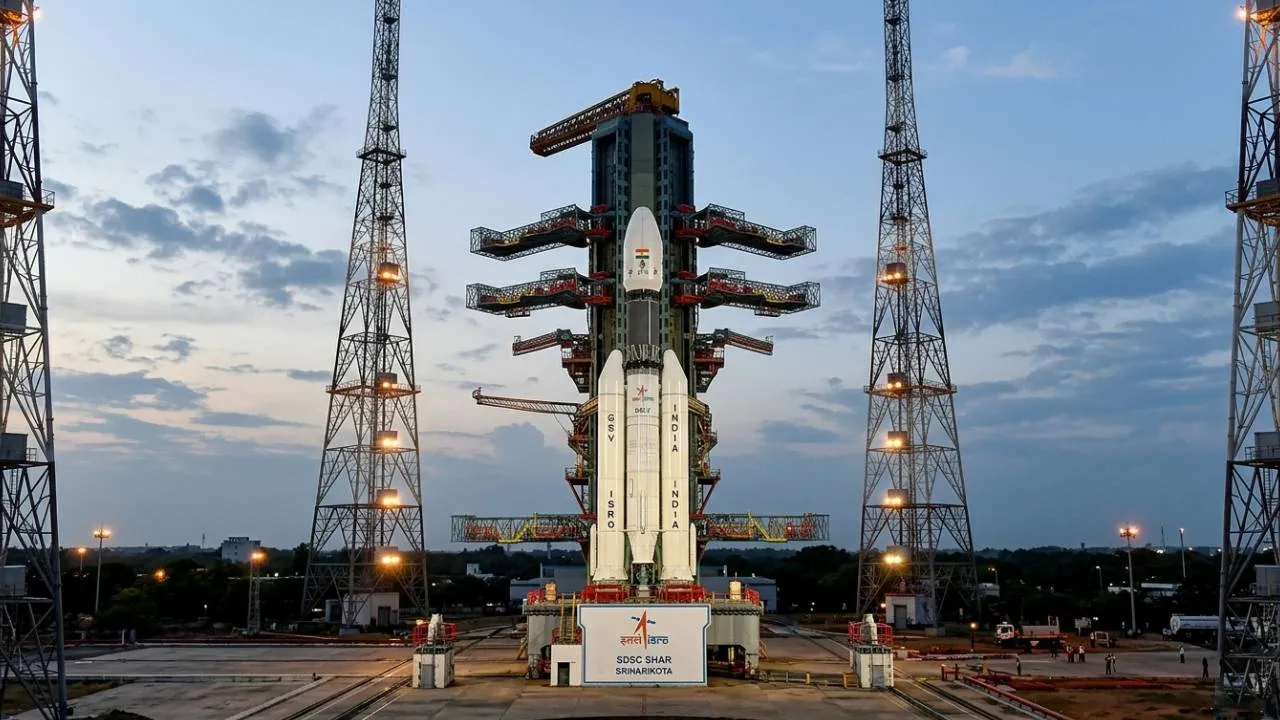
The Indian Space Research Organisation (ISRO) is on the brink of a significant milestone with the imminent launch of EOS-05 aboard the GSLV-F17 rocket. This launch occurs nearly five years after ISRO’s unsuccessful attempt with the GISAT-1 mission, which faced a critical setback. The EOS-05 spacecraft is a cutting-edge Earth observation satellite and will be India’s inaugural imaging satellite operating from a geosynchronous orbit, enabling continuous monitoring of targeted areas.

Designed to lift off from the Second Launch Pad at the Satish Dhawan Space Centre in Sriharikota, GSLV-F17 represents the 19th flight in India’s Geosynchronous Satellite Launch Vehicle programme. The rocket aims to deliver EOS-05 into a Sub-Geosynchronous Transfer Orbit, or Sub-GTO, utilising a four-metre-diameter Ogive composite payload fairing. This technical configuration indicates advancements in ISRO’s capabilities, allowing for enhanced satellite deployment.

Evolving from its previous setbacks, this mission embodies India’s aspirations in the field of Earth observation, marking a pivotal return to a programme long-awaited by the nation’s space community.

Historical Context Of GISAT-1 Failure

The GISAT-1 mission, also referred to as EOS-03, was initially scheduled for launch in August 2021 aboard the GSLV-F10 rocket. However, this mission encountered a failure due to an issue during its cryogenic stage, hindering the satellite from reaching its intended orbit. GISAT-1’s primary function was to provide near-real-time imaging of the Indian subcontinent from geostationary orbit, a capability pivotal for quick data recovery in various situations.

This failure highlighted the challenges faced by ISRO in achieving its ambitious goals, while also emphasising the difficulties present in advancing space technology. The setbacks were met with disappointment but also led to a renewed determination within ISRO to overcome such obstacles and continue to push the boundaries of space missions.

With EOS-05, ISRO aims not only to rectify the previous mission’s failure but also to realise long-term objectives related to continuous Earth observation from geosynchronous orbit, a capability that is key for timely monitoring of natural and environmental changes.

Significance Of Continuous Earth Observation

The capability provided by an Earth observation satellite in geosynchronous orbit goes beyond traditional monitoring methods. Unlike conventional satellites that revolve around the Earth at varying altitudes, the geosynchronous position allows for uninterrupted observation of the same geographical region. This advantage is expected to enhance India’s ability to track weather systems, cyclones, and other phenomena that require timely and accurate data.

EOS-05 is set to transform how India observes its environment, providing crucial insights into issues such as climate change, disaster management, and agricultural monitoring. As weather patterns become increasingly unpredictable, this continuous monitoring is vital for decision-making processes across various sectors.

The upcoming launch of EOS-05 signals a promising new chapter in the evolution of India’s Earth observation capabilities, combining technological advancements with the lessons learnt from past experiences. It has the potential not only to aid scientific research but also to enhance public safety and resource management across the nation.

Long or Short, get news the way you like. No ads. No redirections. Download Newspin and Stay Alert, The CSR Journal Mobile app, for fast, crisp, clean updates!

App Store –  https://apps.apple.com/in/app/newspin/id6746449540 

Google Play Store – https://play.google.com/store/apps/details?id=com.inventifweb.newspin&pcampaignid=web_share

Latest News

Popular Videos
