


Flávio Bolsonaro Surprises With First-Round Lead Over Lula In Brazil Election
The CSR Journal Magazine

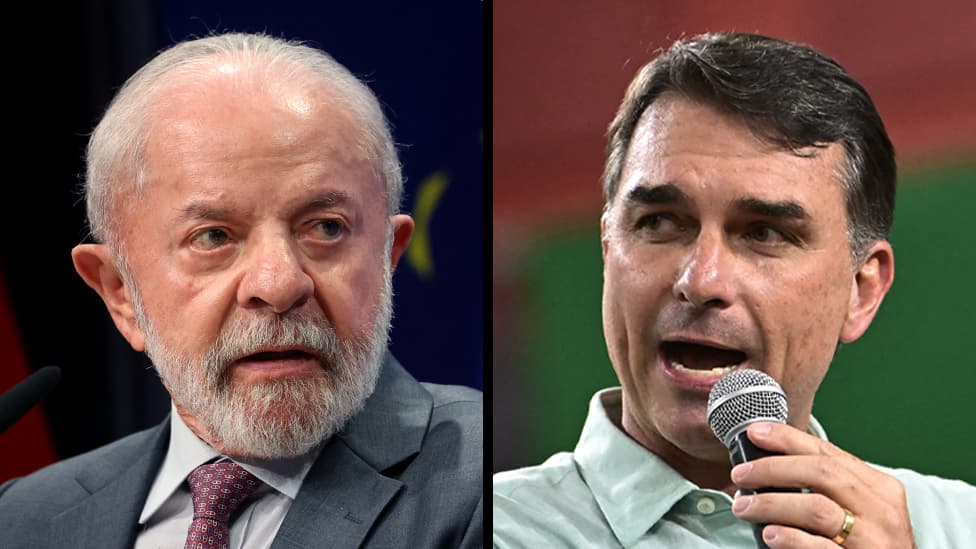
Brazil’s presidential election will be decided in a run-off between incumbent President Luiz Inácio Lula da Silva and right-wing Senator Flávio Bolsonaro after neither candidate secured the majority required to win outright in the first round. Flávio Bolsonaro finished first with 47.03 per cent of the valid vote, while Lula received 45.16 per cent, according to Brazil’s Superior Electoral Court.

The two candidates will face each other again on October 25. The result was notable because pre-election polling had generally shown Lula ahead, although several late surveys had indicated a closely contested race. The first-round outcome sets up another direct contest between the political forces represented by Lula and the Bolsonaro family.

Flávio Bolsonaro Outperforms Pre-Election Polls

Flávio Bolsonaro, 45, is the son of former president Jair Bolsonaro and is contesting the presidency for the first time. He entered the race after his father, who was barred from running, endorsed him as his political successor.

Flávio received more than 56 million votes, compared with nearly 54 million for Lula. The gap between the two candidates was about 1.9 percentage points, the narrowest margin between the top two candidates in a Brazilian presidential first round since the return of direct presidential elections in 1989, according to Brazilian media reports.

Speaking after the result, Flávio said the vote showed that Brazilians wanted political change and expressed confidence about the second round. His Liberal Party also recorded a strong performance in congressional and state-level races. His wife, Michelle Bolsonaro, was elected to the Senate.

Jair Bolsonaro, who remains a central figure in the conservative movement, is serving a prison sentence after being convicted over an attempt to overturn the 2022 election result. Flávio has previously pledged to pursue amnesty for his father and others convicted over the January 8, 2023 unrest if he becomes president.

Lula Admits First-Round Result Was Unexpected

Lula, 80, had hoped to secure another term without a second round but acknowledged that the result did not match his expectations. The president is seeking his fourth non-consecutive term in office.

“I admit I was convinced I would win in the first round,” Lula said after the vote. “The game is about to start. We are in extra time. In extra time, we will win over the Brazilian people.”

Lula first became president in 2003 and was re-elected in 2006. He returned to office in 2023 after defeating Jair Bolsonaro in the 2022 presidential election, one of the closest presidential contests in Brazil’s history.

The latest result means Brazil’s political divide will once again be decided in a head-to-head contest. The first-round votes do not carry over as a separate ballot, with voters choosing between the two finalists on October 25.

Crime And Economy Become Key Run-Off Issues

Public security is expected to remain an important issue during the second-round campaign. Brazil has recorded a decline in its homicide rate, but violent crime, drug trafficking and organised criminal groups remain major concerns for voters.

Flávio Bolsonaro has proposed designating major Brazilian gangs as terrorist organisations and has backed tougher measures against organised crime, including maximum-security prisons. Lula has opposed the US designation of Brazilian criminal groups as terrorist organisations and has focused on measures targeting the finances of organised crime, improving investigations and strengthening the prison system.

Economic concerns are another major dividing line. Lula has highlighted his social welfare programmes, including Bolsa Família, which provides financial assistance to low-income families while linking benefits to conditions involving areas such as education and healthcare.

Flávio Bolsonaro has proposed limiting public debt, reducing government expenditure and revising elements of the welfare system. The candidates will now have three weeks to make their economic and security proposals central to the run-off campaign.

Regional And Demographic Divisions

The first-round results showed clear geographic differences between the candidates. Flávio Bolsonaro won across much of the South, Southeast and Centre-West, while Lula led in much of the Northeast as well as some northern states.

Lula has traditionally drawn stronger support among poorer and lower-income voters and in Brazil’s Northeast, while Bolsonaro’s political base has included stronger support among evangelical Christians and voters in more affluent parts of the country.

Neither candidate secured the majority needed to avoid a run-off, leaving the votes of candidates eliminated in the first round potentially significant. Augusto Cury received 2.89 per cent of the valid vote, while Renan Santos and Ronaldo Caiado each received around 2 per cent.

US And China Relations In Focus

Foreign policy is also expected to feature prominently in the second-round contest. Lula has made Brazilian sovereignty a recurring theme and has criticised what he sees as attempts by the United States to interfere in Brazil’s political affairs.

Flávio Bolsonaro has developed closer political ties with Washington and is aligned with US President Donald Trump on several issues. Relations between Brasília and Washington have been strained during Trump’s presidency, including over US measures targeting Brazil and officials linked to the legal proceedings against Jair Bolsonaro.

At the same time, Flávio has indicated that he would seek an economically pragmatic relationship with China. China is a major trading partner for Brazil and an important destination for Brazilian exports, including soy and beef.

October 25 Vote To Decide Brazil’s Next President

The October 25 run-off will determine whether Lula wins another term or Flávio Bolsonaro brings the political movement associated with his family back to Brazil’s presidency.

The campaign now enters a three-week phase in which both candidates will seek to consolidate their existing support while attracting voters who backed candidates eliminated in the first round. With less than two percentage points separating them in the initial vote, the final contest will once again put Brazil’s competing political blocs directly against each other.

Long or Short, get news the way you like. No ads. No redirections. Download Newspin and Stay Alert, The CSR Journal Mobile app, for fast, crisp, clean updates!

App Store –  https://apps.apple.com/in/app/newspin/id6746449540 

Google Play Store – https://play.google.com/store/apps/details?id=com.inventifweb.newspin&pcampaignid=web_share

Latest News

Popular Videos
