


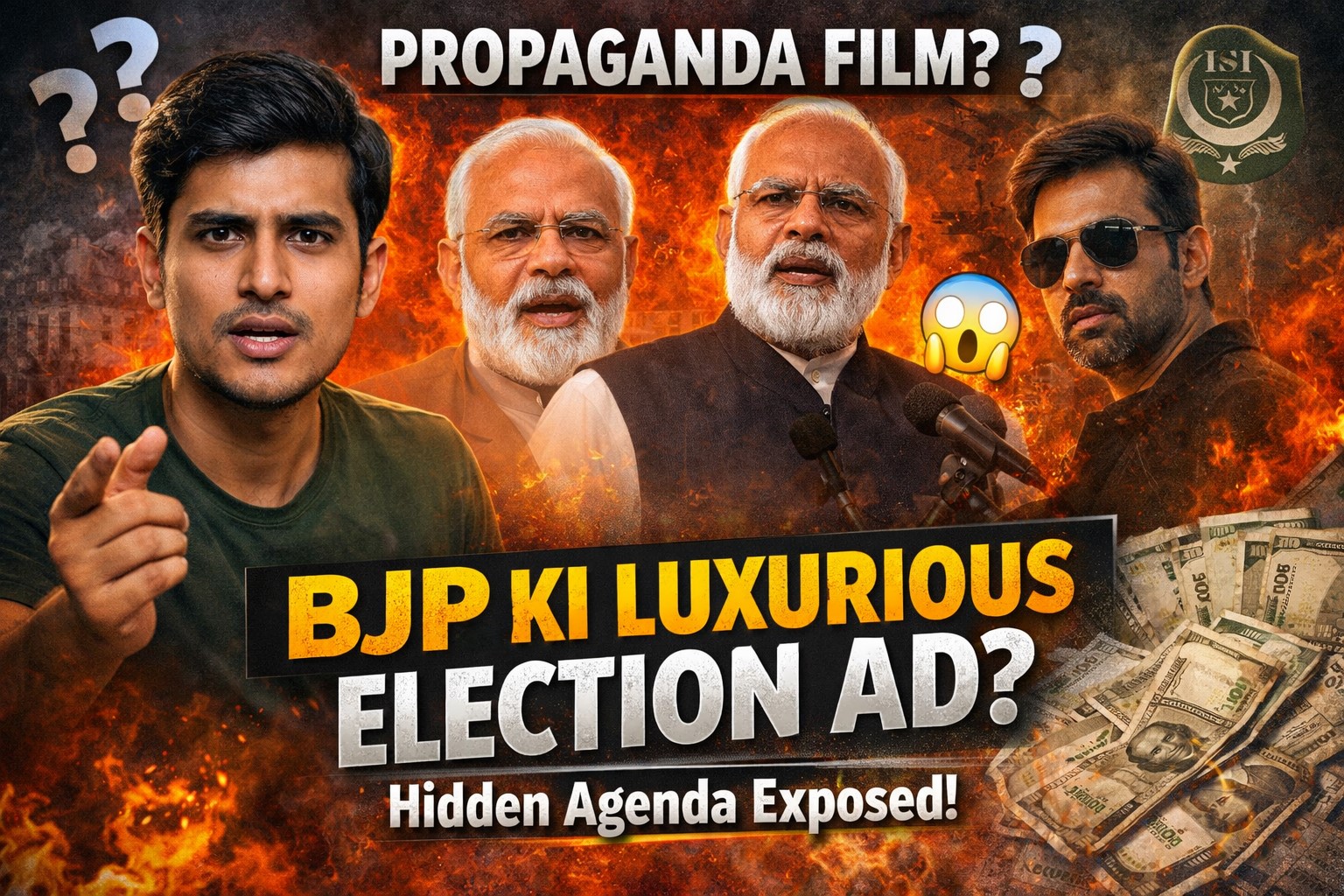
Dhurandhar 2 Faces Criticism as BJP’s Costliest Election Advertisement, Claims Dhruv Rathee
The CSR Journal Magazine

Aditya Dhar’s Dhurandhar: The Revenge has been making headlines for its box office success and acclaim within the industry. However, the film has ignited discussions among audiences and critics regarding its political implications. YouTuber Dhruv Rathee, known for his critical stance on the first film, has released a detailed video dissecting the sequel.

Intense Critique of the Film

Rathee has expressed that his initial concerns regarding the first installment have intensified after watching the new release. He asserts that “Dhurandhar 2 is not a film for entertainment; it serves as the BJP’s most luxurious election advertisement, costing viewers Rs 500.” He also referred to the director as a “maha chaatukar,” which translates to a significant sycophant.

Questioning the Narrative Structure

In his critique, Rathee organized his video by mirroring the film’s narrative style. He interrogated the film’s assertion of being a fictional piece inspired by real events, emphasizing that the use of true identities, names, and archival footage complicates the line between reality and fiction. He remarked, “You display Narendra Modi’s actual face alongside real footage with names like Dawood Ibrahim and then claim it’s all coincidental?”

Manipulative Storytelling Techniques

Rathee categorized certain scenes as tactics designed to elicit intense emotional responses, dubbing this method “emotional priming.” He elaborated, “Initially, emotions are stirred, and then the narrative builds upon that foundation.” He believed that while some of these scenes could be omitted without altering the storyline, they were intentionally placed to sway audience perceptions.

Psychological Manipulation in Character Dynamics

He likened the technique to “giving someone an extremely spicy chili, forcing them to seek sweets afterward.” Rathee argued that the director emotionally engages the audience to facilitate the consumption of the underlying propaganda. Additionally, he pointed out moments where antagonists commend India’s leadership, including a line from a character inspired by Dawood Ibrahim. He described this as a calculated strategy, stating “If the hero praises someone, it holds less weight. However, if the most notorious villain does the same, the audience is persuaded on a different level.”

Controversial Depictions of Real-Life Events

Rathee’s analysis also scrutinized how the film represents actual events like the 2016 demonetization. He contended that the narrative portrays demonetization as a strategic national security initiative while minimizing its broader economic implications, including reported hardships that led to fatalities associated with cash shortages. He also referenced a segment inspired by the 2023 incident involving Atiq Ahmed, indicating that the film’s portrayal diverges from the factual account.

Character Inspirations and Real-Life Links

Moreover, Rathee mentioned that the character portrayed by Arjun Rampal, linked to the ISI, is based on a real individual who passed away in 2011. This element further fueled the debate about the blending of fiction and reality within the cinematic narrative.

Long or Short, get news the way you like. No ads. No redirections. Download Newspin and Stay Alert, The CSR Journal Mobile app, for fast, crisp, clean updates!

App Store –  https://apps.apple.com/in/app/newspin/id6746449540 

Google Play Store – https://play.google.com/store/apps/details?id=com.inventifweb.newspin&pcampaignid=web_share

Latest News

Popular Videos
