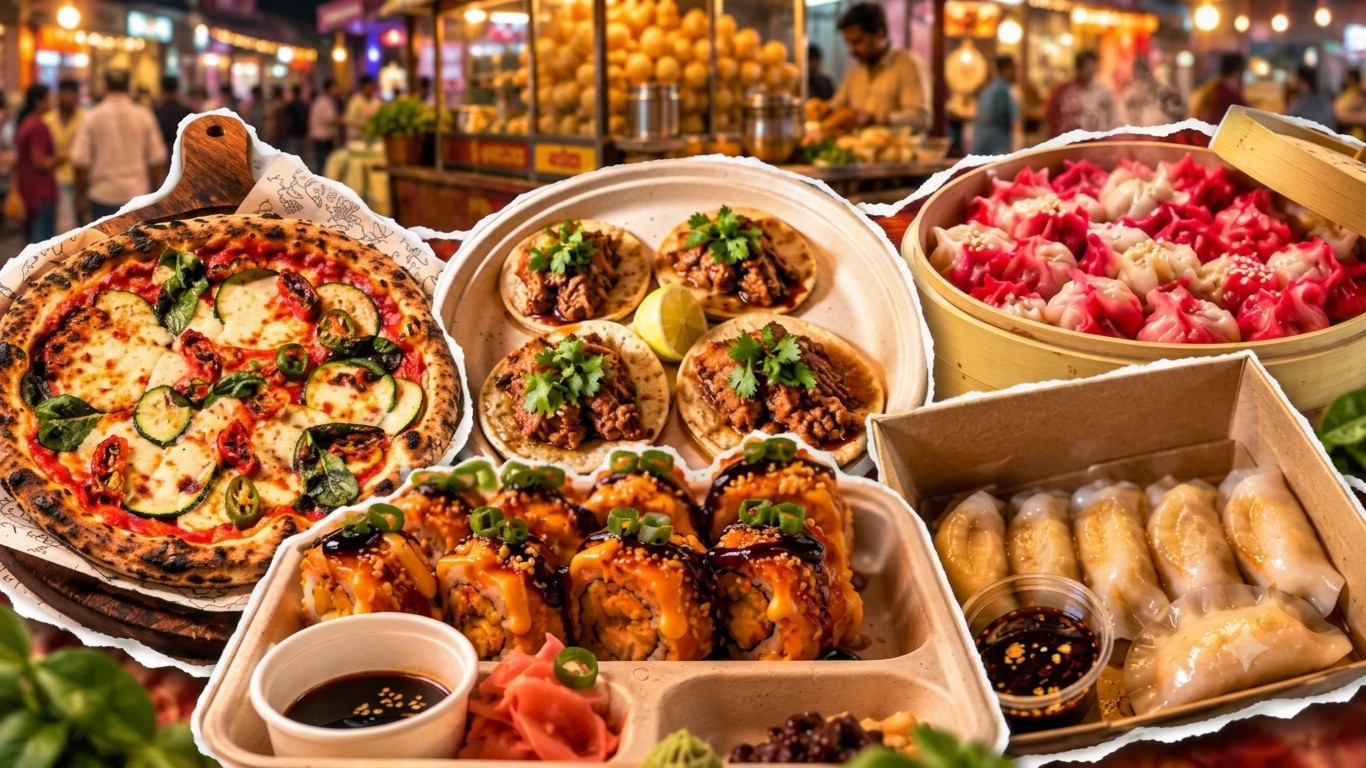
The street food culture in Delhi-NCR is evolving, with gourmet options becoming increasingly popular. Traditional favourites like golgappe, chole bhature, and dahi papdi chaat are now sharing space with international cuisines. Sushi, dim sum, and wood-fired pizzas are making their way onto the streets, transforming the way people experience street food. This shift is evident in various localities, where food carts are serving these gourmet dishes at prices that often undercut traditional restaurants.
In 2026, the culinary landscape is changing, with street food orders reflecting a newfound sophistication. For instance, sushi stalls have appeared even at local fairs, such as the Ramlila melas, showcasing the growing acceptance of diverse cuisines among the public. Vendors are now offering these gourmet dishes at accessible prices, often operating late into the night, catering to a wide range of customers.
As the trend continues to grow, it highlights a shift in consumer preferences, with many seeking to enjoy high-quality food without the associated costs of dining in restaurants. This gourmet-fication of street food is not just a passing trend but appears to be a sustainable change in the culinary landscape.
Innovative Vendors and Their Offerings
One notable vendor after being inspired by a meal at a Japanese restaurant, she began creating her own dim sum and sushi. She aimed to provide these dishes at a fraction of the restaurant prices, making them more accessible to the general public. Her venture reflects a growing trend where entrepreneurs are turning their culinary passions into profitable street food businesses.
Another example is a cart also located in Sector 76. They offer sushi until the early hours, catering to night owls and late-night food enthusiasts. Similarly, they have introduced a variety of Asian dishes at their another cart in Gurgaon, where customers can witness the cooking process live, enhancing their dining experience.
These vendors not only focus on quality but also on affordability. For instance, a vegetarian sushi plate starts at approximately Rs 220, while non-vegetarian options can go up to Rs 550. This pricing strategy allows them to attract a diverse clientele, including those who might not typically dine at upscale restaurants.
Challenges Faced by Gourmet Street Food Vendors
Despite the growing popularity of gourmet street food, vendors face several challenges in their operations. The preparation often occurs in separate kitchens due to limited space at the carts, which necessitates careful planning and organisation. Ingredients are prepared in advance to ensure freshness, and vendors must maintain proper storage conditions for their products.
Moreover, educating customers about unfamiliar dishes remains a hurdle. Many patrons may be accustomed to traditional offerings and may not fully understand the nuances of gourmet items like sushi or dim sum. Vendors often take the time to explain the differences and encourage customers to try smaller portions before committing to larger orders.
Location remains a significant issue for many vendors, as they sometimes operate outside designated vending zones, leading to complaints from local residents. This can result in vendors being asked to relocate, complicating their business operations. Despite these challenges, the demand for gourmet street food continues to grow, indicating a shift in consumer preferences towards diverse culinary experiences.
Long or Short, get news the way you like. No ads. No redirections. Download Newspin and Stay Alert, The CSR Journal Mobile app, for fast, crisp, clean updates!