


The Dead Sea Continues To Sink Amidst Environmental Challenges
The CSR Journal Magazine

The Dead Sea, located at approximately 1,400 feet below sea level, is recognised as the lowest point on Earth. It is situated at the intersection of Israeli, Jordanian, and Palestinian territories. This unique geographical positioning contributes to its extreme characteristics, including water that is nearly ten times saltier than that of the ocean. This salinity allows individuals to float effortlessly, attracting numerous visitors. However, the water level is declining, with the sea receding by about four feet annually.

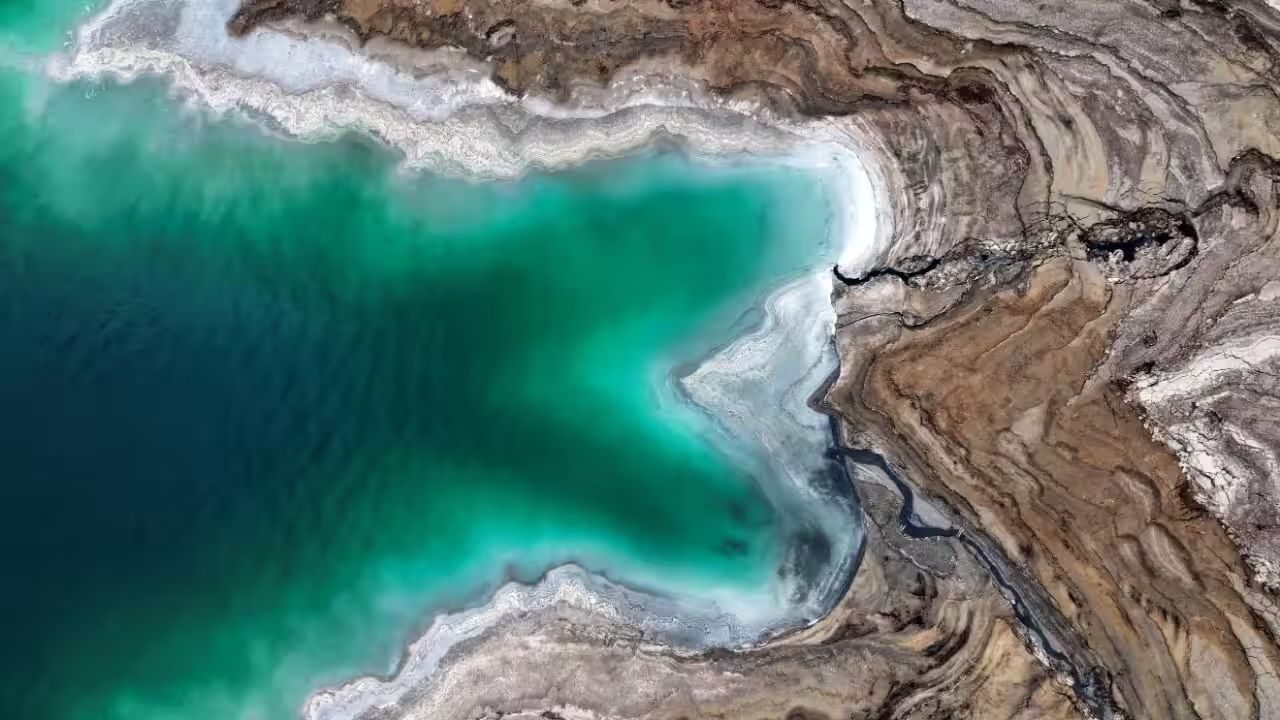
Over the past fifty years, the surface area of the Dead Sea has diminished by roughly one-third. The retreating water has resulted in a striking landscape of salt-encrusted shorelines and numerous sinkholes, which pose increasing risks to those in the area.

Water Supply and Environmental Impact

The Dead Sea is technically classified as a lake, being landlocked and primarily fed by the Jordan River. This river originates at the Syria-Lebanon border, flows through the Sea of Galilee, and continues southward, flanked by Jordan on one side and Israel and the occupied West Bank on the other. The delicate balance of this ecosystem is threatened as the river’s flow has significantly decreased over the decades due to damming and diversion by Israel, Syria, and Jordan.

Historically, the Jordan River delivered approximately 1.3 billion cubic metres of water to the Dead Sea. This figure has plummeted to about 100 million cubic metres, representing a decline of over ninety per cent. Consequently, the Dead Sea now receives less than one-tenth of its original water supply.

In addition to the reduced river flow, mineral extraction activities have contributed to the decline of the Dead Sea. Since the late 1970s, the sea has divided into two basins, with the northern basin being the natural remnant and the southern basin maintained artificially through industrial evaporation pools. Companies such as the Dead Sea Works and the Arab Potash Company extract minerals from these pools, further exacerbating the water loss.

Climate Change and Sinkhole Formation

Climate change is another factor influencing the diminishing water levels of the Dead Sea. Increasingly severe droughts and reduced rainfall have intensified the pressure on this already stressed water system. While climate change alone would not account for the rapid decline, it compounds the effects of river diversions and industrial activities.

The consequences of the Dead Sea’s retreat are evident in the emergence of sinkholes. Currently, there are over 6,000 sinkholes around the area, threatening local businesses and tourism. Popular sites, such as the Ein Gedi beach resort, have been permanently closed due to significant ground instability, with warning signs indicating hazardous conditions.

Tourism has shifted predominantly to the artificial pools on the Israeli side, as the natural northern basin becomes increasingly inhospitable. Visitors often remain unaware that they are bathing in evaporation ponds rather than the authentic experience of floating in the Dead Sea’s natural waters. The ongoing decline raises questions about the future viability of this unique body of water.

Long or Short, get news the way you like. No ads. No redirections. Download Newspin and Stay Alert, The CSR Journal Mobile app, for fast, crisp, clean updates!

App Store – https://apps.apple.com/in/app/newspin/id6746449540

Google Play Store – https://play.google.com/store/apps/details?id=com.inventifweb.newspin&pcampaignid=web_share

Latest News

Popular Videos
