The Day the Taxi Cartel Lost Control of the Road
The CSR Journal Magazine

There is a famous idea in economics called the seen and the unseen. When you look at a kaali
peeli taxi refusing to run on meter, demanding 40 rupees over the fare, or simply driving
away when you say “meter se chaloge?”, you see a rude driver.

What you do not see is the system behind him: the politician who gave his union a monopoly,
the license raj that kept competitors out, and the decades of captured regulation that made this
driver untouchable. The private app-based cab and auto services did not just offer a better
product. They dismantled, at least partially, one of the most persistent rent-seeking
arrangements in Indian urban transport.

This article argues that from the perspective of economics and public choice theory,
platforms like Uber, Ola, and Rapido represent a genuine welfare improvement for the urban
commuter. They are not perfect. But they solved a problem the state had no interest in
solving, because the state was profiting from the problem.

So,
Public choice theory, developed by economists James Buchanan and Gordon Tullock, applies
the logic of economics to political behaviour. Politicians are not selfless public servants who
maximize social welfare. They are rational actors who maximize their own interests: votes,
campaign money, and personal enrichment. Bureaucrats do the same. Regulations, therefore,
are not always written to protect consumers. They are often written to protect the producers
who lobby hardest for protection.

This insight explains almost everything about how the kaali peeli taxi and autorickshaw
system worked in cities like Mumbai, Delhi, Kolkata, and Bengaluru.

In Mumbai, the black-and-yellow taxi permit system was controlled by a small number of
unions, the most prominent being the Mumbai Taximen’s Union. Obtaining a permit to
operate a taxi in Mumbai was not simply a matter of proving you could drive safely. It
required navigating a system of licenses that were, for decades, capped and controlled. The
number of kaali peeli taxis in Mumbai hovered around 42,000 for many years, with the city’s
population exceeding 20 million people. Delhi’s autorickshaw permits were similarly strangled. In 2010, Delhi had roughly 55,000 registered autorickshaws serving a population
of over 16 million. The math was not an accident.

When supply is artificially capped, prices rise. When there is no competition, quality
collapses. Both things happened.

The unions negotiated fare revisions with the government, often successfully, because they
delivered bloc votes during elections. Politicians gave unions what they wanted: fare hikes,
fewer permits for competitors, and regulatory protection. In return, unions mobilized voters
and, in some documented cases, campaign financing. This is textbook rent-seeking. Rent-
seeking is when a group uses political means to capture income that would otherwise not
exist in a free market. It does not create wealth. It redistributes it from commuters to union
members and their political patrons.

The commuter paid twice: once in the fare, and once in taxes that funded the transport
ministry that perpetuated the arrangement.

And,
The most visible symptom of this captured system was the refusal to use the meter.
In theory, every kaali peeli taxi and autorickshaw in India operates on a government-
mandated meter. In practice, in dozens of routes across Indian cities, the meter was
negotiable, meaning it was irrelevant. Drivers in areas like Bandra, Andheri, or Kurla in
Mumbai routinely demanded fixed amounts above meter fare, refused short-distance fares,
and rejected rides to destinations they found inconvenient. In Delhi, autorickshaw drivers
caught refusing to ply by meter paid nominal fines that were so small they functioned as a
cost of doing business rather than a deterrent.

A 2014 study by the Comptroller and Auditor General found systemic non-compliance with
metered fares across multiple Indian cities. Consumer complaint cells were understaffed and
practically dysfunctional. The enforcement mechanism was captured by the same political
interests that had built the system in the first place. Complaining to the transport authority
about an autorickshaw driver was, for most commuters, a reliable way to waste an afternoon.

The meter, in many parts of Indian cities, was not a price. It was a starting point for
negotiation, with the consumer holding all the disadvantage.

Then,
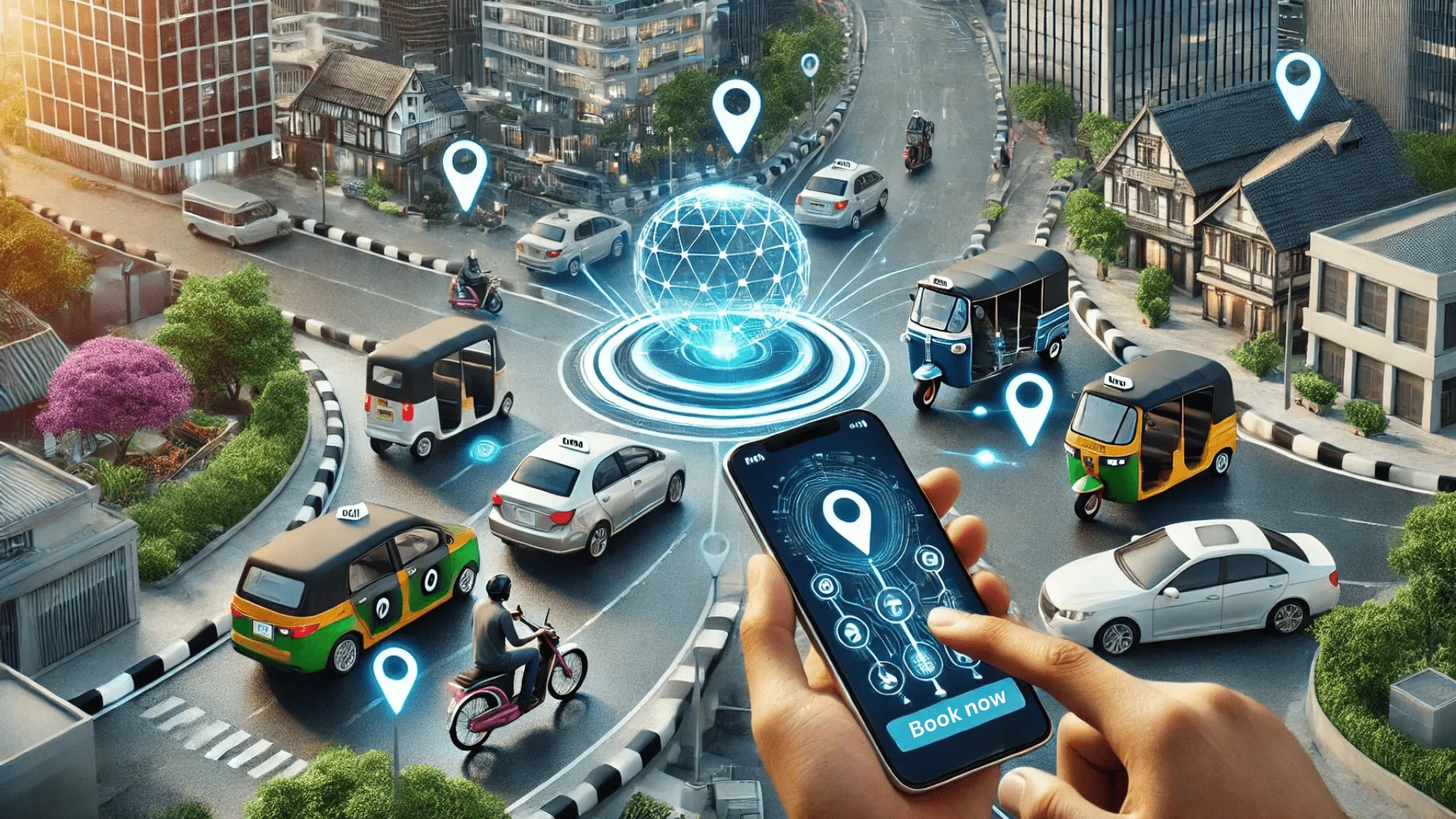
When Uber launched in India in 2013 and Ola had already been operating since 2010, they
did not introduce a luxury product for the rich. They introduced price transparency, route
accountability, and driver ratings to a market that had none of these things.

The upfront fare display was not a minor feature. It was a direct attack on the information
asymmetry that allowed drivers to extract surplus from passengers. Passengers no longer
needed to know the city, negotiate in the local language, or be physically intimidating enough
to hold their ground. The app gave the price before the ride. This is what economists call
reducing transaction costs.

Driver ratings created a reputation system that the government's complaint mechanism never could. If a driver was rude, refused a route, or drove badly, the rating dropped. Enough bad ratings and the driver was delisted. This is not a perfect system. Platform companies have
their own incentive problems. But it was vastly more functional than the alternative, which
was nothing.

Rapido’s entry into the two-wheeler taxi segment was particularly significant for Indian cities
because it addressed the last-mile problem. For distances under five kilometres, an
autorickshaw in congested Indian traffic often made little sense economically for either party.
Rapido created a service tier that the regulated market had simply never bothered to build.

By 2019, Ola claimed to be serving over 250 cities with more than 1.5 million driver-
partners. Uber India had over 600,000 drivers on its platform. Rapido, by 2023, reported 25
million registered users and operations in over 100 cities.

These numbers represent something important. Each driver-partner on these platforms is a
person who obtained economic opportunity outside the union system. Many of them were
unable or unwilling to pay the informal fees and goodwill required to join established taxi
unions. The platforms gave them access to customers without needing political permission.
This is genuinely democratizing, in the economic sense of the word.

For the consumer, the effect was measurable. A 2018 NITI Aayog working paper on urban
transport noted that the entry of app-based aggregators had increased urban mobility options
significantly and was associated with downward pressure on autorickshaw and taxi fares in
competitive corridors. In Bengaluru, where Ola and Uber competition was particularly
intense, peak-hour auto fares negotiated outside the app actually declined in neighbourhoods
with high platform usage, because drivers knew their alternative fare was now benchmarked
against an app price the customer could check instantly.

If you want to understand who benefited from the old system, look at who fought hardest
against the new one.

In 2017, taxi unions in Mumbai called a strike demanding the government ban Ola and Uber.
In 2022, autorickshaw unions in multiple cities demanded that app-based two-wheeler taxis
like Rapido be banned entirely. Maharashtra’s transport ministry, responsive as always to
organized union pressure, imposed various restrictions on aggregators, including surge
pricing caps and requirements that effectively made operations more difficult.

These bans and restrictions were framed as consumer protection. They were, by any honest
analysis, producer protection. The consumer, given the option, overwhelmingly chose the
app. Download numbers, ride volume, and sustained growth in app-based ride-hailing
through every regulatory obstacle thrown at it is a revealed preference argument that is hard
to dismiss. People who can choose are choosing the alternative.

The political resistance also revealed the rent-seeking relationship openly. When the
Maharashtra government considered licensing reforms that would have made it easier for
independent drivers to register without union membership, union leaders threatened political
consequences. The reform was diluted. This is public choice theory operating in real time, in
front of everyone, with no pretense.

There is a second layer to the political economy of Indian transport that deserves attention:
the excess licensing problem.

While permits for taxis and autos were capped to restrict entry, political leaders in many
cities found creative ways to give out additional licenses to their constituencies as a form of
patronage. In Delhi, various governments issued special permits for three-wheelers, e-rickshaws, and other categories in ways that were not always well-coordinated with city
planning. The result was a peculiar contradiction: a shortage of functional, metered transport
services combined with an overcrowding of unregulated or poorly regulated vehicles on key
roads.

Mumbai’s suburban roads and Delhi’s congested corridors showed a pattern common to
patronage-based licensing: vehicles concentrated in profitable areas, absent in peripheral
ones, and present in large numbers in politically important constituencies regardless of
genuine demand. The union vehicle, in many cases, was parked for large parts of the day
because the driver had no obligation to serve the public. The permit was enough. The permit
was the income, through renting it to another driver, often informally.

App-based platforms solved this through utilization incentives. A driver on Ola or Uber earns
only when completing rides. This aligns driver incentives with passenger demand in ways
that a permit system never can. The same vehicle, under the platform model, completes
significantly more rides per day than the traditional permit taxi model.

Also,
It would be dishonest to write this as a celebration of tech companies. Surge pricing during
peak hours or emergencies has been genuinely predatory at times. Driver earnings under
platform models have declined as initial incentives were withdrawn and commission rates
increased. The gig economy has created a workforce with minimal social protections. These
are real problems that deserve serious policy attention.

But these are problems of a different kind. They are problems of an emerging market that can
be regulated intelligently. The problems of the old system were structural: they were designed
to persist because the people who could change them profited from them staying the same.

A platform that charges surge pricing can be required to cap surges by regulation. A company
that underpays drivers can face minimum earnings rules. A gig worker can, in principle, be
given portable social benefits. These are hard policy problems, but they are solvable ones
because the underlying market is competitive. You cannot solve a cartel through regulation
when the regulator is part of the cartel.

I will not deny this but there is, in fairness, something the kaali peeli driver had right. The
ability to say ‘NO’.

The driver who refused a short-distance fare, who would not go to a destination he did not
want, who stood his ground against a demanding passenger: this person understood
something that many professionals in corporate life struggle with. The ability to set a
boundary, to refuse work that does not suit you, to not be available to everyone for
everything, is a skill. It is an underrated one.

In workplaces, the culture of never saying no, of being available at all hours, of treating every
request as mandatory, is corrosive. The kaali peeli driver, whatever his other flaws, did not
suffer from this problem. He knew his worth. He communicated it simply, if sometimes
rudely. There is something worth borrowing from that posture, even if you reject everything
else about the system that produced it.

The lesson is not the monopoly. The lesson is not the refusal to run on meter. The lesson is
that knowing where your obligations end and where your discretion begins is not selfishness.
It is professionalism.

The story of Indian urban transport is a story of regulatory capture playing out over decades,
at the expense of the commuter. Public choice theory did not predict this because it is clever.
It predicted it because it is accurate about human nature. People with political power use it
for personal benefit. Groups with organized interests extract rents from the disorganized
majority. The consumer, dispersed and individually powerless, loses.

What Ola, Uber, Rapido, and their competitors did was introduce a technology that made the
consumer individually powerful in a way that regulation had never managed to. The
consumer could now compare, choose, rate, complain, and switch. These are the mechanisms
of a functioning market. They are imperfect. They are also, by any reasonable measure, a vast
improvement on what came before.

The kaali peeli taxi did not fail because of competition. It failed because it had, for too long,
treated competition as something to be politically prevented rather than economically
answered. When the consumer finally had a choice, the choice was made quickly and clearly.

That is not an indictment of a vehicle. It is an indictment of a system that bet everything on
the assumption that the consumer would never have anywhere else to go.

Views of the author are personal and do not necessarily represent the website’s views.

Dr. Jaimine Vaishnav is a faculty of geopolitics and world economy and other liberal arts subjects, a researcher with publications in SCI and ABDC journals, and an author of 6 books specializing in informal economies, mass media, and street entrepreneurship. With over a decade of experience as an academic and options trader, he is keen on bridging the grassroots business practices with global economic thought. His work emphasizes resilience, innovation, and human action in everyday human life. He can be contacted on jaiminism@hotmail.co.in for further communication.

Long or Short, get news the way you like. No ads. No redirections. Download Newspin and Stay Alert, The CSR Journal Mobile app, for fast, crisp, clean updates!

App Store – https://apps.apple.com/in/app/newspin/id6746449540

Google Play Store – https://play.google.com/store/apps/details?id=com.inventifweb.newspin&pcampaignid=web_share

Latest News

Popular Videos