


Chhattisgarh Skies Turn Blood-Red Amid Cyclone Arnab’s Impact
The CSR Journal Magazine

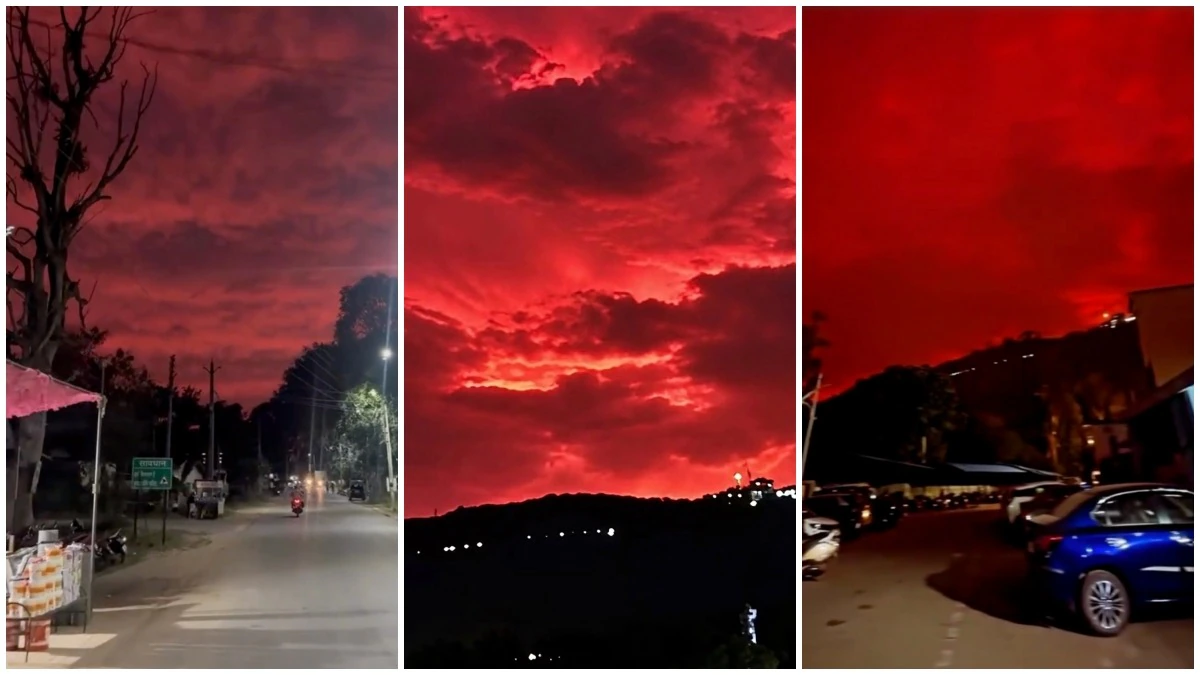
The skies over several regions in Chhattisgarh have reportedly taken on a striking red hue, coinciding with the strong winds and unsettled weather conditions associated with Cyclone Arnab. This unusual occurrence has left local residents astonished and has sparked widespread speculation regarding its cause. Videos and images depicting the vivid skies have been shared extensively on social media platforms, showcasing the dramatic spectacle.

The reddish skies emerged during a period of warnings for thunderstorms, gusty winds, and heavy rainfall as the remnants of Cyclone Arnab moved further inland. Wind speeds in the affected areas have been reported to reach between 60 and 80 km/h, with gusts potentially reaching up to 90 km/h. These conditions have raised alarms about possible damage, fallen trees, and disruptions, particularly in regions vulnerable to strong winds.

While the cyclone’s influence on the weather is evident, the exact cause of the red skies has not been independently verified. It is essential to consult official bulletins from the India Meteorological Department (IMD) for accurate information regarding the cyclone and its effects. Local authorities have advised residents to stay informed through official weather alerts.

Understanding the Red Sky Phenomenon

The appearance of a red sky is often attributed to the scattering of sunlight by atmospheric particles and molecules. During sunrise and sunset, sunlight traverses a longer distance through the atmosphere, which causes shorter wavelengths, such as blue light, to scatter more significantly. This allows longer wavelengths, including red and orange, to become more visible. This phenomenon is commonly explained through Rayleigh scattering.

In addition to Rayleigh scattering, larger particles like dust, smoke, and water droplets can also affect the colour and intensity of light through various scattering processes. Storm clouds, combined with suspended dust and changes in atmospheric visibility, can create unique light and shadow combinations, resulting in dramatic red or orange skies under certain conditions.

However, attributing the specific red sky sighting in Chhattisgarh solely to Rayleigh scattering would necessitate further observation of the atmospheric conditions at the time of the event. The interplay of storm moisture and particulate layers requires detailed analysis to confirm the precise cause.

Concerns Over Strong Winds and Weather Conditions

The emergence of the unusual red skies coincided with reports of strong winds, with speeds reaching between 60 and 80 km/h, and gusts reportedly touching 90 km/h in various locations. Such wind conditions pose risks, including the potential for uprooting trees, damaging weak structures, and disrupting electricity supply. Travel could also become hazardous, particularly during thunderstorms.

Although Cyclone Arnab has weakened since making landfall along the Andhra Pradesh coast, its remnants continue to pose threats of rainfall and unsettled weather across multiple states. While the captivating red skies have captured public interest, the immediate concern remains the unpredictable weather and its potential impacts on the region.

Residents are urged to adhere to official weather alerts and exercise caution during thunderstorms and strong winds. The striking atmospheric phenomenon serves as a reminder of the complexities of weather conditions, with its precise cause requiring further scientific investigation and local weather observations.

Long or Short, get news the way you like. No ads. No redirections. Download Newspin and Stay Alert, The CSR Journal Mobile app, for fast, crisp, clean updates!

App Store – https://apps.apple.com/in/app/newspin/id6746449540

Google Play Store – https://play.google.com/store/apps/details?id=com.inventifweb.newspin&pcampaignid=web_share

Latest News

Popular Videos
