


OpenAI Launches Astra for Law to Assist Legal Professionals
The CSR Journal Magazine

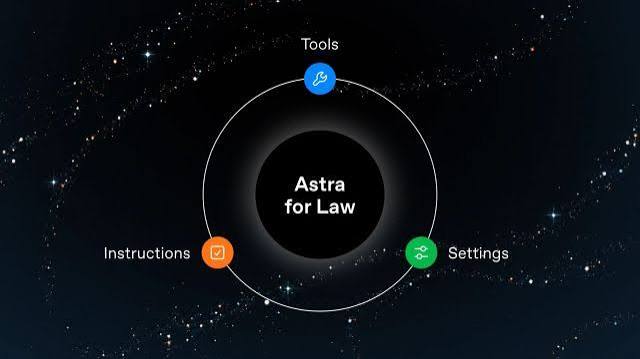
OpenAI has introduced a new AI model called Astra for Law, specifically tailored for the legal sector. This innovative system is designed to assist legal professionals by performing tasks such as legal research, case analysis, and drafting documents. Astra for Law combines features of the existing GPT-6 Astra with a specialized legal search index and tailored instructions for effective legal analysis.

Key Features and Functionality

A notable feature of Astra for Law is its comprehensive Legal Search Index, which encompasses over 230 million URLs. This extensive database allows the model to search American case law, statutes, regulations, court rules, and administrative decisions, with updates incorporated daily. OpenAI has partnered with the Free Law Project to integrate a collection including more than 99.9 per cent of published US precedential case law into its offerings, enhancing the research capabilities available to lawyers.

Furthermore, Astra for Law has undergone testing with 200 legal research questions in the US. At its highest reasoning setting, the model reportedly achieved a correctness rate of 54 per cent compared to 38.7 per cent for the original GPT-6 Astra when solely utilising web searches. This indicates a relative improvement of approximately 40 per cent. The new model also claimed to find 24 per cent more relevant reference cases and retrieve up to 54 per cent more pertinent passages from verified court opinions during audits.

In addition to locating cases, Astra for Law is engineered to contextualize legal research for clients. It can assist in developing legal arguments, evaluating deal terms, identifying potential weaknesses in cases, and clarifying areas of uncertainty within legal discussions.

Privacy and Security Measures

The introduction of Astra for Law has prompted considerations for client confidentiality, which is critical within the legal profession. OpenAI has implemented enhanced privacy controls as part of the model’s framework. Law firms eligible to use the API will benefit from a feature termed Zero Data Retention, ensuring that no client data is stored after processing. Moreover, conversations in ChatGPT Enterprise are not reviewed by humans by default, contributing to the privacy strategy.

OpenAI is also in the process of developing mechanisms to manage access to sensitive information within participating law firms. This aims to ensure that only authorized personnel can engage with potentially confidential data, thus reinforcing trust in the use of AI within legal environments.

Access and Future Development

Initially, Astra for Law will be made available to selected legal firms in the United States through OpenAI’s Trusted Access programme in both ChatGPT and Codex. In the ChatGPT environment, this model will be referenced as “GPT-6 Astra Law,” while the API version will be named gpt-6-astra-law. OpenAI has indicated that API access will be made available in the near future.

The company has plans for ongoing development of Astra for Law, intending to refine the system with insights gathered from feedback provided by legal professionals, law firms, and legal technology companies. This collaborative approach aims to enhance the model’s effectiveness in meeting the evolving needs of the legal sector, positioning it as a valuable tool for practitioners.

Long or Short, get news the way you like. No ads. No redirections. Download Newspin and Stay Alert, The CSR Journal Mobile app, for fast, crisp, clean updates!

App Store –  https://apps.apple.com/in/app/newspin/id6746449540 

Google Play Store – https://play.google.com/store/apps/details?id=com.inventifweb.newspin&pcampaignid=web_share

Latest News

Popular Videos
