


Parliament Debates Three Bills Related to Women’s Reservation
The CSR Journal Magazine

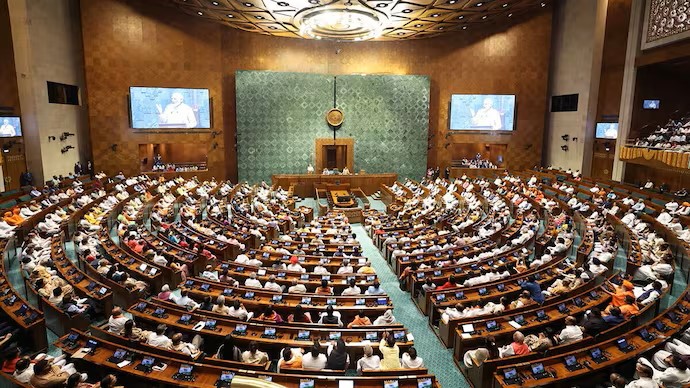
Three significant bills are currently being debated in the Parliament of India, aimed at introducing a 33 per cent reservation for women. The government asserts these proposals are necessary for effective implementation, while opposition parties argue they raise critical constitutional and political questions.

The first bill, known as the Constitutional Amendment Bill, proposes an increase in Lok Sabha seats to a total of 850, comprising 815 for states and 35 for Union Territories, dependent on legislative decisions. Alongside this, changes in state assembly seat allocations will be contingent upon population statistics.

The second bill addresses modifications to the Union Territories Act, the Jammu and Kashmir Reorganisation Act, and the GNCT Delhi Act, facilitating delimitation and adjustments in the number of assembly seats. The third bill introduces a new Delimitation Act, establishing a Delimitation Commission of India to oversee this process.

Key Issues Surrounding the Constitutional Amendment Bill

The most comprehensive of the proposed legislation is the Constitutional Amendment Bill No. 1072026. This bill includes provisions for increased Lok Sabha seats and modifications to state legislative assembly representations. The amendment suggests a total of 815 members elected from States and another 35 from Union Territories, raising questions about the criteria used to determine this figure.

A critical aspect of the discussion involves the potential implications of adjusting the representation based on new census data. The legislation proposes “unfreezing” the current allocation system, which has been based on the 1971 census since the 2001 amendments. The bill seeks to allow Parliament to decide which census to reference for population figures, igniting concerns about how this might impact various regions.

Opposition parties have expressed trepidation regarding which populations will be counted and how adjustments may affect certain states, especially those with stringent population control measures. There are fears that these states might face a reduction in their political representation.

Impact on Women’s Reservation and Other Factors

The proposal explicitly states that the reservation for women will only take effect post-delimitation. The amendment regarding Article 334A clarifies that seats reserved for women will come into effect only after delimitation exercises are carried out nationwide, raising questions regarding the timeline and the census data to be employed.

Furthermore, under Section 8 of the Delimitation Bill, provisions concerning both Lok Sabha and state assembly seat allocations will consider SC/ST reservations. The Commission will oversee these reservations, with seats reserved for women allocated by rotation across constituencies.

The allocation process also involves prioritising census data when determining assembly seat numbers. This shift can have significant consequences, especially if southern states with stabilised populations see a reduction in their representation, prompting opposition concerns about political imbalances.

Opposition Perspective and Future Implications

While opposition leaders endorse women’s reservation, they oppose its linkage to the delimitation process. Prominent opposition figures have stressed the importance of supporting women’s rights while guarding against potential backlash from constituents concerned about representation loss.

Legal experts have voiced caution regarding the intertwining of seat redistribution, delimitation, and women’s reservation, deeming it a complex political undertaking. The proposed reservation for women will last for 15 years following implementation, with potential extensions subject to parliamentary approval.

This situation highlights the delicate dynamics within Indian politics as all parties navigate the implications of these reforms, particularly in the context of representation and women’s rights. The ongoing discussions are poised to shape the future of political engagement in the country significantly.

Long or Short, get news the way you like. No ads. No redirections. Download Newspin and Stay Alert, The CSR Journal Mobile app, for fast, crisp, clean updates!

App Store –  https://apps.apple.com/in/app/newspin/id6746449540 

Google Play Store – https://play.google.com/store/apps/details?id=com.inventifweb.newspin&pcampaignid=web_share

Latest News

Popular Videos
