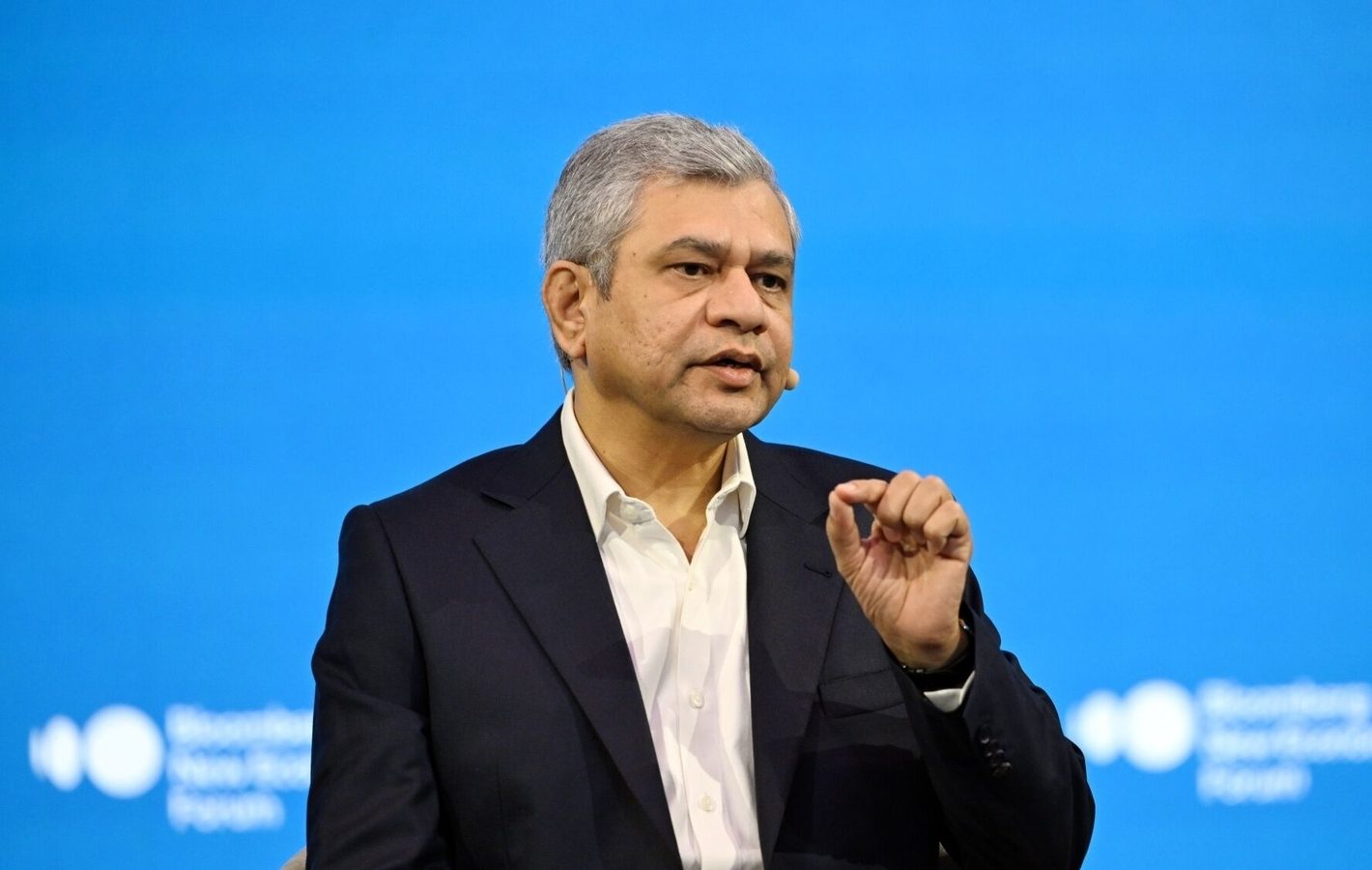
Ashwini Vaishnaw, India's minister for railways, information and broadcasting, electronics and information technology, during the Bloomberg New Economy Forum in New Delhi, India, on Wednesday, Oct. 14, 2026. The New Economy Forum is being organized by Bloomberg Media Group, a division of Bloomberg LP, the parent company of Bloomberg News. Photographer: Prakash Singh/Bloomberg
The global economy is reportedly entering a challenging phase, according to Union Minister Ashwini Vaishnaw. Speaking at the Bloomberg New Economy Forum 2026 in New Delhi, he highlighted that India is preparing for these difficulties. Vaishnaw pointed out that two primary areas of concern will be technology and finance. He suggested that advancements in artificial intelligence (AI) could disrupt job markets and the services sector significantly.
Vaishnaw also warned of potential repercussions if the debt levels of wealthier nations begin to destabilise. He emphasised the importance of recognising these challenges early, stating, “Difficult times ahead.” The minister underscored that geopolitical dynamics necessitate a continuous adjustment of India’s strategies to navigate the evolving landscape.
To address these challenges, the Indian government is devising plans across three timelines: short-term (three to five years), mid-term (five to fifteen years), and long-term (twenty to twenty-five years). Vaishnaw remarked on the unpredictable nature of international relations, noting that alliances can shift, which could impact India’s economic dependencies.
Focus on Materials and Semiconductor Development
In his address, Vaishnaw identified materials as a critical area of vulnerability in India’s economic framework. He referred to the ongoing development of the “India stack” and highlighted that reliance on specific materials poses significant risks. The minister elaborated on the semiconductor initiative, noting that the initial phase had supported one major company, but the programme has now expanded to include twelve projects, with five already in production.
The second phase of this initiative, known as Semicon 2.0, is centred on essential materials such as gases, substrates, and chemicals. On July 15, the Union Cabinet approved a substantial policy with an outlay of ₹1.27 lakh crore, an increase from the ₹76,000 crore allocated in the first phase. This policy aims to encompass the entire semiconductor value chain, rather than focusing solely on individual projects.
Vaishnaw noted that building a robust semiconductor ecosystem is a lengthy process, often taking decades. He questioned whether India has the luxury of time, stressing the need for expedited efforts to establish a self-sufficient semiconductor industry.
India’s Position as a Trusted Global Partner
Vaishnaw asserted that many older chip production processes, particularly those ranging from 28nm to 90nm, are becoming increasingly centralised in select regions. He explained that when buyers consider a product, trust becomes a more significant factor than merely cost. He highlighted the growing importance of cybersecurity and expressed India’s ambition to be recognised as a reliable partner in the global market.
In the mobile phone sector, India has made notable advancements, progressing from assembly to module production and, most recently, to component manufacturing. The country has achieved self-sufficiency in various components and is also exporting them. This strategic approach is being mirrored in sectors such as semiconductors, railways, and defence.
Vaishnaw emphasised that technology has historically relied on global supply chains, and India aims to play a substantial role in these networks while adding value in areas where it excels. He referenced the design of advanced chips, such as the 2nm and 3nm models by major firms like Nvidia, Qualcomm, and AMD, which are being developed in India. Additionally, he noted that prominent global companies have operated in India for four decades without intellectual property disputes.
In terms of fiscal health, Vaishnaw reported that India has successfully reduced its public debt from 61 per cent of GDP to 55 per cent over the past five years. He stated that the objective is to create an economy resilient to various shocks, whether financial, economic, or technological. With India nearing a $4 trillion economy and achieving annual growth rates of 6-8 per cent, he cautioned that external factors could pose risks to this trajectory.
Long or Short, get news the way you like. No ads. No redirections. Download Newspin and Stay Alert, The CSR Journal Mobile app, for fast, crisp, clean updates!
Union Minister Ashwini Vaishnaw announced on 14 October that India is formulating a comprehensive plan spanning 20 to 25 years aimed at minimising critical...
The recent decision by the US Federal Reserve to raise interest rates by 25 basis points is expected to influence global monetary policies, including...