


Understanding Fixed and Floating Interest Rates for Personal Loans
The CSR Journal Magazine

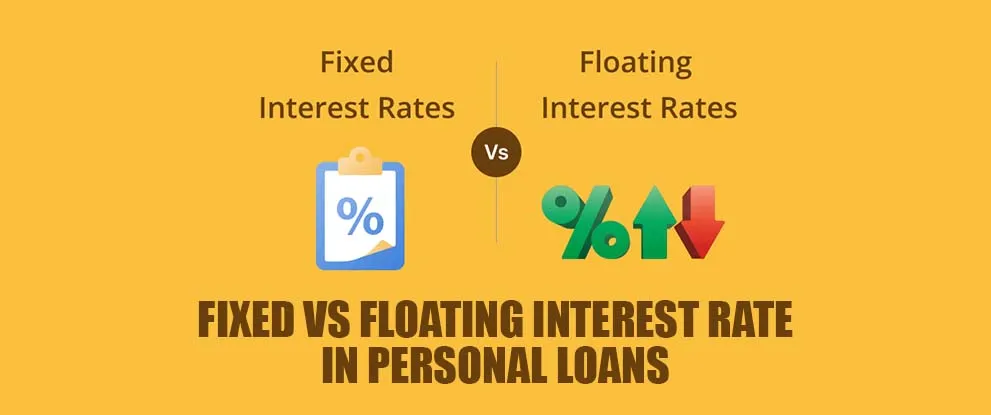
The choice of interest rate is a critical consideration for borrowers applying for personal loans. It significantly impacts the overall cost of borrowing, including the monthly EMI and the repayment duration. There are primarily two types of interest rates offered by lenders: fixed and floating. Gaining a clear understanding of these options can aid borrowers in making informed decisions that align with their financial situations.

Definition and Features of Fixed Interest Rates

A fixed interest rate denotes that the borrowing cost remains constant throughout the entire tenure of the loan. This means that the interest rate agreed upon at the outset is not subject to fluctuations, irrespective of economic changes. Borrowers benefit from predictable EMIs, allowing for better financial planning and budgeting over the loan period.

The primary advantage of a fixed interest rate is the assurance it provides. Monthly payments remain unchanged, thus enabling borrowers to have a clear understanding of their financial obligations. In periods of rising market interest rates, borrowers with fixed rates are insulated from payment increases, ensuring stability in their repayments.

However, the fixed rate is often set higher initially, compared to floating rates, and borrowers do not benefit from potential decreases in market rates. Additionally, some lenders may impose restrictions on switching to a different interest structure, limiting flexibility.

Understanding Floating Interest Rates

A floating interest rate is characterised by its variability, as it fluctuates based on a benchmark rate established by financial institutions. This benchmark is commonly linked to the repo rate set by the Reserve Bank of India. When the repo rate increases, the lending rates typically follow suit, leading to higher floating rates. Conversely, a reduction in the repo rate usually results in decreased interest costs for the borrower.

However, the potential for fluctuating EMIs may complicate budgeting for borrowers. If market rates rise, borrowers face the risk of increased monthly payments, which could elevate their overall loan costs. Such uncertainty may not be suitable for those requiring consistency in their financial commitments.

The decision between fixed and floating interest rates should align with an individual’s financial circumstances and risk tolerance. Opting for a fixed rate might be prudent for those who have a consistent income, seek certainty, and anticipate a trend of rising interest rates. It allows for predictable budgeting and long-term financial stability.

Conversely, a floating interest rate may appeal to borrowers who can handle potential increases in EMI and are seeking to capitalise on possible savings from declining market rates. Those willing to accept a degree of uncertainty in return for lower initial interest payments may find floating rates more advantageous.

Long or Short, get news the way you like. No ads. No redirections. Download Newspin and Stay Alert, The CSR Journal Mobile app, for fast, crisp, clean updates!

App Store –  https://apps.apple.com/in/app/newspin/id6746449540 

Google Play Store – https://play.google.com/store/apps/details?id=com.inventifweb.newspin&pcampaignid=web_share

Latest News

Popular Videos
