


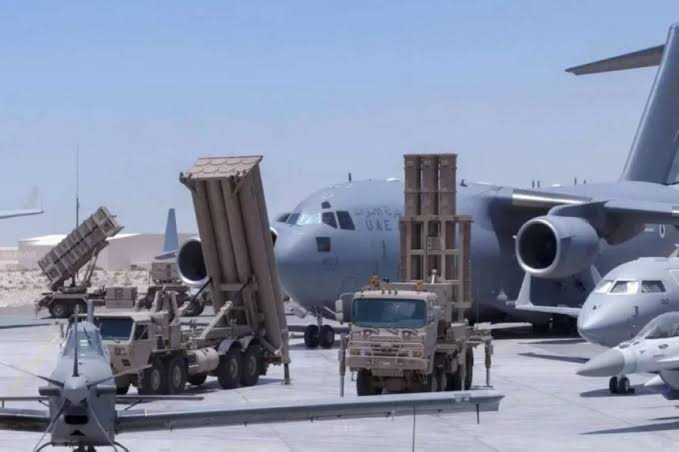

On Monday, the United Arab Emirates (UAE) announced that it successfully intercepted an Iranian drone that was allegedly fired into its territorial waters. This incident marks an escalation in the ongoing regional tensions, occurring shortly after a weekend during which the United States and Iran exchanged fire for the first time in over a month.
The UAE Defence Ministry confirmed that Iranian forces launched a drone towards the nation, which was intercepted without any reported damage or casualties on the UAE side. The escalation follows a period of heightened military activity, with the US attacking rocket launchers on an Iranian island, claiming they were poised to deploy mines into the strategically important Strait of Hormuz.
Regional Responses and Implications of Recent Attacks
Iran retaliated following the US strikes by launching missiles at American installations in Jordan; however, all missiles were reportedly intercepted. Iranian President Masoud Pezeshkian reiterated that Iran is not seeking conflict but warned they would respond decisively to any acts of aggression. Conversely, the UAE labelled the drone attack as a “dangerous escalation,” adding to the rising hostilities in the region.
During this tense period, the US has increased economic pressure on Iran, hoping to compel Tehran into concessions, including reopening the Strait of Hormuz for shipping. The geopolitical landscape remains precarious, particularly with Israel conducting airstrikes in Gaza City, which resulted in at least five Palestinian deaths on the same day. The strikes included an attack on a residential area and a separate strike on a vehicle, targeting suspected militants according to the Israeli military, although they did not provide evidence for their claims.
Global Diplomatic Engagements Amid Conflict
In Kyrgyzstan, world leaders gathered for a summit of the Shanghai Cooperation Organization. Chinese President Xi Jinping, Russian President Vladimir Putin, and Indian Prime Minister Narendra Modi were among the attendees. Iranian President Pezeshkian was scheduled to meet with President Putin on the summit’s sidelines, indicating an alignment among nations countering US influence.
Meanwhile, in the US, Treasury Secretary Scott Bessent facilitated discussions among G20 finance ministers, focusing on strategies to economically isolate Iran.
Arms Deals and Defence Partnerships
In a significant development, Israel formalised what it described as its largest-ever arms deal with Greece, valued at 3 billion euros (approximately USD 3.5 billion). This agreement, known as Achilles Shield, involves a multilayered air defence system based on Israeli technology. Israel’s defence exports reached record levels last year, despite ongoing criticisms regarding its military engagements.
In Iraq, Prime Minister Ali al-Zaidi rejected a proposal to extend the presence of US-led coalition forces beyond September 30, when their current mission is set to conclude. Government spokesperson Haider al-Aboudi did not disclose the proposal’s source or specifics. The US troop withdrawal from Iraqi bases initiated last year is reportedly nearing completion, although the semi-autonomous Kurdish region still hosts a limited US presence, with local officials voicing concerns over security vulnerabilities.
New Defence Alliances and Regional Stability Efforts
Turkish Foreign Minister Hakan Fidan indicated openness to additional countries joining a recently established defence pact involving Turkiye, Pakistan, and Saudi Arabia. The Mecca Defence Alliance aims to reinforce collective defence principles akin to NATO’s Article 5, while not targeting any specific adversary. Notably, Fidan mentioned the possibility of Egypt’s participation in future collaborations.
Additionally, Lebanese President Joseph Aoun sought Greek intervention to facilitate the implementation of an agreement aimed at resolving tensions with Israel. He appealed for Greece’s assistance in addressing the protracted conflicts that Lebanon has faced, emphasising that military solutions hold little promise for lasting peace.
As the USS Abraham Lincoln approaches Thailand for a scheduled port call, its extended deployment in support of US operations in the ongoing conflict serves as a reminder of the persisting military undertones across the region.
Recent developments illustrate the complexities and interconnectedness of military, political, and diplomatic actions shaping the Middle Eastern landscape.
Long or Short, get news the way you like. No ads. No redirections. Download Newspin and Stay Alert, The CSR Journal Mobile app, for fast, crisp, clean updates!
App Store – https://apps.apple.com/in/app/newspin/id6746449540
Google Play Store – https://play.google.com/store/apps/details?id=com.inventifweb.newspin&pcampaignid=web_share