


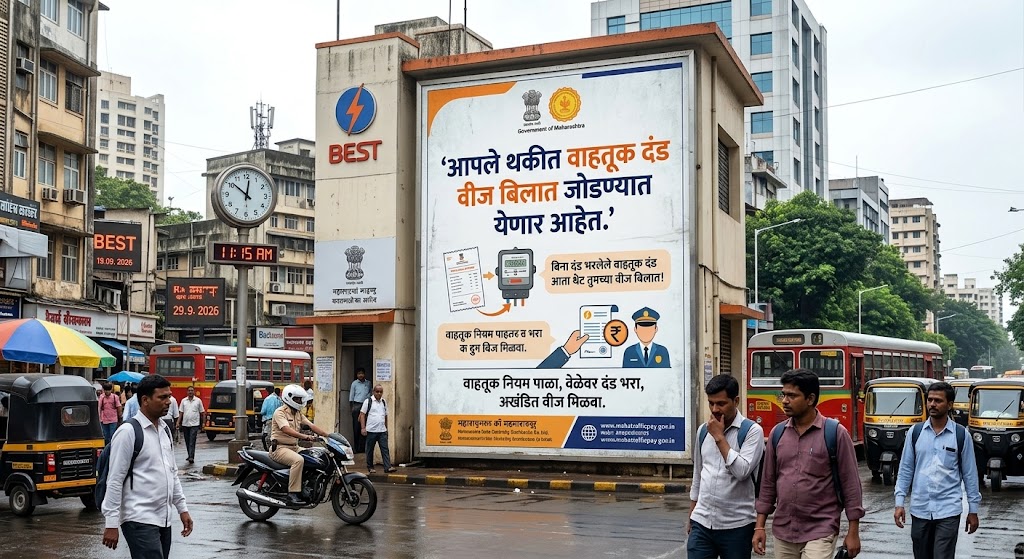
Supreme Court Proposes Linking Unpaid Traffic Fines to Electricity Bills
The CSR Journal Magazine

The Supreme Court has proposed that States and Union Territories consider more robust methods for the recovery of unpaid traffic fines, including the option of attaching such dues to electricity bills. This recommendation emerged during a session focused on road safety and the electronic enforcement of traffic laws. The Bench, comprising Justices JB Pardiwala and KV Viswanathan, stressed that merely issuing e-challans is insufficient for ensuring compliance.

Justice Pardiwala underscored the importance of implementing measures that address real-world scenarios rather than relying exclusively on digital notices. He indicated that the effectiveness of recovery efforts must be evaluated in light of practical challenges faced by authorities in enforcing traffic laws.

Extent of Unpaid Fines and Potential Solutions

The Court was apprised that approximately Rs 45,000 crore in e-challan fines is currently awaiting recovery across various States and Union Territories. Of this staggering amount, roughly Rs 25,000 crore has been collected thus far. In response to this situation, the bench suggested several methods to enhance the collection of these unpaid fines.

Among the proposed solutions were measures such as preventing the renewal of vehicle registration certificates and ownership transfers for those with outstanding dues. The Court also mentioned blocking the issuance of fitness and Pollution Under Control (PUC) certificates, along with the renewal of driving licences unless all pending fines were cleared. These steps aim to create a disincentive for drivers who might otherwise neglect their financial obligations regarding traffic violations.

Furthermore, the Court discussed the utility of blacklisting vehicles with unpaid challans on the Parivahan portal, as well as conducting random inspections to detain vehicles found to be in violation. This approach could help to ensure that road safety regulations are duly respected and that outstanding fines are systematically addressed.

Historical Context of the Road-Safety PIL

The suggestions were put forward in relation to a long-pending public interest litigation (PIL) concerning road safety that was filed in 2012 by Dr S Rajaseekaran, an orthopaedic surgeon based in Coimbatore. The Court has been continuously monitoring the situation for nearly 14 years, seeking to ascertain whether the directives issued to improve traffic enforcement and enhance road safety have been effectively executed.

Justice Pardiwala noted the need for thorough oversight concerning the realisation of established guidelines, indicating that a comprehensive assessment of compliance is essential. The Court appointed Senior Advocate Gaurav Agarwal as amicus curiae, directing him to compile a detailed chart that outlines the directives given by the Court, the timelines for their implementation, current status, and his comments regarding compliance levels.

This comprehensive evaluation is anticipated to provide clarity on the progress made in the area of traffic law enforcement and road safety. The outcomes of this assessment might further guide the Court in crafting more effective strategies to ensure compliance with traffic regulations and to enhance road safety for all users.

Long or Short, get news the way you like. No ads. No redirections. Download Newspin and Stay Alert, The CSR Journal Mobile app, for fast, crisp, clean updates!

App Store –  https://apps.apple.com/in/app/newspin/id6746449540 

Google Play Store – https://play.google.com/store/apps/details?id=com.inventifweb.newspin&pcampaignid=web_share

Latest News

Popular Videos
