


Super El Nino 2026 Could Pose Threat to India’s Monsoon
The CSR Journal Magazine

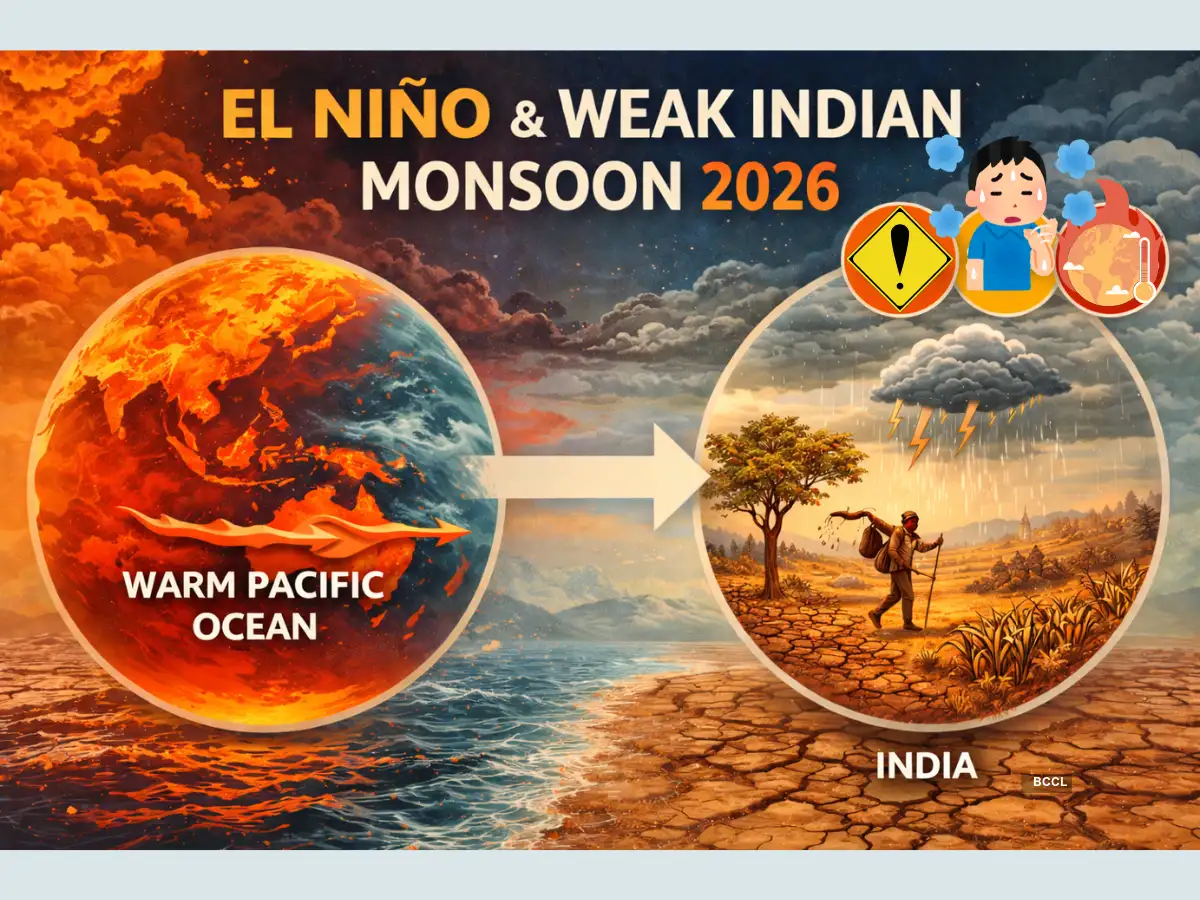
Super El Nino 2026 is imminent, with current sea surface temperatures (SSTs) nearing all-time highs. Samantha Burgess, strategic lead for climate at the European Centre for Medium-Range Weather Forecasts (ECMWF), indicated that it is only days before these temperatures could surpass previous records. April 2026 witnessed SSTs ranked as the second highest ever recorded, with the month itself noted as one of the hottest globally, at 1.43 degrees Celsius above the pre-industrial average.

This abnormal warming trend is not seen as random, but rather a precursor to an impending El Nino event, with the potential to escalate into a Super El Nino. The Copernicus Climate Change Service confirmed the rise in temperatures as indicative of significant changes in global weather patterns.

Super El Nino is a classification for exceptionally extreme warming of ocean temperatures, exceeding 2 degrees Celsius above the historical average. In contrast, typical El Nino events require only a rise of 0.5 degrees Celsius. Historical instances of Super El Nino, such as those in 1982-1983, 1997-1998, and 2015-2016, triggered severe weather disruptions and food shortages globally.

Impacts of El Nino on Global Weather Patterns

The El Nino phenomenon influences trade winds across the equatorial Pacific, significantly affecting global climate. Warmth accumulated in the ocean alters weather patterns, resulting in floods or droughts in various regions. Specifically, El Nino can shift the Pacific jet stream southward, impacting winter weather in the United States, leading to wetter conditions in the southern parts while the northern regions experience drier climates.

Recent climate forecasts from notable agencies such as ECMWF and NOAA suggest that conditions for a Super El Nino could materialise between May and July 2026. Academic experts have noted that a strong El Nino might increase the likelihood of 2027 being recorded as the hottest year, as its repercussions typically manifest the year following its peak.

The potential for considerable climate anomalies stemming from the impending Super El Nino requires close monitoring, as its effects may reverberate through atmospheric systems worldwide. These disruptions could further exacerbate existing climatic challenges faced by various nations, including India.

India’s Monsoon at Risk

The situation is particularly precarious for India, with the India Meteorological Department (IMD) predicting below-normal rainfall during the southwest monsoon period from June to September 2026. This monsoon delivers over 70 per cent of the country’s annual rainfall, deemed critical for agricultural productivity. The IMD forecasts indicate rainfall at merely 92 per cent of the Long Period Average, equating to around 87 centimetres based on historical data from 1971 to 2020.

Geographically, most regions in India, excluding the extreme north, west, northeast, and parts of the southern peninsula, are expected to face significant rainfall deficits. A 35 per cent probability exists for a severely deficient monsoon, which is notably higher than the historical average of 16 per cent.

Such reductions in rainfall are forecasted to lead to drier conditions, likely impacting agricultural yields during the kharif season, which heavily relies on monsoon precipitation. The IMD’s outlook underscores the urgency for effective mitigation strategies as farmers brace for the impending season.

Availability of Mitigating Factors

One possible mitigating factor could be the Indian Ocean Dipole (IOD), which influences moisture distribution over India. A positive IOD phase, characterised by warmer sea temperatures in the western Indian Ocean compared to the eastern side, could counteract some of the adverse effects of El Nino. However, current data suggests that the IOD is neutral, lacking sufficient warmth to provide a buffer against potential drought.

Historically, a strong positive IOD has been beneficial, as seen in 1997 when it helped alleviate drought conditions during a significant Super El Nino event. Unfortunately, projections indicate that any positive shift in the IOD may not occur until the latter stages of the monsoon season, which may be too late to effectively support vital rain-fed agriculture.

Recent climatic data continues to unveil the increasing frequency of extreme weather events, attributed to climate change. As the world prepares for the potential impacts of Super El Nino 2026, India’s agricultural sector faces a challenging year ahead that could lead to adverse consequences for food security and livelihoods.

Long or Short, get news the way you like. No ads. No redirections. Download Newspin and Stay Alert, The CSR Journal Mobile app, for fast, crisp, clean updates!

App Store –  https://apps.apple.com/in/app/newspin/id6746449540 

Google Play Store – https://play.google.com/store/apps/details?id=com.inventifweb.newspin&pcampaignid=web_share

Latest News

Popular Videos
