


No Uranium Enrichment: Trump Proposes Regime Change in Iran Linked to Nuclear Restrictions and Tariffs

The CSR Journal Magazine

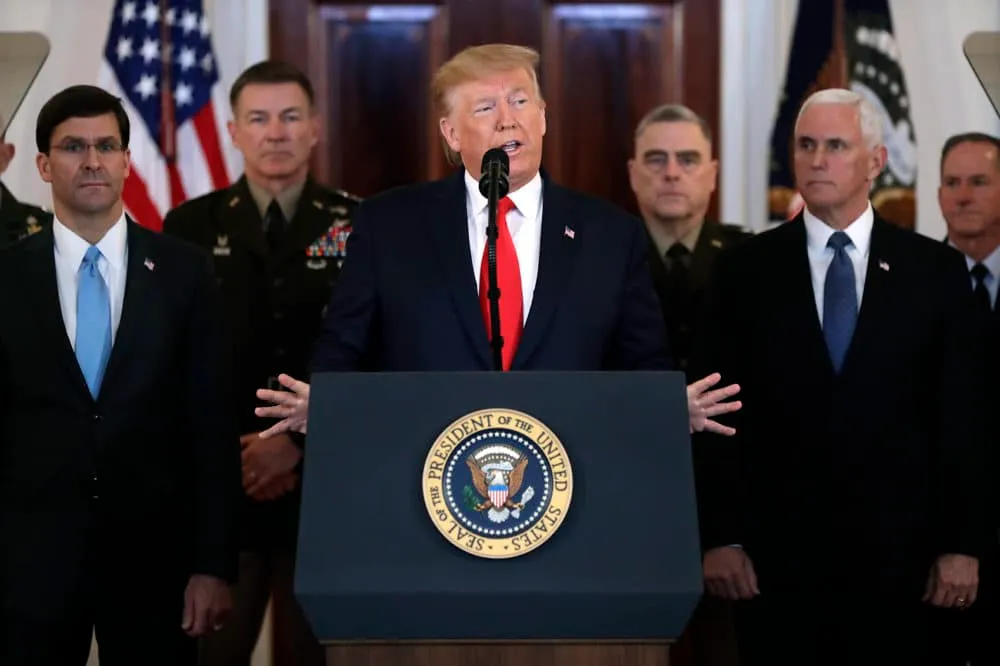
U.S. President Donald Trump has made significant claims regarding Iran’s nuclear capabilities, asserting that there is currently no uranium enrichment occurring in the country. During a recent speech, he emphasized that this lack of enrichment creates an opportunity to push for what he termed ‘regime change’ in Iran. Trump’s statements have reignited discussions surrounding Tehran’s nuclear ambitions and its regional influence.

Linking Ceasefire to Nuclear Adjustments

In his address, Trump proposed a direct connection between achieving a ceasefire in regional conflicts and Iran’s compliance with nuclear restrictions. He suggested that the easing of international tariffs on Iran should be contingent upon the nation agreeing to limit its nuclear activities. This linkage aims to create a framework for negotiations that could ultimately impact both regional stability and nuclear non-proliferation.

Context of the Nuclear Deal

Trump’s comments revive debates surrounding the Joint Comprehensive Plan of Action (JCPOA), the nuclear agreement that was established in 2015 but controversially abandoned by the United States in 2018. The deal was designed to limit Iran’s nuclear program in exchange for sanctions relief. Since the U.S. withdrawal, tensions have escalated, and Iran has gradually resumed activities that some international observers view as non-compliant with the original agreement.

International Reactions to Trump’s Proposition

International leaders and experts have responded to Trump’s comments with a mix of concern and skepticism. Many believe that the linkage of tariffs and nuclear compliance may complicate the already delicate situation in the region. Critics argue that such proposals could hinder diplomatic efforts and exacerbate tensions between Iran and other nations, particularly those who were signatories to the JCPOA.

The Broader Implications for U.S.-Iran Relations

The suggestion of regime change introduces a complex dimension to U.S.-Iran relations. Historically, the prospect of regime change has elicited varied responses internationally, with discussions often veering into debates over sovereignty and self-determination. The strategic implications of such a move would likely reverberate beyond Iran, impacting U.S. relationships with allies and adversaries alike in the Middle East.

Trump’s Position on National Security

In the context of national security, Trump has reiterated his administration’s focus on preventing Iran from becoming a nuclear power. His comments reflect a consistent theme during his time in office, where he argued for stringent measures to contain threats perceived from Tehran. As tensions remain high, the stance reinforces a hardline approach that has characterized U.S. foreign policy in the region over recent years.

Looking Ahead: Nuclear Negotiations and Regional Stability

The future of nuclear negotiations with Iran remains uncertain, especially with mounting pressures from various geopolitical factors. The implications of Trump’s statements will likely influence how stakeholders approach future talks. As countries deliberate on Iran’s nuclear capabilities and its role in the region, a concerted effort towards finding common ground appears essential for mitigating risks associated with nuclear proliferation and enhancing regional stability.

Long or Short, get news the way you like. No ads. No redirections. Download Newspin and Stay Alert, The CSR Journal Mobile app, for fast, crisp, clean updates!

App Store –  https://apps.apple.com/in/app/newspin/id6746449540 

Google Play Store – https://play.google.com/store/apps/details?id=com.inventifweb.newspin&pcampaignid=web_share

Latest News

Popular Videos