


NASA’s Perseverance Rover Discovers 4-Billion-Year-Old ‘Crocodile Bridge’ Rock Formation on Mars
The CSR Journal Magazine

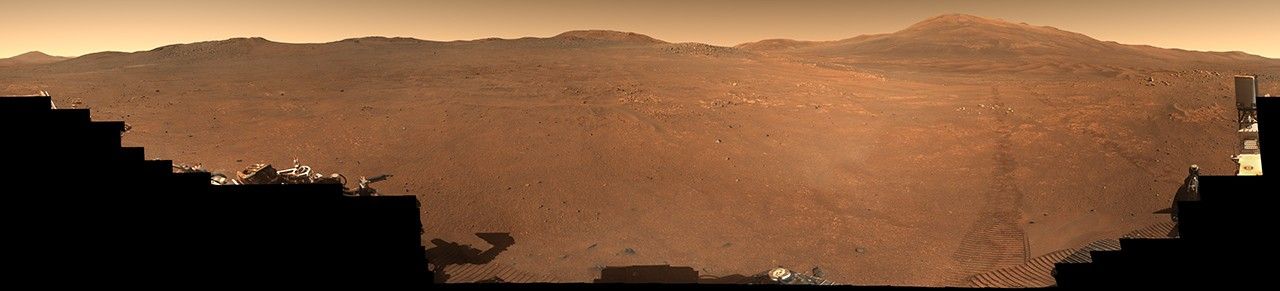
NASA’s Perseverance rover has recently captured stunning images of a rocky formation on Mars known as Crocodile Bridge. This area, located along the rim of Jezero Crater, represents one of the oldest landscapes observed in the solar system. The rover took a detailed panorama composed of 980 images, with most captured on December 18, 2025, and additional images on January 25, 2026. This unique geological feature has remained largely unchanged for billions of years.

Significance of the Geological Formation

The rocks at Crocodile Bridge are among the most ancient found anywhere in the solar system, serving as time capsules that date back to Mars’s formative years. These formations are remnants from a time when Mars was still developing, with a hardening crust and an atmosphere in the process of formation. Unlike Earth, which continually recycles its geological material due to active tectonic plates, Mars lacks such movement, allowing these ancient rocks to remain intact. Consequently, scientists are able to study formations that are billions of years old.

The geological stability of Mars allows for the preservation of these ancient materials, making it significantly easier for researchers to investigate the planet’s early history. On Earth, geological processes are ever-changing, and thus, similar rocks have eroded or been destroyed over time.

The exploration of Crocodile Bridge is not only notable for its ancient landscape but also for its potential insights into the climatic and environmental conditions of early Mars. The rock formations could provide essential information regarding whether the planet was ever warm, wet, or even habitable.

Future Explorations by Perseverance Rover

Crocodile Bridge does not merely represent an aesthetically pleasing destination for the Perseverance rover; it signifies the entrance to a broader region named Lac de Charmes. In the coming months, the rover will spend considerable time examining this area. Scientists regard this zone as critical for uncovering vital insights regarding the earliest geological history of Mars.

Considering Jezero Crater was once a lake, researchers are particularly intrigued by the surrounding rocks. These formations may retain chemical and physical signatures that could provide evidence about Mars’s past conditions, particularly during a time when it might have been more hospitable to life. Each image relayed by Perseverance functions as a visual record from Mars’s distant past.

The Mastcam-Z camera system employed by the rover enhances its ability to capture detailed, zoomable images of the Martian surface, allowing scientists to study terrain features with precision. As the mission progresses, the insights gained from Crocodile Bridge and the surrounding areas may significantly advance the understanding of Mars’s history and geological evolution.

Long or Short, get news the way you like. No ads. No redirections. Download Newspin and Stay Alert, The CSR Journal Mobile app, for fast, crisp, clean updates!

App Store –  https://apps.apple.com/in/app/newspin/id6746449540 

Google Play Store – https://play.google.com/store/apps/details?id=com.inventifweb.newspin&pcampaignid=web_share

Latest News

Popular Videos
