


Kamal Haasan Responds to Elon Musk Amid Starlink Controversy
The CSR Journal Magazine

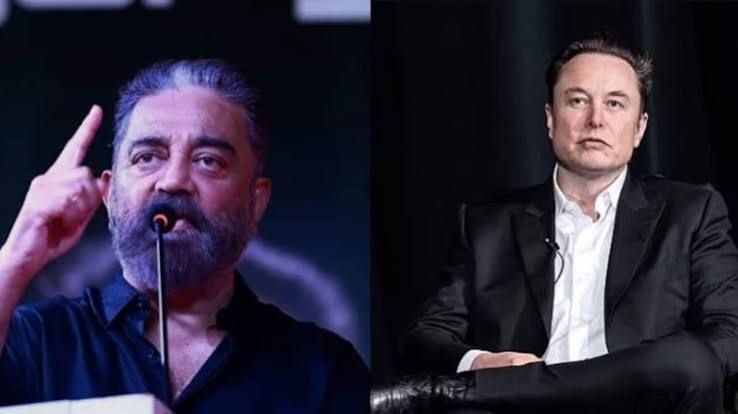
Kamal Haasan, the renowned actor and Rajya Sabha MP, has addressed allegations made by Elon Musk concerning the purported hindrance in Starlink’s launch in India. Haasan asserted that neither Indian nor American billionaires should dictate the policies of a sovereign nation. He clearly stated, “India is a democracy, not a colony,” emphasizing the autonomy of the Indian populace in determining their future.

Following Musk’s comments alleging that certain powerful individuals were obstructing Starlink’s operations to maintain their “monopolistic chokehold,” Haasan responded firmly. He welcomed international partnerships but reiterated that it is ultimately the decision of the Indian people to shape their own destiny.

Musk had previously questioned whether Mukesh Ambani, chairman of Reliance Industries, was the “real boss of India.” This statement provoked a reaction from Congress leader Rahul Gandhi, who made a cryptic remark on Musk’s statement, prompting Musk to acknowledge his concerns, saying, “This is indeed troubling.”

Government’s Stance on Starlink’s Approval Process

The Indian government has categorically dismissed Musk’s allegations regarding the approval process for satellite internet services. The Ministry of Communications asserted that the procedures were equitable and devoid of bias, stating that Starlink, Jio Satcom, and Eutelsat OneWeb, backed by Bharti Enterprises, all hold necessary licences.

However, the ministry clarified that for these companies to commence commercial operations, they must complete security evaluations and secure spectrum approvals. This regulatory framework is apparently designed to ensure that all necessary security measures are enforced before the initiation of services.

Adding to the ongoing discourse, Haasan advocated for the need for competition in both Indian and global markets to deliver practical and affordable connectivity, especially to underserved regions. He raised concerns that exorbitant subscription and equipment costs could exclude average households from accessing satellite internet, stating that connectivity should reduce the digital divide rather than exacerbate it.

Issue Of Western Double Standards

Haasan also called attention to perceived double standards employed by Western nations, which he claims promote free markets abroad while simultaneously protecting their domestic industries. Citing examples such as the United States’ imposition of 100 per cent tariffs on electric vehicles from China, he highlighted a broader contradiction in policy.

Moreover, he referenced the restrictions faced by tech giant Huawei in both India and the US due to security apprehensions. Haasan contended that it is unreasonable for nations to demand an equitable playing field from others only when it aligns with their strategic interests.

In addressing domestic issues, Haasan recognised the scrutiny that India must partake regarding its own shortcomings, referencing a report by the Comptroller and Auditor General (CAG) which found only 33.2 per cent of service-ready gram panchayats operational under BharatNet despite significant expenditure of Rs 39,888 crore.

However, he commended India’s telecommunications sector and regulatory framework for enhancing data affordability and connecting millions of people to the internet. Haasan concluded by affirming that the trajectory of India’s future lies in the hands of its citizens, independent of Western interests or the influence of wealthy individuals.

Long or Short, get news the way you like. No ads. No redirections. Download Newspin and Stay Alert, The CSR Journal Mobile app, for fast, crisp, clean updates!

App Store –  https://apps.apple.com/in/app/newspin/id6746449540 

Google Play Store – https://play.google.com/store/apps/details?id=com.inventifweb.newspin&pcampaignid=web_share

Latest News

Popular Videos
