


Kabul School Blast Injures 42 Children, Raises Concerns in Hazara Community
The CSR Journal Magazine

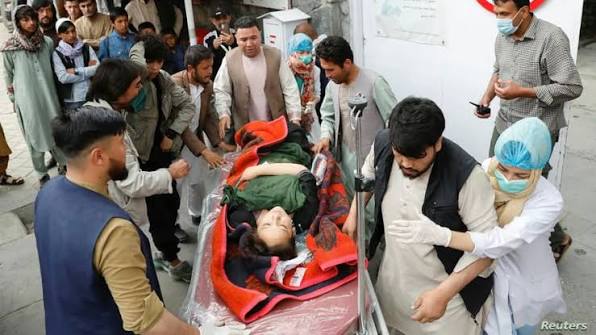
The recent explosion near a school complex in Kabul resulted in injuries to at least 42 children, as reported by the United Nations on Tuesday. This incident has sparked widespread concern regarding the safety of children in the area. The UN political mission in Afghanistan confirmed that the injured children were between the ages of nine and 14 years old. The explosion occurred on Monday, prompting calls for a thorough investigation from both Afghan authorities and UN officials.

Richard Bennett, the UN’s independent investigator for Afghanistan, condemned the attack, describing it as a “heinous” act that harmed many children. Following the incident, UN spokesman Stephane Dujarric reiterated that the UN Assistance Mission in Afghanistan (UNAMA) had verified the reports of injuries sustained near the educational facility. Initial statements from Kabul police spokesman Khalid Zadran indicated that a hand grenade had caused the casualties, although further details about the explosion remain sparse.

Context and Background

Reports from Afghan media suggest that the number of injured children may be closer to 50. This explosion took place in a district of Kabul primarily inhabited by the Hazara ethnic minority, who constitute about 9 per cent of Afghanistan’s population. Historically, the Hazara community has faced significant persecution and violence. Most Hazaras are Shiite Muslims, and they have often been targeted by Sunni Muslim extremists, including groups like the Islamic State.

In May 2021, just prior to the takeover of the Taliban, a series of bombings at a school in Kabul resulted in numerous fatalities among the Hazara community, particularly affecting young girls who were leaving classes. The recent explosion occurred in the Dasht-e-Barchi neighbourhood, which is known as the main Hazara district in the Afghan capital, and has also been the site of previous attacks.

Bennett, in a post on social media platform X, emphasised the need for an independent investigation to hold accountable those responsible for this latest act of violence, expressing his concern that this predominantly Hazara area of Kabul has been targeted once again. His remarks highlight ongoing security issues in the region.

Implications for Education and Safety

The explosion has not only raised immediate safety concerns but has also drawn attention to the broader challenges facing education in Afghanistan. Dujarric noted that the situation for schooling in the country is already precarious, with many girls being denied access to education beyond the sixth grade. He shared that approximately two-thirds of the 900,000 children who returned to Afghanistan, mainly from neighbouring Pakistan, are still out of school, constituting around 600,000 children.

The UN and its humanitarian partners have made efforts to support children’s education amid these challenges; however, Dujarric pointed out that their initiatives have been hampered by a lack of funding. The ongoing violence, particularly in regions such as Dasht-e-Barchi, compounds the difficulties faced by families trying to provide education for their children. The recent attack highlights the urgent need for a secure and stable environment for educational institutions in Afghanistan.

The aftermath of the blast near the Kabul school complex has raised pressing questions about the safety of children in conflict-affected areas and the protection of educational spaces. As investigations proceed, the international community remains watchful of developments concerning the well-being of Afghan children amidst such alarming incidents.

Long or Short, get news the way you like. No ads. No redirections. Download Newspin and Stay Alert, The CSR Journal Mobile app, for fast, crisp, clean updates!

App Store –  https://apps.apple.com/in/app/newspin/id6746449540 

Google Play Store – https://play.google.com/store/apps/details?id=com.inventifweb.newspin&pcampaignid=web_share

Latest News

Popular Videos
