


app-store-logo
play-store-logo
February 18, 2026

Indian Army Utilizes AI to Counter Chinese Action Along LAC in Arunachal Pradesh
The CSR Journal Magazine

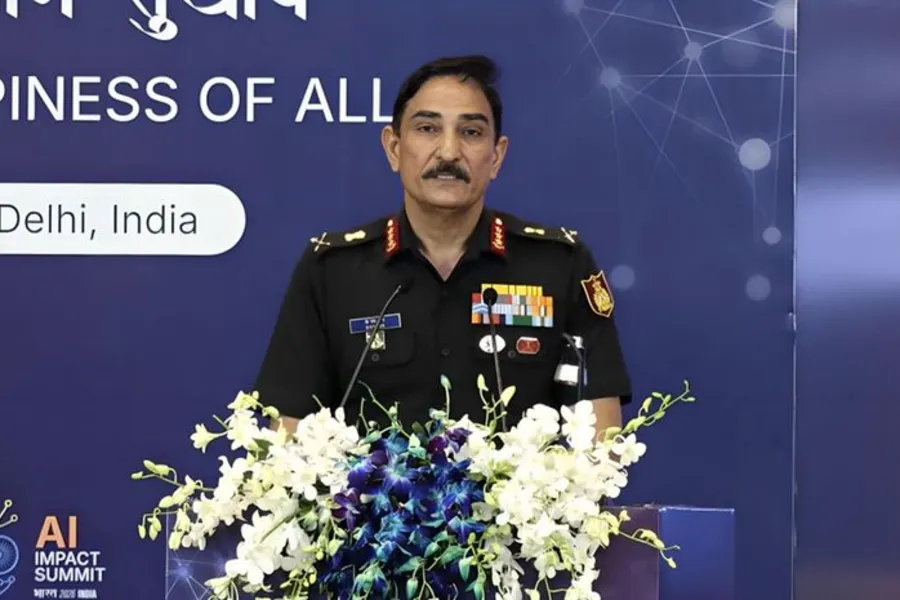
The Indian Army has successfully employed artificial intelligence (AI) to predict and thwart a significant Chinese military maneuver along the Line of Actual Control (LAC) in Arunachal Pradesh, according to Lt Gen Dinesh Singh Rana, Commander-in-Chief of the Strategic Forces Command.

Speaking at the India AI Impact Summit 2026, Lt Gen Rana noted that AI is fundamentally altering the landscape of modern warfare, strategic policy, and national security frameworks. He recounted his experiences overseeing a Corps tasked with securing the LAC in Arunachal Pradesh, highlighting that a locally designed, cost-effective AI system played a crucial role in identifying early warning signs of increased Chinese military activity in a contentious region.

Early Detection and Strategic Positioning

Lt Gen Rana explained that AI systems enabled the military to anticipate a significant Chinese buildup, asserting that the technology allowed them to predict the timing of the anticipated actions. He characterized the Chinese initiative as “unprecedented” and emphasized that the application of AI-driven intelligence facilitated timely force positioning and evacuation strategies, ultimately ensuring that there were “no casualties” on the Indian side.

Global AI Landscape in Military Applications

The general underscored that the relevance of AI transcends science fiction, positioning it as a critical component of global power relations. He pointed out the increasing investments in AI technologies, particularly by major powers such as the United States and China, framing the scenario as an ongoing “AI race.” Lt Gen Rana elaborated that AI’s impact extends beyond software, influencing various aspects of military operations, workforce development, infrastructure, and strategic command structures. Nations are integrating AI into command-and-control systems, autonomous weaponry, precision strikes, target recognition, logistics, predictive maintenance, maritime awareness, electronic warfare, and cyber defense, as well as counteracting misinformation.

Concerns Over Advanced AI

Addressing the potential implications of advancing from narrow artificial intelligence to artificial superintelligence (ASI), Lt Gen Rana cautioned that such a transition could present both significant opportunities and critical challenges. He classified advanced AI as a dual-use technology, which could be exploited by malicious actors or wielded for strategic manipulation, akin to the deterrence doctrines seen during the Cold War era.

According to him, regulating the proliferation of AI technologies would prove to be much more complex than managing nuclear capabilities due to the inherently digital nature of AI.

Need for Comprehensive AI Strategy in India

Drawing insights from the ongoing Russia-Ukraine conflict, Lt Gen Rana advocated for the development of scalable and cost-efficient AI systems for military use, including autonomous drones, rather than depending exclusively on high-end technology options. He called for India to create a thorough AI security doctrine that incorporates economic, cyber, space, and military perspectives, allowing decision-makers to evaluate the indirect ramifications of strategic choices.

Lt Gen Rana emphasized that as India aspires to achieve superpower status, it must also emerge as a responsible AI authority, akin to its status as a prudent nuclear power, asserting that once advanced AI capabilities are secured, they will be managed responsibly.

Long or Short, get news the way you like. No ads. No redirections. Download Newspin and Stay Alert, The CSR Journal Mobile app, for fast, crisp, clean updates!

App Store – https://apps.apple.com/in/app/newspin/id6746449540

Google Play Store – https://play.google.com/store/apps/details?id=com.inventifweb.newspin&pcampaignid=web_share

Latest News

Popular Videos
