


German Designer Develops Shirt That Makes Wearers Invisible to AI and CCTV
The CSR Journal Magazine

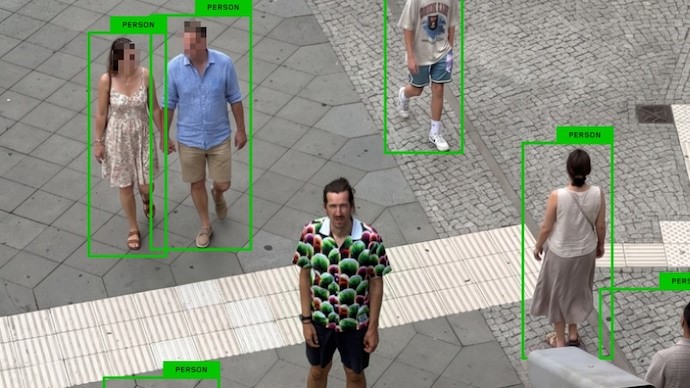
German designer Simon Weckert has created a distinctive button-down shirt named Digital Camouflage, aimed at thwarting AI-powered video surveillance systems. The shirt features a vibrant array of colours including green, pink, and orange, presented in a seemingly abstract pattern. This design serves a deliberate function: to disrupt the ability of AI systems to identify human figures in visual data.

Weckert demonstrated the effectiveness of the shirt by showcasing a typical interaction with an image-recognition system. In the demonstration, the system detects a person by framing them with a green box labelled “PERSON”. However, upon the introduction of the Digital Camouflage shirt in front of the figure, both the box and label vanished. Once the shirt was removed, the system resumed its recognition of the individual, highlighting the shirt’s capacity to mislead AI perception.

Purpose and Context Behind the Design

The motivation behind Weckert’s creation stems from increasing surveillance measures in urban centres, particularly in places like Berlin, where local governments are set to deploy AI-driven surveillance technologies. Weckert’s initiative intends to assess the robustness and reliability of these AI systems, posing the question of how effectively they can be deceived by alternative methods.

Weckert’s exploration into this technology-driven debate highlights a growing concern regarding privacy in public spaces. As AI technology is integrated into monitoring systems, the necessity for discussions surrounding its efficacy and ethical implications has become paramount. The Digital Camouflage shirt stands as a tangible experiment in understanding these contemporary issues.

The effectiveness of the shirt relates to the fundamental characteristics of AI vision systems. Unlike human observers, these technologies processes images based on learned patterns derived from vast datasets. Consequently, the AI identifies individuals by analysing factors such as body shape, colour, and textural details. The Digital Camouflage shirt cleverly interferes with this process through its bright hues and overlapping designs, rendering the traditional visual cues more challenging for the AI to interpret accurately.

Creation Process and Testing Methodology

Weckert elaborated on the design process, stating that he employed AI to assist in crafting and refining the shirt’s patterns. This technique, described as an “adversarial loop”, involves creating patterns, subjecting them to AI detection tests, and subsequently iterating on designs based on the AI’s level of confidence in identifying a person. This dynamic approach aims to produce a pattern that maximally confuses the system.

In his trials, Weckert specifically utilised YOLO, an open-source AI framework commonly employed in real-time object detection—mirroring the technology used by many contemporary surveillance networks. His experiments illustrate a shift towards adversarial clothing, which ultimately seeks to challenge the capabilities of AI in recognising human forms and could shape future discourse on privacy and surveillance.

While Weckert’s work is innovative, he does not propose that the Digital Camouflage shirt can universally neutralise all forms of surveillance technology. Instead, he emphasises the project’s role in highlighting vulnerabilities within AI vision systems. The initiative ultimately aims to foster a critical awareness of the implications surrounding artificial intelligence in public observation and privacy.

Long or Short, get news the way you like. No ads. No redirections. Download Newspin and Stay Alert, The CSR Journal Mobile app, for fast, crisp, clean updates!

App Store –  https://apps.apple.com/in/app/newspin/id6746449540 

Google Play Store – https://play.google.com/store/apps/details?id=com.inventifweb.newspin&pcampaignid=web_share

Latest News

Popular Videos
