


How AI Is Changing the Teacher-Student Dynamic and Testing Equity
The CSR Journal Magazine

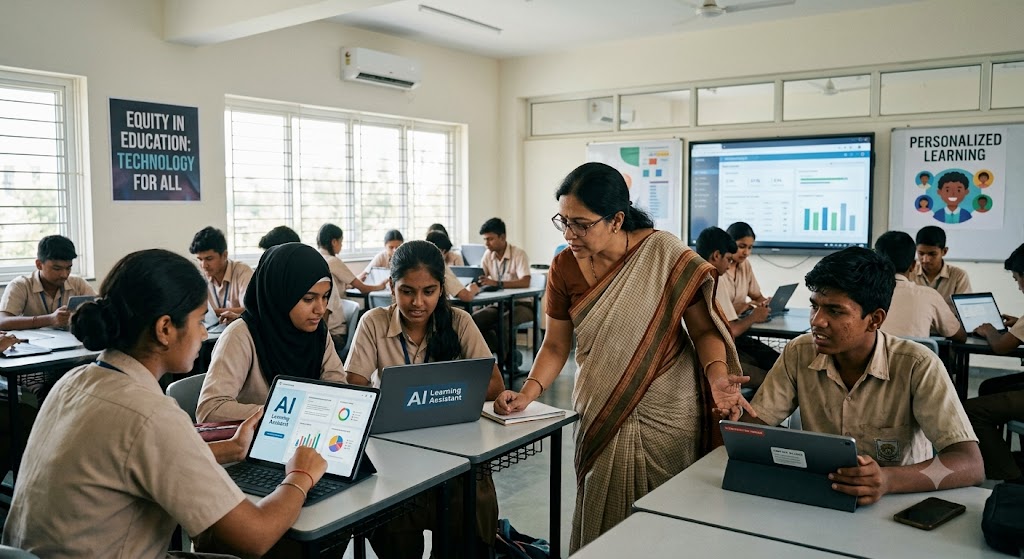
This article discusses how the introduction of artificial intelligence (AI) into educational settings alters the traditional student-teacher relationship. A typical scenario now sees students consulting AI tools like ChatGPT for answers instead of relying solely on teachers or textbooks. This instant access to information leads educators to confront the challenge of addressing potentially incorrect AI-generated answers.

The ongoing shift in educational resources has been rapid, progressing from teachers as primary knowledge sources to the incorporation of AI technologies. As students now interact with AI, they expect immediate and personalised responses, fundamentally changing how they engage with knowledge.

The United Nations Educational, Scientific and Cultural Organization (UNESCO) has labelled this transformation as evolving from a traditional teacher-student dynamic to a contemporary “teacher-AI-student” relationship. This transition calls for competency frameworks for both teachers and students, emphasising responsible use and human agency alongside technical skills.

AI’s Role in the Classroom

The AI revolution in education raises various potentials and limitations. While AI tools can generate custom quizzes, translate learning materials, and adapt to diverse learning levels, they still lack the emotional intelligence and mentorship that human teachers provide. Teachers play a crucial role in recognising students’ emotional struggles, motivating those who are disengaged, and maintaining classroom discipline.

Recent government initiatives further highlight the commitment to incorporating AI in educational settings. The Indian Education Ministry has announced plans to introduce concepts related to AI and computational thinking in schools, aiming for comprehensive integration from 2026. This initiative aligns with the National Education Policy, which acknowledges AI’s capacity to enhance educational methods and outcomes.

Despite the advantages of AI, there are concerns surrounding its biases and the content it presents. AI’s understanding of complex subjects is limited by its training data, raising critical discussions about the responsibility of human educators in teaching contentious topics. Thus, educators contend that AI cannot fully replace the nuanced understanding and context that a human teacher provides.

Addressing Educational Inequities through AI

An important consideration in the AI era is the potential for widening educational divides. Students from privileged backgrounds may have better access to AI tools and resources compared to their peers from underprivileged backgrounds. This disparity raises questions about whether AI could democratise education or deepen existing inequities within India’s educational system.

AI’s capability to provide explanations in various Indian languages presents an opportunity to bridge gaps in English-language instruction, yet it also questions the effectiveness of these AI models in accurately conveying complex ideas in regional languages. Additionally, the issue of academic integrity arises, as educators must navigate instances where students might rely heavily on AI-generated content.

The effect of AI on assessment practices is also under scrutiny. As students increasingly seek AI-generated answers, it may necessitate a re-evaluation of traditional examination methods, shifting the focus from rote memorisation to critical thinking, collaboration, and practical application of knowledge.

Educators face the challenge of adapting to AI technologies without sufficient training in their effective use. Initiatives from organisations like Google aim to provide professional development opportunities for teachers, while stressing the importance of maintaining human connections in the classroom amidst the rise of digital tools.

The future of education appears to rely on finding a balance between AI’s capabilities and the essential qualities that teachers bring to the classroom. Effective integration of AI can lead to enhanced educational experiences, as long as the critical roles of empathy, judgement, and mentorship remain at the forefront of teaching practices.

Long or Short, get news the way you like. No ads. No redirections. Download Newspin and Stay Alert, The CSR Journal Mobile app, for fast, crisp, clean updates!

App Store –  https://apps.apple.com/in/app/newspin/id6746449540 

Google Play Store – https://play.google.com/store/apps/details?id=com.inventifweb.newspin&pcampaignid=web_share

Latest News

Popular Videos
