


Govt Approves Centres of Excellence for Assamese, Bengali, Marathi, Pali and Prakrit
The CSR Journal Magazine

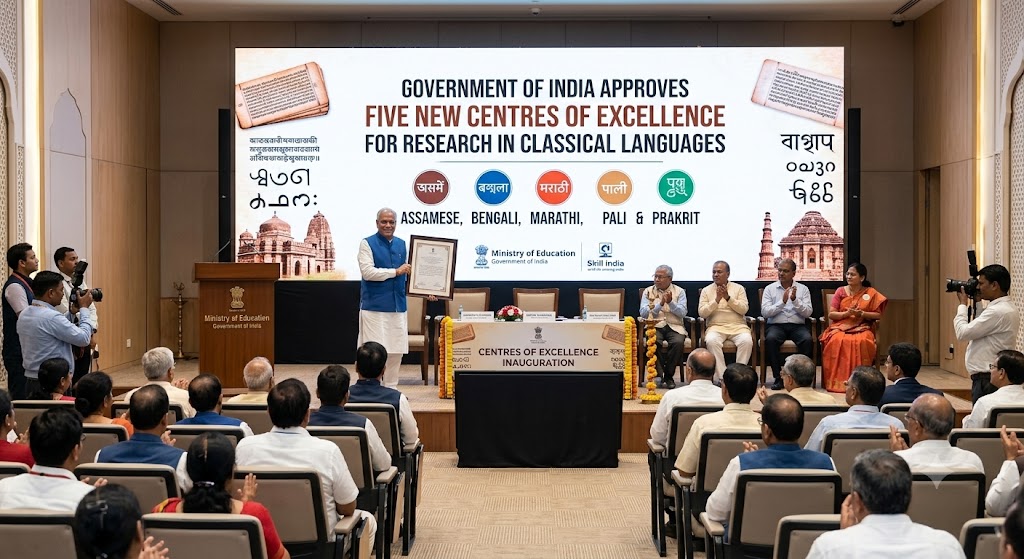
The expansion of India’s classical language map is taking a significant step forward with the establishment of focused research centres. The Ministry of Education has officially sanctioned five Centres of Excellence dedicated to the study of Classical Assamese, Bengali, Marathi, Pali, and Prakrit. This development was announced through an Office Memorandum from the Language Division of the Department of Higher Education, dated October 1, 2026.

These Centres of Excellence will be located at various universities and institutions across five states: Tezpur University in Assam for Classical Assamese, Visva-Bharati University in West Bengal for Classical Bengali, Deccan College Post-Graduate and Research Institute in Pune, Maharashtra for Classical Marathi, the Central University of Odisha in Sunabeda for Classical Pali, and the Central University of Gujarat in Kundhela, Vadodara for Classical Prakrit.

The primary aim of these new centres is to foster academic research, facilitate digitisation initiatives, and aid in the preservation and dissemination of the respective languages and their rich cultural heritage.

Significance of the Selected Languages

The approval of these five classical languages is grounded in a significant context. In October 2024, the Union Cabinet officially conferred Classical Language status upon Marathi, Pali, Prakrit, Assamese, and Bengali, bringing the total number of recognised classical languages in India to eleven. Previous languages that received this status include Tamil, Sanskrit, Telugu, Kannada, Malayalam, and Odia.

The designation of classical status is based on rigorous criteria, which include the existence of ancient texts or documented history spanning approximately 1,500 to 2,000 years, a substantial body of heritage literature, and evidence found in inscriptions and various scholarly texts. This formal recognition provides the foundation for academic institutions to develop dedicated programmes for these languages.

In particular, the establishment of the Classical Pali centre holds special significance for the state of Odisha. Chief Minister Mohan Charan Majhi expressed support for the initiative, viewing it as a crucial advancement in the preservation of India’s linguistic and intellectual heritage, reflecting the cultural wealth of the region.

Future Endeavours in Language Preservation

With the establishment of these five Centres of Excellence, the government aims to deepen the academic pursuit and preservation efforts associated with these languages that only attained classical status two years prior. This move is expected to culminate in a richer understanding of the linguistic heritage that has shaped India’s cultural landscape over millennia.

Academic institutions will now have structured frameworks to enhance research and educational programmes focused on these languages. These efforts will not only contribute to preserving the languages themselves but will also promote engagement with their associated literature and cultural narratives.

As these centres begin their operations, they will likely play a pivotal role in encouraging scholarly activity and raising awareness about the importance of India’s classical languages, thus ensuring that they remain vibrant and relevant in the contemporary academic discourse.

Long or Short, get news the way you like. No ads. No redirections. Download Newspin and Stay Alert, The CSR Journal Mobile app, for fast, crisp, clean updates!

App Store –  https://apps.apple.com/in/app/newspin/id6746449540 

Google Play Store – https://play.google.com/store/apps/details?id=com.inventifweb.newspin&pcampaignid=web_share

Latest News

Popular Videos
