


Four Major Storm Systems Observed in the Pacific Ocean from Space
The CSR Journal Magazine

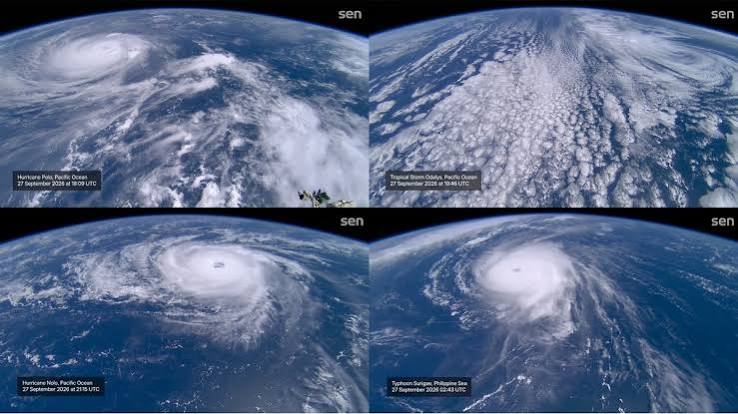
The Pacific Ocean displayed remarkable activity in late September when four tropical systems were captured simultaneously from space. Footage recorded via a camera on the International Space Station (ISS) on September 27 revealed Hurricane Nolo, Hurricane Polo, Tropical Storm Odalys, and Typhoon Surigae. Their extensive cloud formations encompassed vast areas of the ocean, illustrating the impressive scale of these natural phenomena.

Details of Each Storm

Hurricane Nolo, one of the first systems detected, originated on September 13 and evolved into a hurricane as it progressed toward Hawaii. At its peak on September 27, Nolo exhibited maximum sustained winds reaching approximately 185 kmph and was located south of Honolulu. By this time, it had begun to move further away from the Hawaiian Islands, posing a reduced threat to the region.

Hurricane Polo formed around September 20 and demonstrated rapid intensification, reaching Category 5 status with peak winds of about 285 kmph. However, this system weakened as it approached Mexico. By September 29, Polo made landfall in Baja California Sur as a Category 2 hurricane, bringing concerns regarding damaging winds and potential flash flooding.

Tropical Storm Odalys, also initiated on September 20, briefly intensified into a hurricane. However, by September 27, it was undergoing a swift decline in strength and was anticipated to transform into a post-tropical system. By September 29, Odalys had lost its tropical characteristics, ceasing to remain an active storm.

Meanwhile, in the western Pacific, Typhoon Surigae developed east of the Philippines. It rapidly gained strength, evolving into a significant typhoon as it advanced towards the seas near Okinawa and Japan. Although it maintained its intensity on September 29 while located south of Japan, it was beginning to lose strength due to changing conditions.

Reasons for Concurrent Storm Activity

September is known to be one of the peak months for tropical cyclones in the Pacific. The warm ocean waters provide the essential heat and moisture for storm formation, while favourable atmospheric conditions may encourage simultaneous developments of multiple systems across various ocean regions. The snapshot from September 27 depicted all four tropical systems actively developing, each at a different point in its lifecycle.

While the satellite image presented an impressive view of these storm systems from above, it is essential to note that their impacts varied. Nolo and Polo were significant hurricanes in the eastern Pacific, whereas Surigae categorised as a powerful typhoon in the western Pacific, and Odalys was rapidly weakening. The visual representation did not necessarily reflect the varying severity between the storms.

As the systems evolved, Hurricane Polo had moved across Baja California Sur as a Category 2 hurricane, while Nolo continued its path away from Hawaii. Odalys transitioned into a post-tropical system, lessening its impact. Typhoon Surigae remained a crucial storm to monitor as it navigated east-northeast and was expected to weaken further due to less favourable environmental conditions.

Current Developments in the Pacific

Following the events of September 27, developments in the Pacific have been swift. Hurricane Polo has crossed over Baja California Sur, causing potential hazards associated with its transition into a Category 2 hurricane. Nolo has persisted in its movement away from Hawaii, and Odalys has diminished to the status of a post-tropical system.

At this stage, Typhoon Surigae continues to be the most significant storm monitored, as it progresses east-northeast south of Japan. Forecasts suggest it may weaken further as it encounters less conducive atmospheric conditions. The imagery from space on September 27 captured unique and striking evidence of nature’s power, showcasing four named storm systems across the vast Pacific Ocean.

Long or Short, get news the way you like. No ads. No redirections. Download Newspin and Stay Alert, The CSR Journal Mobile app, for fast, crisp, clean updates!

App Store –  https://apps.apple.com/in/app/newspin/id6746449540 

Google Play Store – https://play.google.com/store/apps/details?id=com.inventifweb.newspin&pcampaignid=web_share

Latest News

Popular Videos
