


Electronics to Claim Over Half of Vehicle Costs by 2030 Boosting Local Industry
The CSR Journal Magazine

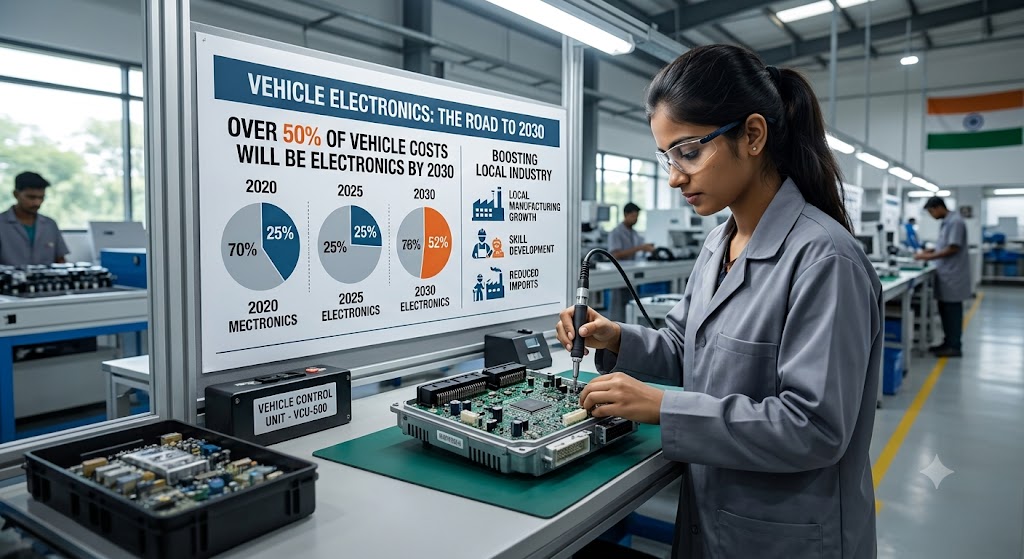
The proportion of a vehicle’s cost attributed to electronics is projected to rise significantly, reaching 50-55 per cent by 2030, compared to an estimated 30-35 per cent in 2020. This trend presents substantial opportunities for Indian auto component manufacturers to expand their focus towards electronic components, as indicated by a report released by BCG and ACMA.

The increasing electronic content in vehicles is largely driven by the adoption of advanced technologies, including advanced driver assistance systems (ADAS), infotainment features, various sensors, and enhanced connectivity. The report highlights that regardless of whether a vehicle operates on an internal combustion engine or is electric, the shift towards a more electronic approach is undeniable.

Currently, the electricals and electronics segment accounts for only around 12 per cent of the total component supply in India for the financial year 2025. This disparity underscores the significant potential for domestic suppliers to develop capabilities in this market segment.

Growth in Electronics Content And Structural Changes in the Auto Industry

As the automotive landscape evolves, the integration of electronics is becoming a driving force behind structural changes within the industry. The report indicates that elements such as premiumisation, electrification, and heightened safety requirements are contributing to the emergence of new component value pools.

Additionally, the report elaborates on various opportunities that lie in sectors such as sensors, electronic control units (ECUs), power electronics, battery management systems (BMS), and connectivity. This growing emphasis on electronic components not only boosts domestic manufacturing prospects but also encourages Indian suppliers to capture a more significant share of the value generated by the industry’s transition towards greater electronic integration.

The demand for new technologies and electronic components signifies that traditional manufacturing capabilities may no longer suffice. Suppliers will need to invest in advanced technology, engineering expertise, and robust research and development initiatives to keep pace with market requirements.

Future Growth Driven By Localisation And Technology Development

The report maintains that as the proportion of electronics within vehicle value increases by 2030, the ability of Indian suppliers to localise and develop these technologies will emerge as a critical growth avenue. As vehicles become increasingly sophisticated, the requirement for “more content and capability inside every vehicle” will profoundly impact industry dynamics.

Emerging value pools are likely to reward those within the industry that can adapt and innovate. This shift will propel suppliers toward building new competencies that align with the evolving landscape, thus enabling them to meet changing consumer demands and regulatory standards.

In conclusion, the growing emphasis on electronics is set to catalyse significant transformation within the Indian auto component sector. With the right investments in technology and capabilities, local manufacturers are poised to seize the opportunities presented by the evolving automotive market.

Long or Short, get news the way you like. No ads. No redirections. Download Newspin and Stay Alert, The CSR Journal Mobile app, for fast, crisp, clean updates!

App Store –  https://apps.apple.com/in/app/newspin/id6746449540 

Google Play Store – https://play.google.com/store/apps/details?id=com.inventifweb.newspin&pcampaignid=web_share

Latest News

Popular Videos
