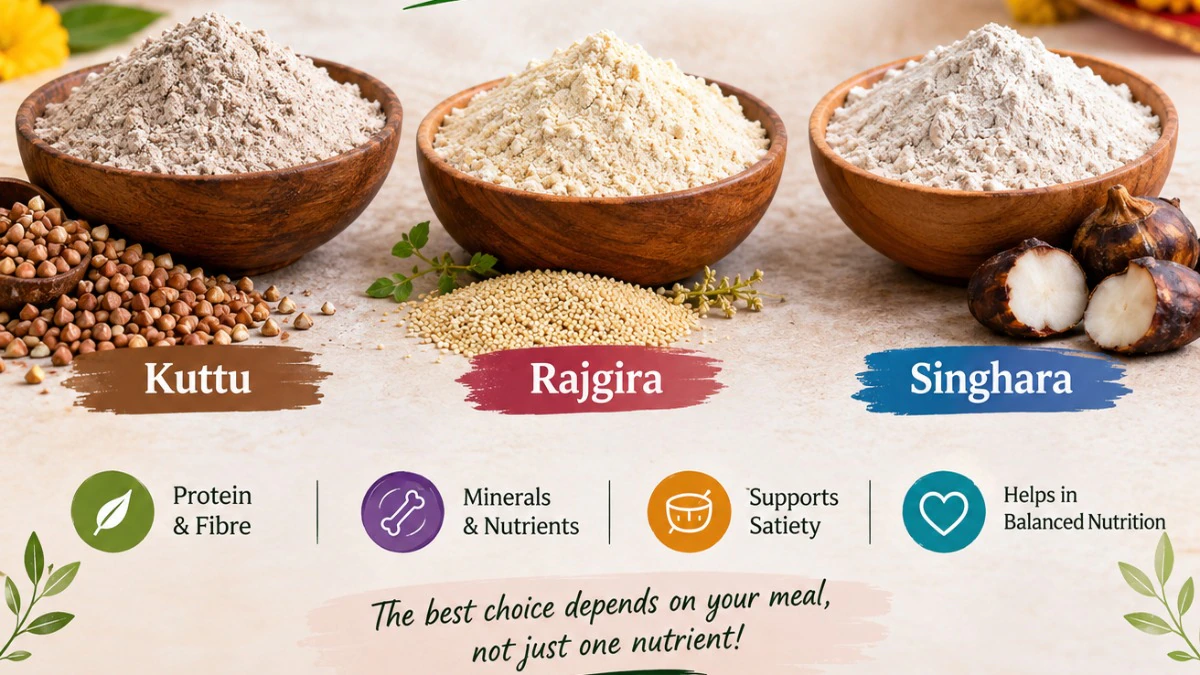
Choosing the appropriate flour during Navratri fasting can enhance meal variety, but it is essential to note that no single option is categorically the healthiest. The commonly used flours include kuttu (buckwheat), rajgira (amaranth), singhara (water chestnut), and sama ke chawal (barnyard millet). Each type has its distinct nutritional profile, encompassing protein, fibre, carbohydrates, and minerals.
According to Nutritionists, it is crucial to consider the overall meal rather than evaluating a flour based solely on one nutrient. Factors such as portion size, cooking methods, and accompanying foods significantly influence the nutritional value of meals during fasting.
Each flour contributes different nutrients, making it important to incorporate a variety of them into meal planning during the fasting period.
Nutritional Comparison of Kuttu, Rajgira, and Singhara
The nutritional values of these flours vary significantly. For instance, rajgira typically contains a higher protein content, while kuttu offers a combination of protein and fibre. Singhara flour primarily serves as a source of carbohydrates, whereas sama ke chawal provides energy through carbohydrates.
It is important to note that these values refer to 100 grams of raw flour, and actual intake will depend on serving sizes. The specific nutritional benefits can vary based on the variety and processing of the flour.
While kuttu is often praised for its fibre content, rajgira is recognised for its protein. However, no flour can be deemed universally superior, as each has unique contributions to a balanced diet. Individual dietary needs and preparation methods should guide the choice of flour.
Flour Choices for Protein and Weight Management
When avoiding regular grains and pulses during fasting, both rajgira and kuttu are sensible options for protein intake. Rajgira generally offers a good amount of protein per 100 grams, while kuttu provides both protein and fibre. However, relying solely on flour may not suffice for adequate protein intake.
To enhance protein content, pairing these flours with curd, milk, or paneer is advisable. For instance, rajgira cheela filled with paneer or kuttu roti served with curd can create a more nutritionally balanced meal compared to consuming flour alone.
In terms of weight management, no single fasting flour guarantees better outcomes. The overall meal composition, portion sizes, and cooking methods are more significant than the choice of flour. For example, kuttu puri, when deep-fried, can be more energy-dense than a simple kuttu roti.
Thus, opting for healthier cooking methods and including protein sources and vegetables can contribute to more balanced fasting meals.
Digestibility and Nutritional Value of Cooking Methods
The digestibility of fasting flours varies among individuals, influenced by factors such as fibre content, portion sizes, and existing digestive sensitivities. A sudden increase in fibre may lead to discomfort for some, while others may experience constipation from inadequate fibre intake.
Cooking methods also impact the nutritional value of the flours. For instance, rotis typically require less added fat, whereas deep-frying increases calorie content significantly. Therefore, the preparation method should be considered alongside the type of flour used.
Ultimately, a balanced approach to Navratri fasting involves incorporating a variety of flours and suitable accompaniments. By focusing on diversity and balance, individuals can meet their nutritional needs effectively during this period.
Long or Short, get news the way you like. No ads. No redirections. Download Newspin and Stay Alert, The CSR Journal Mobile app, for fast, crisp, clean updates!