


Delhi Police Detain Abhijeet Dipke Before Tiranga Yatra Due to Orders
The CSR Journal Magazine

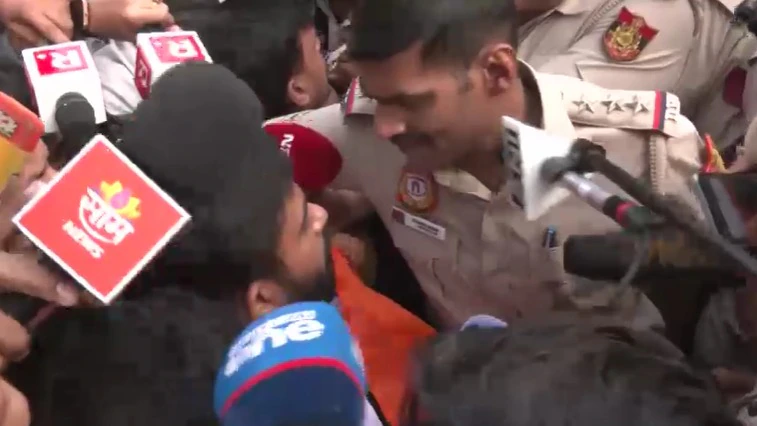
Abhijeet Dipke, the founder of the Cockroach Janta Party (CJP), was detained by Delhi Police shortly before 5 pm as he attempted to leave his residence. The police had been stationed outside his home for several hours, informing him that he could not proceed to Central Park in Connaught Place due to prohibitory orders under Section 163 of the BNSS. Despite being aware of the restrictions, Dipke was determined to carry out his plans.

As he stepped outside, police officers quickly intervened, stating that he was being taken into custody. Dipke challenged the legality of the action, asserting that he was not breaking any laws and was merely intending to carry the Indian flag. He highlighted the presence of media personnel in the vicinity, suggesting that his actions were being observed and recorded by the press.

The police remained resolute in their decision. An officer informed Dipke that he was being placed in preventive custody, a measure taken to avert any potential disturbances. Despite his protests, the police maintained that he could not proceed to New Delhi and that they would provide alternative arrangements later.

Details of the Police Response

The police had established a significant security presence in Connaught Place, which is known as the financial hub of the national capital. Multiple layers of barricades and a human chain formed by police and paramilitary personnel surrounded the area, indicating the authorities’ preparedness for any gatherings or protests. This heightened security was likely a response to previous incidents and the potential for unrest during public demonstrations.

Dipke continued to question the rationale behind his detention, asking, “How have I broken the law?” He insisted that his intention was simply to unfurl the national flag in a peaceful manner. His insistence on the legality of his actions highlighted the tension between individual rights and state security measures during public events.

As the situation unfolded, another officer reiterated that preventive action was being taken against him. This phrase, often used in law enforcement, suggests that the authorities believed Dipke’s actions could lead to a breach of peace, even if he had not yet engaged in any unlawful behaviour. The decision to detain him was thus framed as a precautionary measure.

Public Reaction and Implications

The incident has drawn attention from various quarters, particularly regarding the balance between civil liberties and law enforcement. Observers noted the presence of media personnel, which raised questions about the transparency of the police’s actions. The situation has sparked discussions about the right to peaceful assembly and the conditions under which authorities can impose restrictions.

In the wake of Dipke’s detention, there may be further scrutiny of the legal frameworks that govern public gatherings and the enforcement of prohibitory orders. The event serves as a reminder of the complexities involved in managing public demonstrations, especially in areas with heightened security concerns.

As the day progressed, the implications of this incident for future gatherings and the rights of individuals wishing to express their sentiments in public spaces became a focal point for discussion. The balance between maintaining order and respecting individual freedoms remains a critical issue in contemporary society.

Long or Short, get news the way you like. No ads. No redirections. Download Newspin and Stay Alert, The CSR Journal Mobile app, for fast, crisp, clean updates!

App Store – https://apps.apple.com/in/app/newspin/id6746449540

Google Play Store – https://play.google.com/store/apps/details?id=com.inventifweb.newspin&pcampaignid=web_share

Latest News

Popular Videos
