


AIMIM Chief Asaduddin Owaisi Criticises Elon Musk for Questioning India’s Political Authority
The CSR Journal Magazine

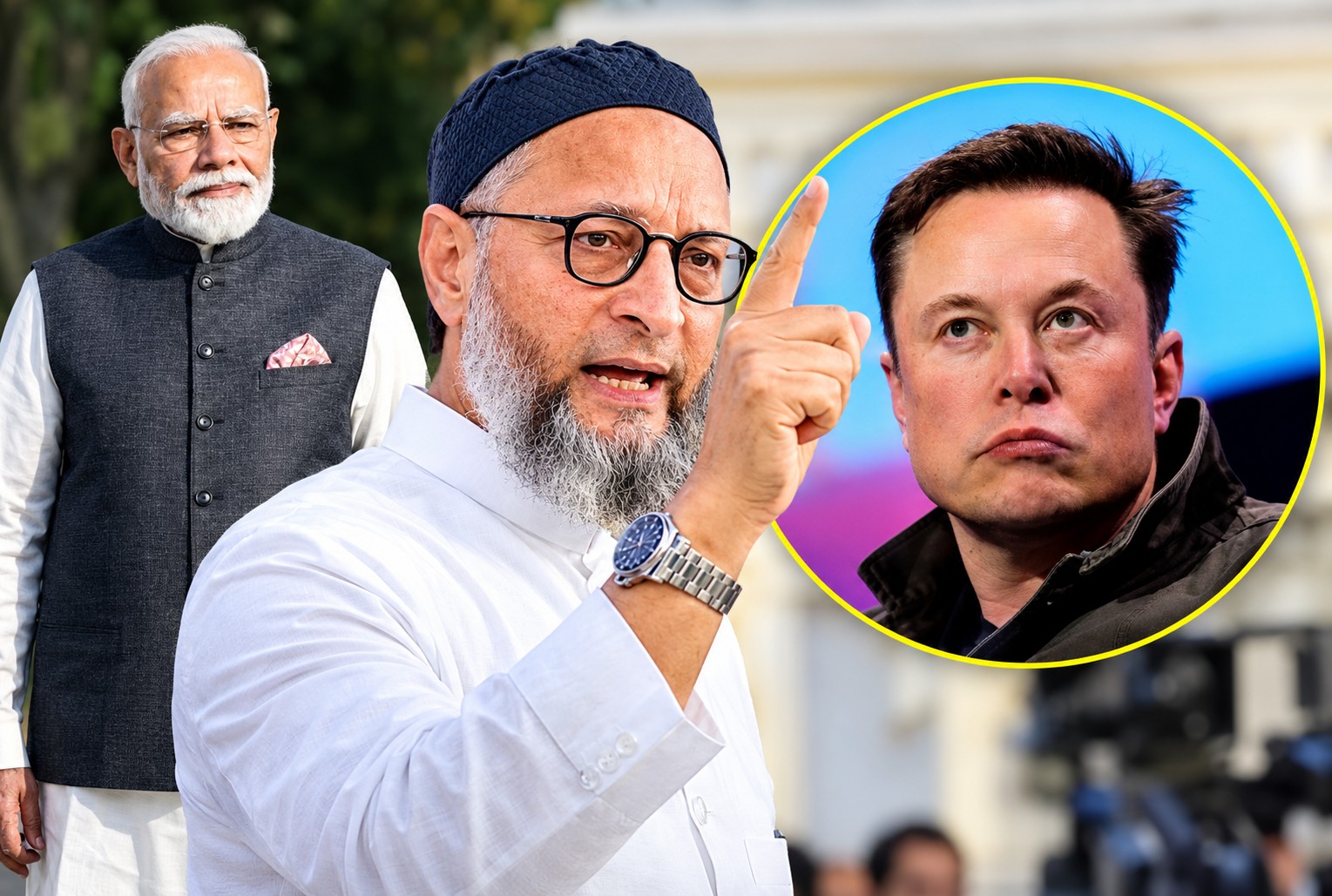
AIMIM leader Asaduddin Owaisi has expressed his discontent with Elon Musk, the CEO of Tesla and SpaceX, for questioning India’s political and business decisions. Owaisi has been a vocal critic of Prime Minister Narendra Modi but clarified that his opposition does not extend to allowing a foreign businessman to dictate terms to India. His remarks were made in Hyderabad, following AIMIM’s legal action in the Supreme Court regarding electoral rolls.

During his address to journalists, Owaisi stated, “We have always opposed Narendra Modi and will continue to do so. However, how can Elon Musk write such things about our Prime Minister?” He emphasised that the distinction between opposing the government and allowing foreign influence is crucial in this context.

Owaisi’s comments come against the backdrop of Musk’s grievances regarding the delay in regulatory approvals for Starlink, his satellite internet service, in India. The situation has evolved into a political debate, with various opposition leaders seizing the opportunity to question the government’s ties with major corporations.

Political Implications of Musk’s Allegations

Musk’s public complaints have sparked a broader discussion about the relationship between the Indian government and powerful business figures. He alleged that “oligarchs” in India are obstructing his company’s entry into the market to maintain their dominance. Furthermore, he provocatively questioned whether Mukesh Ambani, the chairman of Reliance Industries, is the “real boss of India.” This assertion raised eyebrows and prompted responses from various political figures.

The Indian government has dismissed Musk’s claims, stating that security assessments for all licensed satellite communications operators, including Starlink, are underway. It asserted that all companies are at a similar stage in the approval process and that none can commence commercial operations until necessary assessments are completed.

Owaisi focused on the implications of Musk’s comments, questioning whether a foreign billionaire should have the authority to influence India’s regulatory decisions. He stated, “How the country’s resources are used, the country will decide. Will this white man sit and dictate to us?” His remarks highlight the tension between national sovereignty and foreign business interests.

Contrasting Responses from Political Leaders

While Owaisi’s approach centres on nationalism and the integrity of Indian decision-making, Rahul Gandhi, the Leader of the Opposition, took a different angle. Gandhi responded to Musk’s comments by implying that the real power in India lies with industrialists, specifically referring to Gautam Adani, although he did not name him directly. This response was seen as an opportunity to reiterate the Congress party’s long-standing criticism of the BJP’s ties to big business.

Gandhi’s remarks on social media, which included a reference to Musk’s comments, aimed to draw attention to the perceived collusion between political power and corporate influence under the current government. His response was more of a political jab than a detailed critique of the regulatory framework.

The differing responses from Owaisi and Gandhi illustrate the complexities of the political landscape in India. Owaisi’s focus was not to defend every action taken by the Modi government but to assert that Indian policies should be determined by Indian interests, independent of foreign influence.

Long or Short, get news the way you like. No ads. No redirections. Download Newspin and Stay Alert, The CSR Journal Mobile app, for fast, crisp, clean updates!

App Store – https://apps.apple.com/in/app/newspin/id6746449540

Google Play Store – https://play.google.com/store/apps/details?id=com.inventifweb.newspin&pcampaignid=web_share

Latest News

Popular Videos
