


Copper Prices Rise Due to Increased Demand from Industries
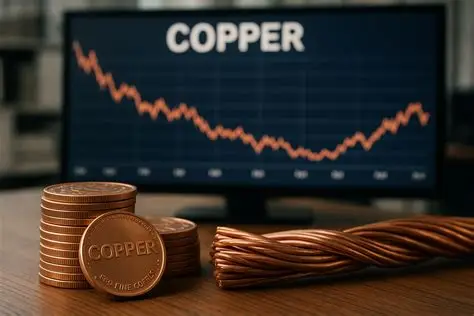
The recent increase in copper prices has drawn attention due to its implications for various industries. Copper has become essential in supporting the shift towards environmentally sustainable technologies, appearing in sectors such as power grids, electric vehicles, renewable energy projects, and data centres. In India, copper futures surged to approximately Rs 1,400 per kilogram in August 2026, mirroring global trends where pricing on the London Market Exchange (LME) remains near record highs.

On August 17, 2026, Multi Commodity Exchange (MCX) copper contracts were noted at around Rs 1,400 per kg. Despite the escalating costs, buyers are increasingly opting to pay a premium for immediate access to copper, bypassing the wait for potential price reductions. The scenario raises critical questions about the sudden spike in demand and its implications for manufacturers.

Moreover, for companies heavily reliant on copper to sustain production, the increased costs risk eroding profit margins. Yet, rather than risk production delays, many turn to the market to secure the necessary supplies. This willingness to pay above the prevailing market rate highlights underlying market dynamics.

Challenges in Copper Production

The global copper production landscape reveals ongoing challenges that hinder supply growth. Establishing new copper mines requires substantial time and investment, often spanning several years to identify suitable deposits, obtain necessary approvals, and build supporting infrastructure. Existing mines are also facing declined ore quality and operational disruptions, leading to increased production costs.

Forecasts from S&P Global suggest a pronounced increase in copper demand, projected to rise from approximately 28 million tonnes in 2025 to around 42 million tonnes by 2040, marking an increase of nearly 50 per cent. The anticipated growth primarily stems from sectors like electrification, renewable energy, electric vehicles, and artificial intelligence data centres.

This escalating demand sets the stage for a mismatch between rapid consumption increases and the lengthy development timelines required for new supply. Consequently, the market for copper concentrate, crucial for producing refined copper, is feeling the pressure as smelters compete for shrinking supplies, driving costs higher and further straining margins.

Why Buyers Are Paying a Premium

Manufacturers who depend heavily on copper are increasingly faced with the dilemma of rising costs versus the necessity of securing supplies for ongoing operations. The urgency to fulfil orders means that many companies cannot afford to wait for prices to soften; the implications of delayed access to copper could lead to production halts and loss of customer loyalty.

In such scenarios, opting to pay a premium appears economically favourable compared to the risk of inventory shortages. While traders can opt to withhold purchases during price spikes, manufacturers from various sectors—such as cable and transformer production—are often compelled to proceed with acquisitions.

The premium that buyers are willing to pay above the global benchmark thus signals robust competition within the market, reflecting the pressing necessity for physical copper supplies to maintain operational continuity. The LME serves to indicate copper’s global value, while the additional premium illustrates the logistical costs associated with securing the metal.

India’s Growing Demand for Copper

Copper’s pivotal role in the energy transition has led many to refer to it as “the new oil.” Its properties make it indispensable in numerous applications, including wiring, motors, transformers, electric vehicles, and energy storage systems. The International Copper Association India has reported that demand rose by 9.3 per cent year-on-year, reaching 1.878 million tonnes in FY25.

The building and construction sector has emerged as the primary driver of copper demand, comprising about 25 per cent of total consumption. Industrial applications follow closely at 19 per cent, with infrastructure demands accounting for 17 per cent. Notably, the accelerating consumption from emerging sectors, such as solar and wind energy, is also contributing to this trend.

Nevertheless, despite the growth, these innovative sectors still represent only 4.6 per cent of India’s total copper demand according to ICAI data. As India expands its power infrastructure to meet rising consumption, electricity demand soared to a record peak of 270.8 GW in May 2026, indicating the nation’s increasing reliance on copper for future development.

Long or Short, get news the way you like. No ads. No redirections. Download Newspin and Stay Alert, The CSR Journal Mobile app, for fast, crisp, clean updates!

App Store –  https://apps.apple.com/in/app/newspin/id6746449540 

Google Play Store – https://play.google.com/store/apps/details?id=com.inventifweb.newspin&pcampaignid=web_share

Latest News

Popular Videos
