


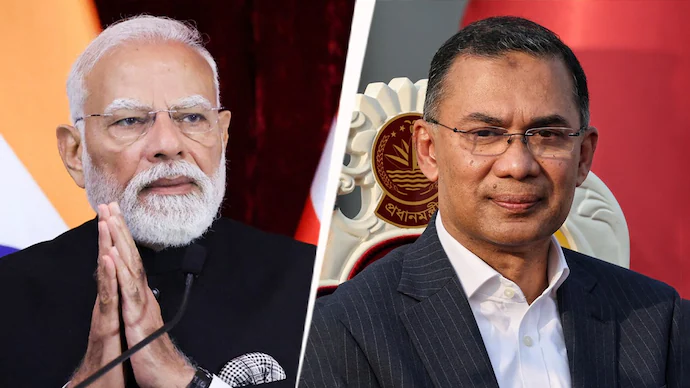

Bangladesh Seeks Guarantee Clause in Renewed Ganges Water Treaty with India

The CSR Journal Magazine

Bangladesh has expressed its intention to seek a “guarantee clause” in the renegotiation of the Ganges Water Treaty with India, aiming to protect its water rights. With the current treaty, established in 1996, due to expire in December, this move has been described as essential for ensuring reliable water flow during dry seasons. Reports indicate that the Bangladesh government is prepared to turn to international forums for support if necessary.

The urgency for a new agreement has been underscored by Water Resources Minister Shahiduddin Chowdhury Anee, who reiterated Dhaka’s commitment to renegotiating the treaty. He is optimistic that Prime Minister Tarique Rahman will advocate strongly for Bangladesh at the upcoming United Nations session next month. Anee made these statements at a recent seminar titled “Ganges Water Treaty: Issues for Renegotiation,” which was organised by the Bangladesh Institute of Law and International Affairs.

Anee emphasised the necessity of establishing a treaty, stating that without one, the nation lacks a viable pathway forward. He highlighted the importance of including a right-to-information provision in future agreements and restoring a guarantee clause that ensured minimal water flow in the 1977 treaty but was omitted in the 1996 version. The minister’s comments underscore Bangladesh’s view that a new treaty is crucial for upholding its water rights.

Concerns Over Current Treaty Provisions

Bangladesh has raised concerns that the existing agreement does not adequately ensure sufficient water during peak dry seasons. According to research by the IMPRI think tank, the formula used for water allocation is based on outdated hydrological data, leading to increased uncertainty regarding dry-season flows. Additionally, Bangladesh has pointed out that the environmental components of the treaty are insufficient and has called for broader considerations regarding upstream water withdrawals, river health, salinity, and ecological flow.

Another significant issue in the bilateral water-sharing relationship is the Farakka Barrage, constructed by India in West Bengal. This structure diverts a portion of the Ganges’ flow into the Hooghly river system and has been a point of contention for Bangladesh due to perceived reductions in dry-season water availability downstream. Anee has previously described the barrage as a “death trap” for the people of Bangladesh, citing the aggravation of relations caused by India’s construction of additional barrages and embankments along the Ganges.

India has characterised the Farakka Barrage as a diversion structure rather than a dam, claiming it channels approximately 40,000 cusecs of Ganga water into the Farakka canal while allowing the remainder to flow downstream. The Ministry of External Affairs has indicated that water-flow data is shared regularly with Bangladesh as stipulated by an established protocol through the Joint Rivers Commission.

Urgent Call from India’s Parliamentary Committee for Negotiations

In July, India’s parliamentary standing committee on external affairs recommended that discussions regarding the renewal of the Ganges Water Treaty commence “without further delay,” citing approaching deadlines. The committee suggested that negotiations should take into account contemporary hydrological data, climate forecasts, and concerns raised by the states of West Bengal and Bihar.

Additionally, the Indian government informed Parliament in February that discussions with Bangladesh about renewing the treaty had not yet started, although it acknowledged stakeholder inputs, including perspectives from West Bengal, in shaping its stance. Anee’s statements followed earlier comments where he expressed the desire for amicable relations with India while highlighting the importance of meeting Bangladesh’s water-sharing interests, especially in relation to the prolonged negotiations over the Teesta river agreement.

As the December deadline approaches for the current Ganges treaty, Bangladesh continues to press for a new agreement that contains stronger safeguards to ensure equitable water sharing between the two nations.

Long or Short, get news the way you like. No ads. No redirections. Download Newspin and Stay Alert, The CSR Journal Mobile app, for fast, crisp, clean updates!

App Store –  https://apps.apple.com/in/app/newspin/id6746449540 

Google Play Store – https://play.google.com/store/apps/details?id=com.inventifweb.newspin&pcampaignid=web_share

Latest News

Popular Videos