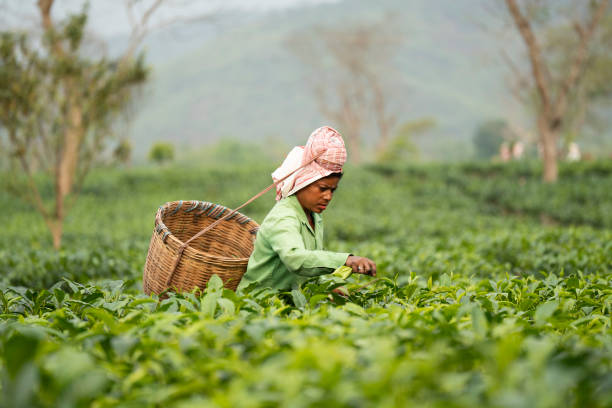
Bokakhat, India. 20 April 2024. A woman tea plucker plucking tea leaves at a tea estate, in Bokakhat, Assam, India. The tea industry in Assam is a significant and integral part of the global tea production and a major player in the economy of India. Assam, located in the northeastern part of India, is one of the world's largest tea-producing regions, known especially for its Assam tea, a black tea known for its body, briskness, malty flavor, and strong, bright color.
The Tea Association of India has reported alarming declines in auction prices within the North Indian tea sector, exacerbated by recent natural calamities including flash floods, extreme heat, and severe pest infestations. In an official statement released on Friday, Shailja Mehta, President of the Tea Association of India, outlined the dire situation facing Assam and West Bengal’s tea industries, where falling auction prices over the past month have raised significant concerns regarding the sector’s sustainability.
Auction Price Analysis Highlights Severity of Crisis
Mehta described the current state of the industry as a “grim reality,” citing a detailed analysis of sales for the financial year 2026-27 that indicates a sharp downturn in tea auction prices. The auction centres in Kolkata, Guwahati, and Siliguri—three critical locations for North India’s tea trade—have experienced considerable price drops from July to mid-August (Sales 27 to 34). Auction averages have decreased significantly, with reductions ranging from Rs. 19 to Rs. 53.
In Kolkata, for instance, the average price for CTC (Crush, Tear, Curl) tea has fallen from Rs. 291.27 during Sale 26 to Rs. 238.77 in Sale 34, marking a decline of Rs. 53 or approximately 17% in less than two months. Similarly, in Guwahati, the average sale price decreased from Rs. 264.89 to Rs. 221.57, a drop of about 15%. Siliguri also recorded an approximate 8% decline, with prices slipping from Rs. 201.80 in Sale 27 to Rs. 182.30 in Sale 34.
Causes of Price Decline Examined
According to the Tea Association of India, the current challenges cannot solely be attributed to an oversupply in the market. While figures released by the Tea Board of India indicate a slight increase in production of approximately 16 million kilograms (Mkgs) or 5% compared to the previous year, production rates have been disrupted by severe flooding in Assam, along with excessive heat and pest problems affecting other tea-growing areas in North India.
Member estates of the Tea Association have reported an estimated 8% drop in crop yield for July 2026, with a similar decrease expected in August. This trend could result in an overall reduction of around 8 Mkgs in North India by the end of the month compared to last year.
Future Projections Unfavourable for Tea Industry
Looking ahead, further declines in crop yield are anticipated, particularly in Assam, where inundated tea bushes from recent floods will take time to recover. The outlook for the tea industry is further compounded by a stagnation in exports due to ongoing geopolitical tensions. Official figures from the Tea Board indicate that while the industry reached a record high of 285.53 Mkgs in exports in 2025, it now lags behind by approximately 23 Mkgs or about 18% compared to the same timeframe last year.
With conditions largely beyond the control of industry stakeholders, the tea sectors in Assam and West Bengal are facing a challenging future. The persistent decline in auction prices, alongside rising costs for essential inputs such as wages and bonuses, has created a particularly bleak scenario for the industry moving forward.
Long or Short, get news the way you like. No ads. No redirections. Download Newspin and Stay Alert, The CSR Journal Mobile app, for fast, crisp, clean updates!
Prime Minister Narendra Modi's recent visit to the Manohari Tea Estate in Assam's Dibrugarh has garnered significant attention, particularly through various photos and videos...