


Artemis-2 Astronauts Begin Moonwalk Training After Historic Mission
The CSR Journal Magazine

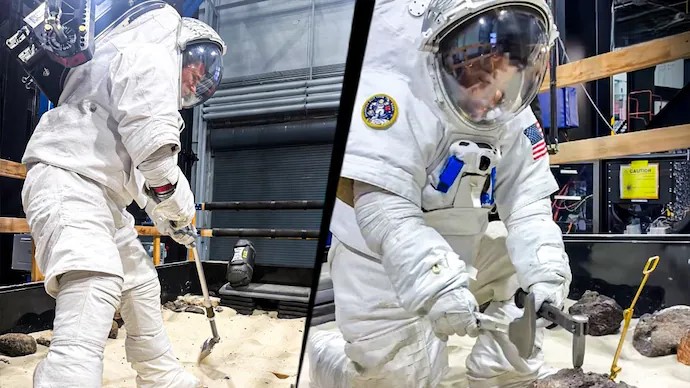
The Artemis-2 astronauts have resumed training shortly after their remarkable journey around the Moon. Canadian astronaut Jeremy Hansen shared a photograph on the social media platform X, showing the crew outfitted in full spacesuits engaged in intensive training sessions. This preparation aims to equip them with the skills necessary for efficient movement and tool usage during future lunar landings.

The mission concluded on April 11, 2026, after the crew, consisting of NASA astronauts Reid Wiseman, Victor Glover, Christina Koch, and Jeremy Hansen, returned to Earth, splashing down in the Pacific Ocean after a ten-day voyage. This mission represented the first time since the Apollo era ended in 1972 that humans travelled farther from Earth.

During their mission, the astronauts successfully tested NASA’s Orion spacecraft, which made a round trip around the Moon before safely returning to Earth. Such operations are vital for ensuring the spacecraft’s suitability for human spaceflight.

Importance of Immediate Training

Following their return, training immediately commenced, which is seen as a prudent step for the astronauts as their bodies are still acclimating to Earth’s gravity. They experience imbalances and disorientation akin to what they might face on the Moon, where gravity is only one-sixth as strong as it is on Earth.

This unique state enables the astronauts to gain valuable insights into operating in a low-gravity environment. They participate in demanding drills focused on walking, bending, and utilising tools on the lunar surface, allowing them to refine their techniques while the experiences from their mission are still fresh in their minds.

The training sessions are conducted in specialised facilities that simulate the lunar environment, featuring sandy and rocky surfaces resembling the Moon’s regolith. Technicians closely observe the astronauts as they manoeuvre in their bulky suits, aiming to maximise efficiency and conservation of energy for future missions.

Preparing for Future Lunar Missions

Although Artemis-2 was primarily a test flight without a lunar landing, it successfully achieved its objectives. The mission confirmed that both the Orion spacecraft and the Space Launch System (SLS) rocket could safely transport astronauts on a lunar expedition.

The upcoming Artemis-3 mission is poised to achieve a lunar landing for the first time in over 50 years, with plans to include the first woman and the first person of colour to walk on the lunar surface. This inclusion signifies a significant milestone in space exploration and diversity.

Nasa, along with its international collaborators, is dedicated to ensuring the success of forthcoming lunar missions. The training sessions are pivotal, as they help transform the lessons learned from Artemis-2 into actionable improvements for future crews.

The photograph posted by Hansen highlights the dedication of the astronauts, showing one of them in a white spacesuit diligently utilising a tool in a rocky testing area, with a technician observing nearby. This visual reinforces the commitment required for exploration beyond our planet, demonstrating how, following a significant space voyage, preparations for the next monumental leap continue unabated.

Long or Short, get news the way you like. No ads. No redirections. Download Newspin and Stay Alert, The CSR Journal Mobile app, for fast, crisp, clean updates!

App Store –  https://apps.apple.com/in/app/newspin/id6746449540 

Google Play Store – https://play.google.com/store/apps/details?id=com.inventifweb.newspin&pcampaignid=web_share

Latest News

Popular Videos
