


app-store-logo
play-store-logo
February 25, 2026

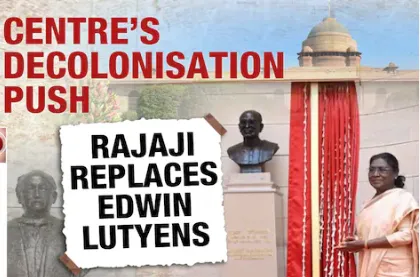
Rashtrapati Bhavan Replaces Bust of Lutyens with C. Rajagopalachari
The CSR Journal Magazine

Rashtrapati Bhavan, the official residence of the President of India, has undergone a notable change by replacing the bust of British architect Edwin Lutyens with that of C. Rajagopalachari. This decision marks a significant shift in the commemorative landscape of the prestigious site, signaling a focus on Indian leaders and their contributions to the nation.

C. Rajagopalachari’s Legacy

C. Rajagopalachari, also known as Rajaji, holds a revered place in Indian history, having served as the last Governor-General of India from 1948 to 1950. His contributions to India’s freedom struggle and governance are widely recognized. Rajagopalachari was not only a prominent political leader but also a notable thinker and writer, known for his views on various socio-political issues.

Context of the Bust Replacement

The bust of Lutyens, credited with designing New Delhi, has been a symbol of British colonial architecture in India. However, its removal reflects a growing trend of reassessing colonial legacies and prioritizing figures from India’s own history, particularly those who played pivotal roles in the independence movement and nation-building post-independence.

Government’s Stance on Historical Commemorations

The Indian government has expressed a commitment to promote individuals who have significantly impacted the country’s history. This aligns with a broader initiative to highlight the contributions of local heroes and freedom fighters rather than celebrating colonial figures. The shift is part of a larger narrative encouraging the recognition of India’s own historical personalities.

Public Reaction

The decision to replace the bust has generated a varied response from the public. Many people have welcomed the change, perceiving it as a step towards acknowledging India’s indigenous heritage. Others have raised questions about the implications of such decisions on historical memory and national identity. The discussions reflect a lively engagement among citizens about how history is remembered and represented.

Cultural Significance of Bust Replacements

Replacing statues and busts has become a worldwide phenomenon where societies reflect on their histories and values. In India, this trend resonates with ongoing dialogues about colonial legacies, representation, and cultural heritage. The choice of C. Rajagopalachari as a replacement not only signifies a shift in focus but also emphasizes an inclusive narrative acknowledging diverse contributions to the nation’s development.

Looking Ahead

The installation of Rajagopalachari’s bust at Rashtrapati Bhavan opens up discussions on possible future commemorations of other significant figures in India’s socio-political landscape. As the nation continues to navigate its historical narrative, it remains essential for such actions to consider the complexities of India’s diverse past while fostering a collective understanding of its identity today.

Long or Short, get news the way you like. No ads. No redirections. Download Newspin and Stay Alert, The CSR Journal Mobile app, for fast, crisp, clean updates!

App Store –  https://apps.apple.com/in/app/newspin/id6746449540 

Google Play Store – https://play.google.com/store/apps/details?id=com.inventifweb.newspin&pcampaignid=web_share

Latest News

Popular Videos
