


Makkah Pact Set to Be Activated as Pakistan, Turkey, and Saudi Arabia Discuss Response to Houthi Attacks

The CSR Journal Magazine

Pakistan, Turkey, and Saudi Arabia are reportedly engaged in discussions regarding a unified military response to the recent surge in Houthi attacks. A prominent security source from Rawalpindi confirmed on Wednesday that Pakistan stands ready to activate the Makkah defence pact if hostilities against Saudi Arabia persist. The dialogue is being led by Pakistan’s Chief of Army Staff, Field Marshal Asim Munir, who has initiated conversations with officials in both Riyadh and Ankara to formulate a coordinated strategy.

According to the source, the high-ranking military officials from the three nations are contemplating the specifics of an appropriate response, assessing both timing and tactics. The discussions highlight Pakistan’s commitment to uphold the joint defence agreement, asserting its willingness to support Saudi Arabia in the current situation.

Details of the Makkah Pact

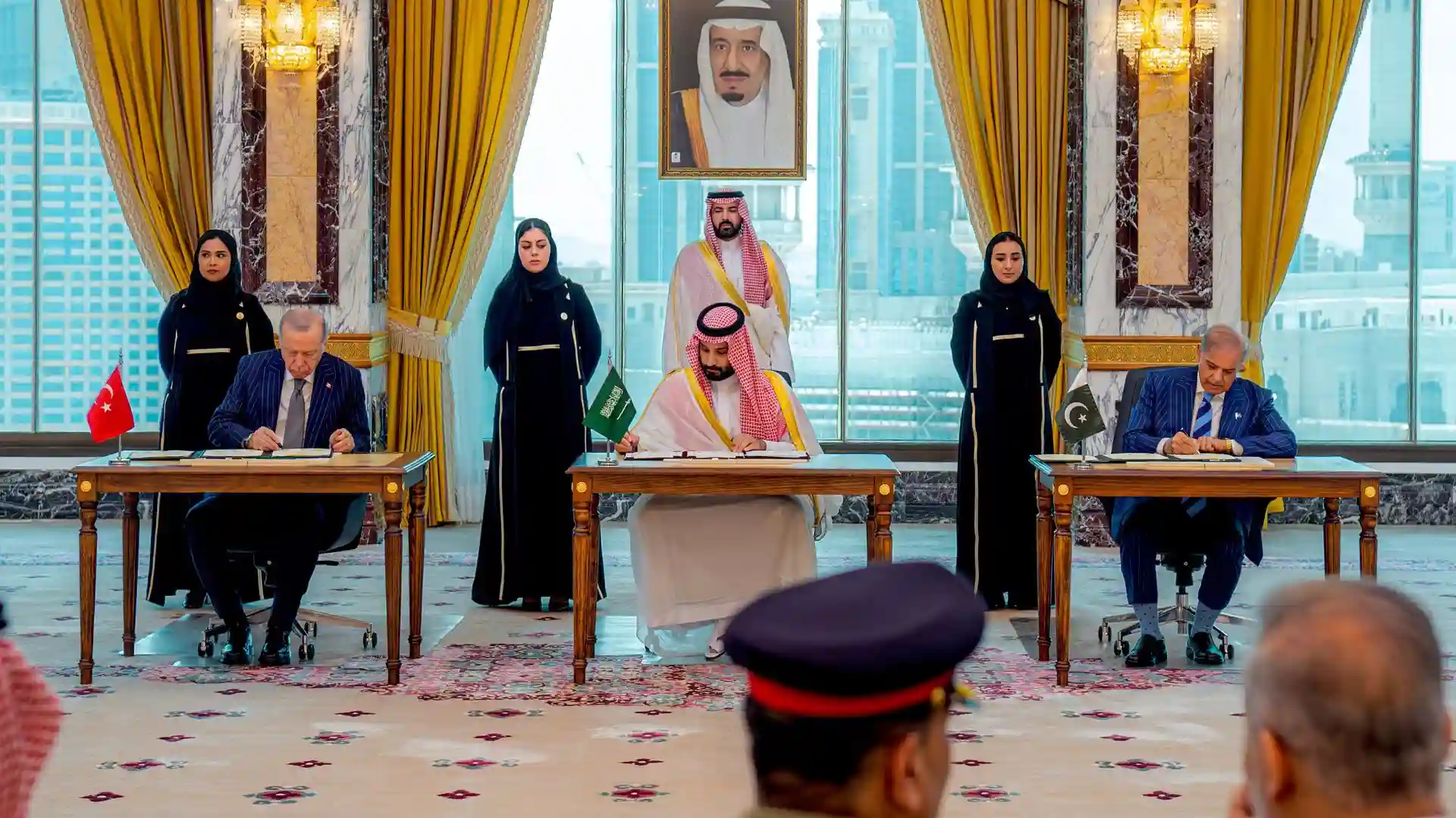
The Makkah Pact, signed on August 7, establishes a collective security framework among Saudi Arabia, Turkey, and Pakistan. Under this agreement, an armed assault on any one of the signatory nations is regarded as an aggression against all three states involved. Sources indicate that the recent escalation of Houthi military actions could prompt the activation of this agreement.

Reportedly, Pakistan’s military assets, including air force units and infantry, have been placed on standby within Saudi Arabia. Furthermore, naval forces have been repositioned to the Red Sea in preparation for potential deployments as the situation develops. Ongoing discussions focus on broadening military strategies and forthcoming meetings among senior military officials are anticipated to refine these plans.

The Makkah Pact represents a pivotal alignment of military cooperation among these nations, aiming to bolster regional stability in the face of external threats. The potential activation of this agreement is seen as a critical step in addressing the ongoing conflict driven by Houthi forces in Yemen.

Escalation of Houthi Attacks

The discussions on military coordination unfold amidst an alarming increase in hostilities between Iranian-aligned Houthi forces and pro-Saudi elements in Yemen. Recently, Houthi militia conducted significant strikes against an airbase in Khamis Mushait, alongside assaults on oil infrastructure in adjacent Saudi cities, resulting in injuries to 73 individuals. This series of attacks marks one of the most aggressive offensives directed at the Kingdom to date.

Following these strikes, Houthi military spokesperson Yahya Saree declared on Wednesday that Saudi forces had executed 54 airstrikes across various regions in Yemen within a mere 12 hours. Saree emphasised that these retaliatory actions would not be overlooked, suggesting further conflict escalation could ensue.

This latest round of violence is situated against a backdrop of broader regional instability, exacerbated by earlier aggressive actions involving US-Israeli operations targeting Iran internationally. The potential ramifications of this conflict extend beyond immediate military confrontations, raising concerns about global energy supply chains and regional security.

Long or Short, get news the way you like. No ads. No redirections. Download Newspin and Stay Alert, The CSR Journal Mobile app, for fast, crisp, clean updates!

App Store –  https://apps.apple.com/in/app/newspin/id6746449540 

Google Play Store – https://play.google.com/store/apps/details?id=com.inventifweb.newspin&pcampaignid=web_share

Latest News

Popular Videos