


Indian Frog With a Galaxy: Rare Amphibian Spotted in Western Ghats
The CSR Journal Magazine

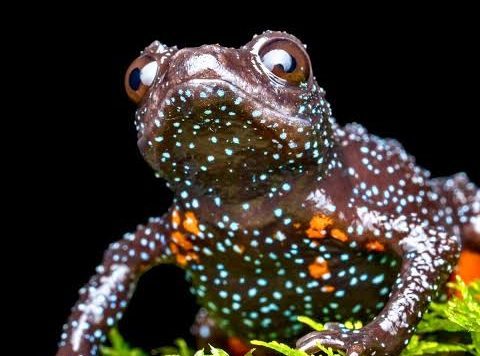
The newly rediscovered Galaxy Frog, known scientifically as Melanobatrachus indicus, has captured attention due to its unique appearance, which resembles a galaxy painted across its back. This remarkable amphibian is primarily located within the wet evergreen forests of the southern Western Ghats. Recent images shared by Supriya Sahu, Additional Chief Secretary of the Environment, Climate Change and Forests Department of Tamil Nadu, have reignited interest in this species. Its dark body is adorned with tiny bluish-white spots, reminiscent of stars, while flashes of scarlet-orange can be observed underneath.

This species is notably small, often measuring only a few centimetres in length. Its elusive nature means it typically spends much of its life concealed beneath fallen logs and forest litter. Researchers have reported that extensive studies may pass without a single sighting of this remarkable frog.

Habitat and Historical Background

The Galaxy Frog is endemic to the southern regions of the Western Ghats, with confirmed sightings along areas in Kerala and Tamil Nadu. It inhabits wet evergreen and other moist forest ecosystems, generally thriving at altitudes of approximately 1,000 to 1,500 metres. The species was first documented in 1878 in the Anamalai Hills of Tamil Nadu and was rediscovered in 1997 after a notable absence in research reports. Recent surveys have contributed further records from various sites across the southern Western Ghats, yet it continues to be one of India’s most infrequently observed frog species.

According to the International Union for Conservation of Nature (IUCN), this amphibian is classified as “Vulnerable”. Additionally, the Zoological Society of London’s EDGE programme has identified it as a high-priority species, categorising it as both Evolutionarily Distinct and Globally Endangered.

Despite the recent interest in the Galaxy Frog, much of its behaviour remains shrouded in mystery due to its infrequent presence in the wild. The anatomical structure of the species is also unusual, lacking a visible tympanum, which is the external eardrum, and males do not possess a vocal sac.

Conservation Concerns for the Galaxy Frog

The Galaxy Frog’s specific habitat requirements render it especially sensitive to environmental disturbances. Researchers have found this species in microhabitats created by rotting logs and various forms of ground cover. It appears that even minor disruptions can jeopardise the delicate conditions it relies on to survive.

The amphibian’s vibrant orange markings, usually hidden, serve as a part of its defensive strategy, becoming visible when the frog is under threat. The striking colours could potentially startle predators, enhancing its chances of survival in its natural habitat.

Overall, while the Galaxy Frog presents a captivating image, it is also emblematic of a species facing significant vulnerabilities. Its existence underscores the critical need for biodiversity preservation in the Western Ghats, where the protection of even the smallest ecosystems can have broader implications for conservation efforts.

Long or Short, get news the way you like. No ads. No redirections. Download Newspin and Stay Alert, The CSR Journal Mobile app, for fast, crisp, clean updates!

App Store –  https://apps.apple.com/in/app/newspin/id6746449540 

Google Play Store – https://play.google.com/store/apps/details?id=com.inventifweb.newspin&pcampaignid=web_share

Latest News

Popular Videos
