


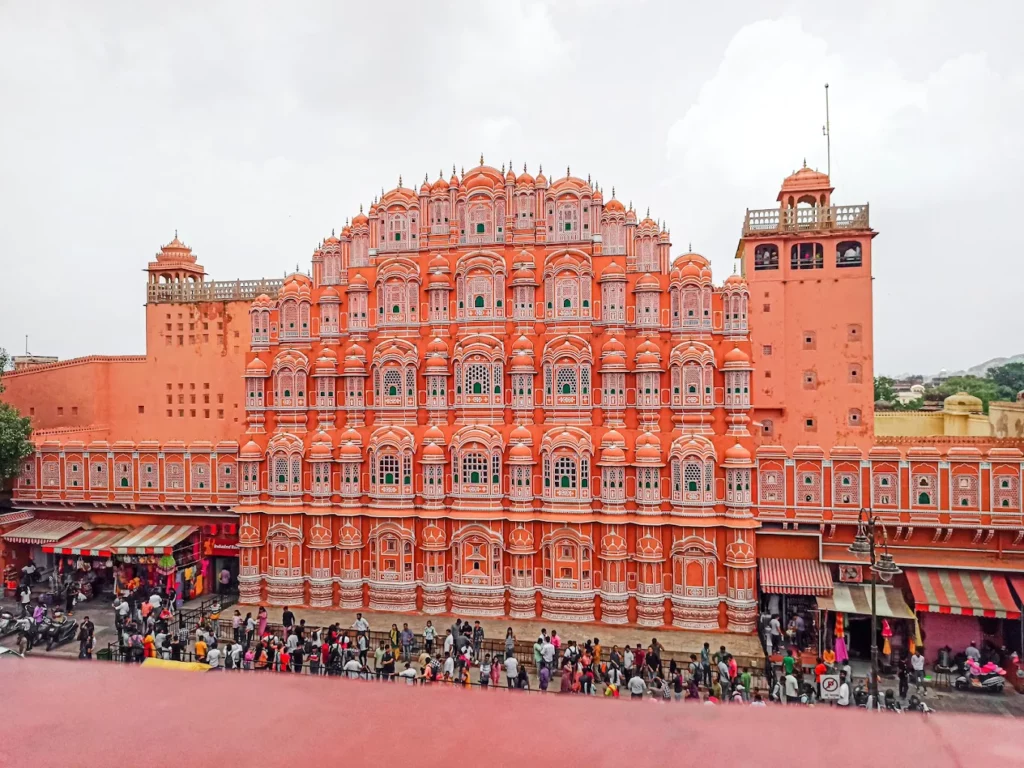

Hawa Mahal: Jaipur’s Iconic Palace Featuring 953 Intricate Jharokhas

The CSR Journal Magazine

Hawa Mahal, also known as the Palace of the Winds, is a significant architectural landmark located in Jaipur, Rajasthan. Built in 1799 by Maharaja Sawai Pratap Singh, the grandson of Maharaja Sawai Jai Singh, this exquisite structure was designed by Lal Chand Ustad. The palace is situated in the heart of Jaipur and is celebrated as a stunning example of Rajasthani royal heritage.

The name ‘Hawa Mahal’ derives from its remarkable 953 windows, or jharokhas, which are ingeniously integrated into its walls. This design creates a honeycomb effect that facilitates ventilation, keeping the palace cool during the intense heat of Rajasthan’s summers. The architecture is a unique blend of Islamic and Rajput styles, complemented by its striking red and pink sandstone façade, which contributes to Jaipur’s identity as the Pink City.

A notable feature of Hawa Mahal is its pyramidal structure at the top, symbolising the crown of Lord Krishna. This resemblance has led to the palace being affectionately referred to as ‘the crown of Jaipur’, further enhancing its cultural significance.

The Tallest Building Without A Foundation

Hawa Mahal is distinguished as the tallest building in the world without a foundation, standing at five storeys high. This architectural feat is achieved through its curved design, which leans at an angle of 87 degrees. The first floor of the palace, known as Sharad Mandir, features colourful glasswork that is particularly vibrant during autumn celebrations.

The second floor, referred to as Ratan Mandir, adds to the palace’s allure. The upper three storeys are designated as Vichitra Mandir, Prakash Mandir, and Hawa Mandir. Additionally, a museum within the palace showcases Rajasthani miniature art, further enriching the visitor experience.

The palace’s design not only serves aesthetic purposes but also reflects the cultural and social dynamics of the time. The unique grill, known as Aakash Patal Jali, was incorporated to allow royal women to observe the activities in Johari Bazaar without being seen by passersby, highlighting the importance of privacy in royal life.

Historical Significance of Hawa Mahal

The construction of Hawa Mahal was initiated by Maharaja Sawai Pratap Singh as an extension of the royal women’s quarters. The palace was built using local pink sandstone, which later became synonymous with the city itself. In anticipation of Queen Victoria’s husband, Prince Albert, visiting Jaipur, Maharaja Sawai Pratap Singh ordered the entire city to be painted in a romantic dusky pink hue as a welcoming gesture.

This decision led to the royal couple affectionately dubbing Jaipur the ‘Pink City’. Following this, a law was enacted to ensure that all buildings in the city maintained the pink colour, preserving Jaipur’s unique identity. This historical context adds depth to Hawa Mahal’s significance as not just an architectural marvel but also a symbol of the city’s heritage.

Through its intricate design and rich history, Hawa Mahal continues to captivate visitors, standing as a testament to the artistic and cultural achievements of Rajasthan. The palace remains a vital part of Jaipur’s identity, drawing tourists and scholars alike to explore its beauty and historical relevance.

Long or Short, get news the way you like. No ads. No redirections. Download Newspin and Stay Alert, The CSR Journal Mobile app, for fast, crisp, clean updates!

App Store – https://apps.apple.com/in/app/newspin/id6746449540

Google Play Store – https://play.google.com/store/apps/details?id=com.inventifweb.newspin&pcampaignid=web_share

Latest News

Popular Videos