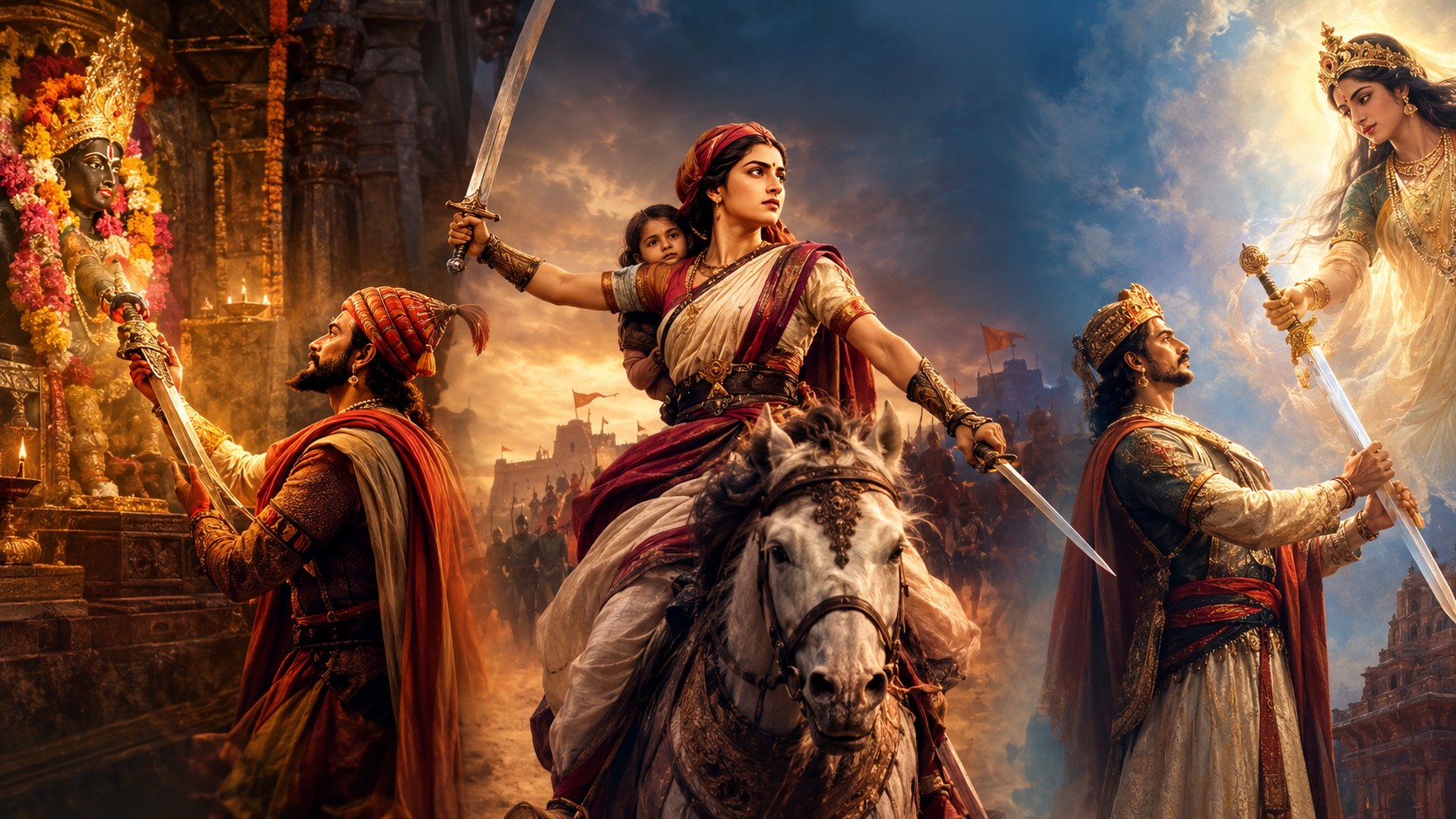
The narrative of Indian warriors is often intertwined with legends and divine influences, exemplified by Shivaji Maharaj and the Bhavani sword. A prominent figure in 17th-century Maharashtra, Shivaji is said to have received a sword from Goddess Tulja Bhavani at her shrine in Tuljapur. This story has persisted through centuries, illustrating the importance of divine connections in warfare.
However, the identity of the so-called Bhavani Talvar remains shrouded in ambiguity. A 2024 study conducted by historian Andrew Halladay explored the controversies surrounding this symbol of power and found that at least three swords have been identified as the Bhavani Talvar since the 19th century. Their origins are often debated among historians, but the legendary significance of Shivaji’s sword has remained steadfast.
Over time, the Bhavani sword evolved into a representation of divine favour, kingship, and Maratha identity. While the essence of its legend—whether the goddess physically bestowed the weapon—remains entrenched in tradition, the narrative has transformed the sword into an emblem of something far greater than mere metal.
Rani Lakshmibai and the Goddess Who Rode With Her
More than a century later, the essence of the warrior-goddess materialised through Rani Lakshmibai of Jhansi during the uprising of 1857–58. Her emergence as a valiant figure has transcended mere historical accounts, evolving into a potent symbol of resistance against colonial rule. In many tales, she is depicted as embodying the goddess Durga or Shakti, astride her horse and ready to defend her kingdom.
The enduring image of Rani Lakshmibai fighting with swords in each hand is enhanced by accounts of her son strapped to her back, reinforcing her status as a legendary figure. These narratives, often embellished in retellings, have contributed to the heroic memory surrounding her. Although Rani Lakshmibai died in June 1858 during her valiant stand, her story continues to resonate as a symbol of unyielding bravery.
In the retelling of her life, Rani Lakshmibai embodies the spirit of Shakti, with her weapon transforming into a powerful symbol of resistance rather than merely a tool for battle. This imagery reinforces her legacy as much more than a historical figure; she has become an icon of empowerment.
Kumara Kampana and the Sword That Came From the Gods
The tradition of divine weapons extends back to the 14th century with Kumara Kampana, the son of Vijayanagara ruler Bukka I. He led military campaigns against the Madurai Sultanate, and his efforts were immortalised in the Sanskrit poem Madhura Vijayam, composed by his wife, Gangadevi. In this epic, a divine woman appears, presenting Kumara Kampana with a remarkable sword crafted by Vishvakarma.
This sword, described as a divine creation, symbolises legitimacy and purpose. Rather than merely detailing a military campaign, the poem bestows upon Kampana a sacred inheritance, turning his weapon into a tool of divinely sanctioned power. The representation of warriors wielding such esteemed weapons has deep historical significance.
Kumara Kampana’s narrative exemplifies how legendary accounts contribute to the construction of a ruler’s image, combining military prowess with divine endorsement. Through these stories, the sword gains a narrative significance that transcends historical events and speaks to deeper cultural connections between leadership, legitimacy, and divine favour.
Long or Short, get news the way you like. No ads. No redirections. Download Newspin and Stay Alert, The CSR Journal Mobile app, for fast, crisp, clean updates!