


Delhi’s Building Collapse Highlights Vulnerability of Structures to Earthquakes
The CSR Journal Magazine

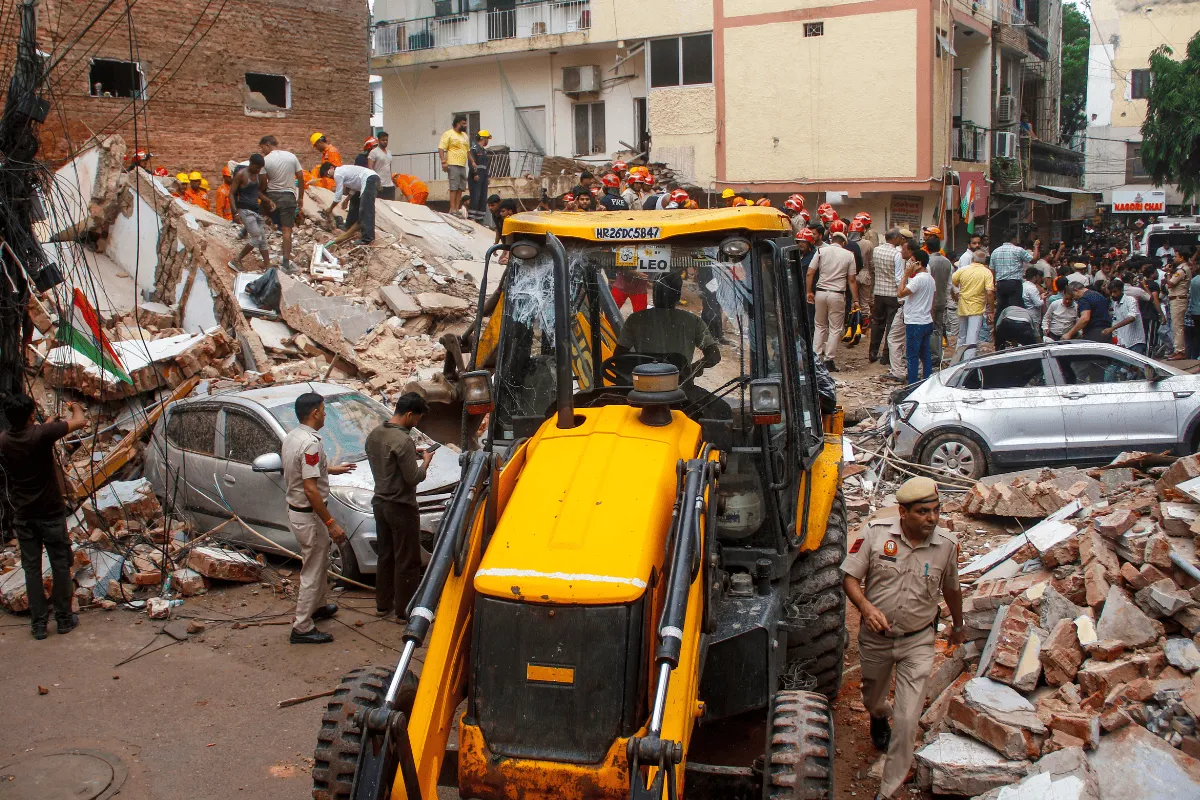
The recent collapse of a five-storey building in Satya Niketan, Delhi, has tragically resulted in the deaths of seven people and left several others trapped under the debris. This incident, which occurred on Sunday afternoon, has raised serious concerns regarding the structural safety of buildings in the capital, particularly in relation to seismic risks. A large rescue operation was initiated, successfully rescuing at least five individuals, while others remained unaccounted for and feared trapped.

Vulnerability in Delhi’s Buildings

A recent study indicates that approximately 38 per cent of the nearly 8.9 million buildings in the Delhi-NCR region may be susceptible to damage in the event of a magnitude 5.0 earthquake. This alarming statistic translates to more than 33 lakh buildings potentially at risk, emphasising the vast scale of earthquake vulnerability within Delhi. The study was conducted by scientists at the National Centre for Seismology and analysed specific factors contributing to this vulnerability.

Delhi is categorised in Seismic Zone IV, which is the second-highest level of earthquake hazard in India. The city not only faces threats from local faults but can also be affected by significant seismic activities originating from the Himalayan region. The complex geological makeup of Delhi and its high population density add to the risks associated with potential earthquakes.

The building that collapsed in Satya Niketan was reportedly used as accommodation for students and had been in existence for around 50 years. Preliminary investigations have raised concerns regarding its age, alleged illegal modifications, and structural alterations. The building was located in a densely populated area, creating anxiety over regulatory oversight and the structural integrity of buildings in rapidly evolving neighbourhoods.

Implications for Building Safety Regulations

In light of the collapse, local authorities are considering the need for structural audits and the implementation of new safety protocols for public buildings and accommodation facilities. The necessity for these measures becomes increasingly apparent when one considers the complex nature of Delhi’s infrastructure and building practices. The potential for structural failures could lead to extensive urban disaster scenarios, especially in high-density areas.

The study published in the journal Environmental Earth Sciences highlights that the earthquake risk in Delhi is exacerbated by factors such as outdated buildings, high population density, and local soil conditions which can intensify seismic activity. Notably, while the report indicates a significant number of buildings are at risk, it does not imply that all of them would necessarily collapse during an earthquake event.

Researchers stress that the local characteristics of the quake, along with the design and construction quality of individual buildings, are crucial in determining potential damage. Proactive measures to improve building safety and strengthen structural resilience become paramount in mitigating future risks. The challenge for the city lies not only in predicting seismic events but also in adequately preparing its infrastructure.”

Challenges in Earthquake Preparedness

Delhi faces multiple challenges in ensuring the safety and preparedness of its buildings for earthquakes. The city’s crowded colonies are populated with ageing structures on narrow roads, many of which may not have undergone regulated modifications over the years. In the event of a major earthquake, such conditions could further complicate rescue efforts.

Furthermore, research has demonstrated that local geological conditions significantly influence how seismic waves interact with different areas of Delhi. Some studies suggest that under certain conditions, the subsurface can enhance earthquake shaking, which poses unique risks to lower-rise buildings. The collapse in Satya Niketan serves as a stark reminder of how structural weaknesses can have catastrophic consequences, even in the absence of a triggering earthquake.

The ongoing situation in Delhi underlines the importance of evaluating not just the frequency of earthquakes but also the readiness of the city’s buildings to endure such events. As the capital grapples with these challenges, immediate action for reinforcement and safety inspections becomes essential to protect lives and property in the foreseeable future.

Long or Short, get news the way you like. No ads. No redirections. Download Newspin and Stay Alert, The CSR Journal Mobile app, for fast, crisp, clean updates!

App Store –  https://apps.apple.com/in/app/newspin/id6746449540 

Google Play Store – https://play.google.com/store/apps/details?id=com.inventifweb.newspin&pcampaignid=web_share

Latest News

Popular Videos
