


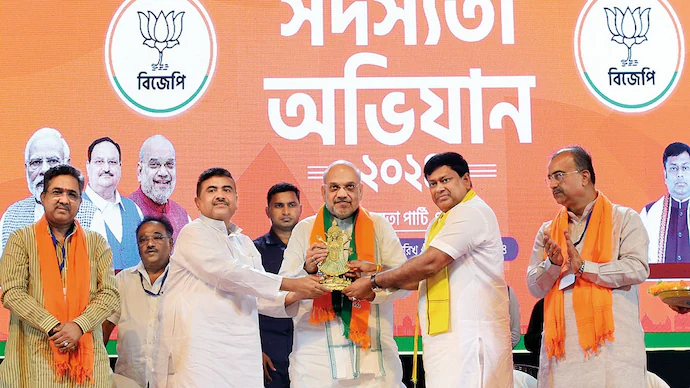

In Kolkata, the Bharatiya Janata Party (BJP) has escalated its preparations for the forthcoming West Bengal Assembly elections through the launch of its manifesto outreach campaign, “Bikosito Paschim Banga Sankalp Patra, Paramarsha Sangraha Abhiyan,” on February 7.
This initiative aims to collect the aspirations and suggestions of citizens across various sectors including industrialists, educators, businesspeople, teachers, doctors, students, housewives, farmers, and the Bengali diaspora. The campaign is set to conclude by the end of February, with party members actively visiting households and local booths to gather feedback and address community concerns.
Engagement Strategies
As part of the campaign, the BJP adheres to its philosophy of treating community members as part of a family, allowing them to voice their grievances and expectations. The initiative is designed to create a comprehensive vision for the future, focusing on diverse needs ranging from agricultural advancements to youth start-up initiatives.
The party frames this outreach as a social contract intended to replace what they term “exploitative governance” with a more transparent administration that prioritizes job creation and local development. Citizens are encouraged to submit suggestions through various channels, including a dedicated phone number, email, QR codes, designated hashtags, and community aspiration boxes located in each district.
Community Participation and Feedback
Thus far, the campaign has reportedly garnered over 250,000 suggestions, with expectations to exceed 500,000 by month’s end. Positive engagement has been highlighted by the BJP, which is also conducting online consultations with members of the Bengali diaspora, as well as scholars and scientists. Public consultation efforts encompass town-hall meetings in Kolkata, alongside additional meetings targeting farmers and fishermen. BJP leader Anirban Ganguly stated that these outreach efforts aim to ensure a diverse range of voices are included in the manifesto formulation process.
Message from State Leadership
Samik Bhattacharya, the BJP’s West Bengal state president, reached out to citizens through written communications, emphasizing the importance of community input. He underlined that the future of West Bengal is contingent on the contributions and thoughts of its residents. Describing Bengal as a historical hub of civilization and culture, he posited that the state’s strength lies in the experiences and aspirations of its populace.
Manifesto Development Process
In outlining the process for manifesto development, Bhattacharya insisted that it should encompass more than just political promises; it should reflect the everyday hopes and challenges faced by West Bengalis. He called for well-considered suggestions on a variety of pertinent topics, including education, employment, healthcare, women’s empowerment, youth development, agriculture, and infrastructure. He reiterated that this initiative is open to everyone, independent of political affiliations, asserting that development in the state is a collective responsibility.
Aiming for Inclusivity
Bhattacharya concluded by advocating for an inclusive approach to the manifesto, stressing that constructive insights from citizens will make it not only people-centric but also development-oriented, rooted in the rich heritage of Bengal. He called for a collaborative effort to create a West Bengal characterized by security, opportunity, dignity, and prosperity for all its citizens.