


Bangladesh Protests India’s Rs 0.01 Charge While Considering Higher Costs for Chinese Power
The CSR Journal Magazine

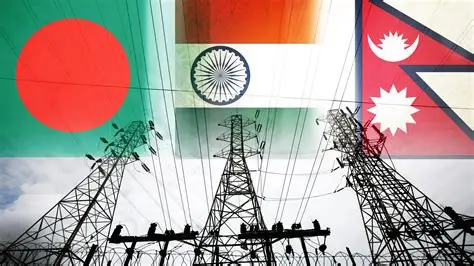
Bangladesh’s electricity strategy currently exhibits notable contradictions. Following objections to India’s proposed Rs 0.01 per-unit charge for cross-border electricity transactions, which India later revised to Rs 0.005, the government in Dhaka is now poised to pay a Chinese firm Tk 25 per unit for electricity generated from waste. This juxtaposition arises amidst significant power shortages, disruptions in gas supply, and ongoing protests related to electricity outages.

The proposed waste-to-energy project in Dhaka, with a modest capacity of 42 Mega Watts (MW), aims primarily to address the city’s increasing waste management challenges. Nonetheless, the 127 per cent markup compared to the Tk 11 per unit paid for Indian electricity during Financial Year 2025-26 highlights the complexities of Bangladesh’s energy policy during a critical time.

While the comparisons between the charges invoke scrutiny, it is essential to consider that the project’s electricity generation and its environmental benefits differ significantly from traditional power supply agreements. Dhaka seeks to turn a growing urban waste problem into a source of energy, amidst a backdrop of severe energy demand.

Understanding the Charges for Electricity Supply

The disparity in pricing between India and China came sharply into focus after Bangladesh expressed concerns regarding India’s proposed Settlement Nodal Agency (SNA) charge for cross-border electricity. On August 24, India communicated an SNA fee of Rs 0.005 per unit after initially proposing a higher rate of Rs 0.01. This fee serves to facilitate the logistical aspects of electricity trade, including scheduling and grid operations, but is not the direct cost of power itself.

This scenario makes it even more pronounced that Dhaka is ready to accept Tk 25 for electricity from the Aminbazar waste-to-energy project. The nature of these fees is different; India’s charge is an operational cost, while Tk 25 is a tariff for generation from waste, reflecting distinct financial considerations in Bangladesh’s energy dealings.

The average cost of imported electricity in Bangladesh significantly rose from Tk 5.82 per unit in FY21 to Tk 11.72 per unit in FY25, affecting the perception of the proposed Aminbazar tariff. Though it exceeds double the average imported rate, analysts suggest that the project serves a wider purpose, contributing to waste management along with energy generation.

Implications of the Waste-to-Energy Project

The electricity to be generated at the Aminbazar site, managed by Dhaka North City Corporation, is anticipated to start production within 18 months, producing 42 MW. Minister Mir Shahe Alam indicated that this initiative does not require significant governmental investment and aims to achieve economic benefits beyond just the production of electricity, as it will involve processing waste and generating organic fertiliser.

State Minister Shahe Alam has acknowledged that the price may seem elevated, but he emphasised the project’s broader environmental advantages, viewing it as part of a solution for the increasing waste accumulation in Dhaka. The project is positioned as a dual initiative that addresses both environmental and energy needs in the region.

As Bangladesh grapples with severe power shortages exacerbated by interruptions in gas supply and the increasing public demand for reliable electricity, the government continues to adapt by implementing strategies for power conservation and contemplating energy imports from India, all while pursuing this costly waste-to-energy initiative.

Long or Short, get news the way you like. No ads. No redirections. Download Newspin and Stay Alert, The CSR Journal Mobile app, for fast, crisp, clean updates!

App Store –  https://apps.apple.com/in/app/newspin/id6746449540 

Google Play Store – https://play.google.com/store/apps/details?id=com.inventifweb.newspin&pcampaignid=web_share

Latest News

Popular Videos
