


Valsad Records Over 900 mm Rainfall, Triggering Severe Flooding in Gujarat
The CSR Journal Magazine

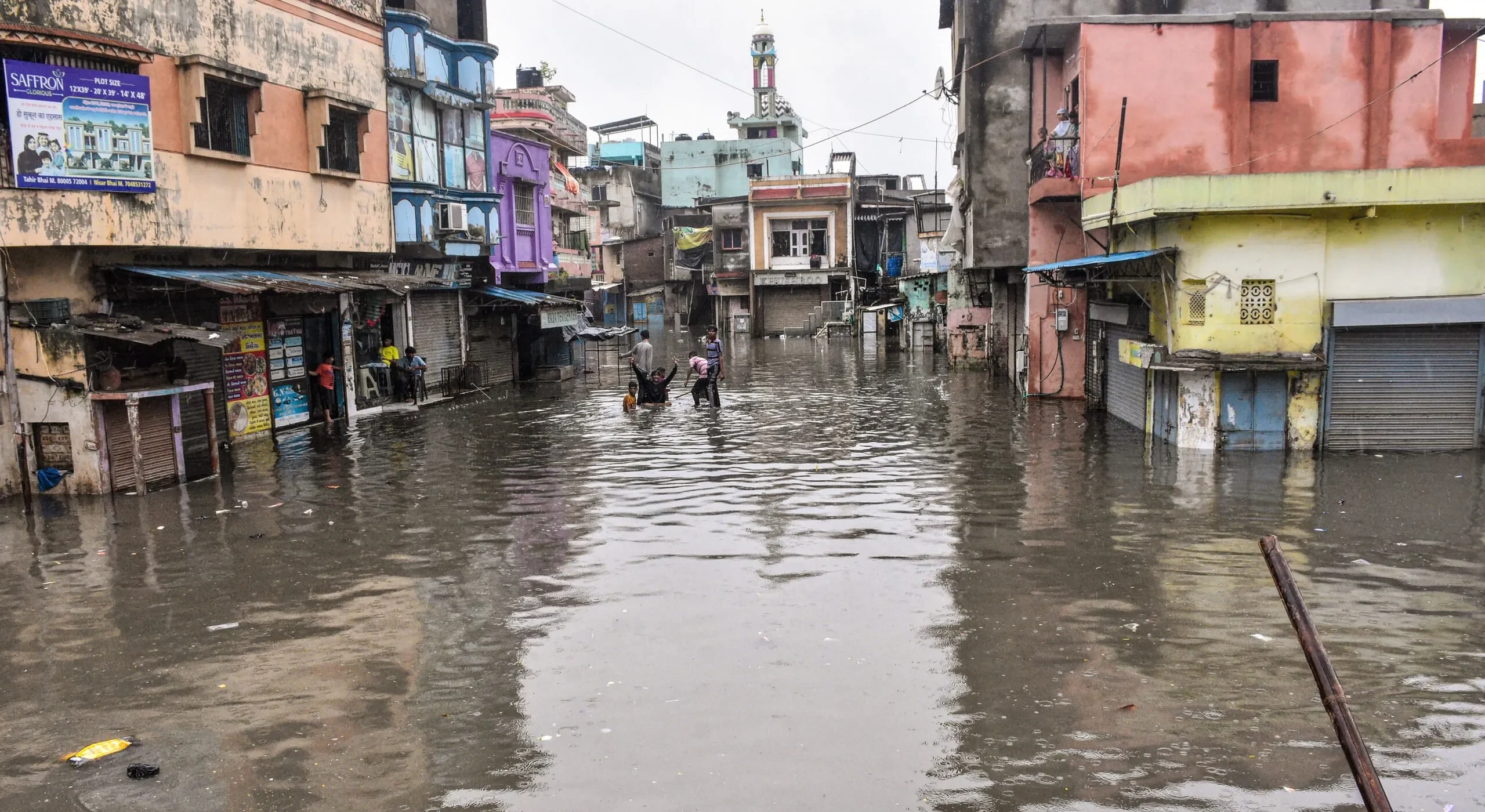
Gujarat has experienced one of the most severe monsoon episodes in recent memory, with certain regions receiving nearly the entirety of Delhi’s annual rainfall within a mere 24 hours. According to the State Emergency Operation Centre (SEOC), Umbergaon in Valsad recorded 906 mm of rainfall from 6 am on July 22 to 6 am on July 23. In contrast, Delhi typically has an annual rainfall ranging from 700 to 800 mm. This means that Umbergaon received around 113 per cent of what Delhi sees in an entire year, all in just one day.

The torrential rain has caused flash floods throughout south Gujarat, impacting both road and rail traffic while inundating residential areas. Authorities have initiated extensive rescue operations in response to the situation, successfully evacuating approximately 1,200 individuals from affected areas to safer locations.

Extensive Rainfall Recorded Across Districts

According to the SEOC, Valsad and its neighbouring areas have witnessed extraordinary rainfall amounts during this period. Following Umbergaon, other regions such as Kaprada recorded 731 mm, Nanapondha received 643 mm, and several other locations like Dharampur and Pardi saw 499 mm and 448 mm, respectively. Various towns in the area experienced significant precipitation, with Vapi measuring 413 mm and Valsad town registering 403 mm within the same 24-hour timeframe.

Additional sites also faced excessive rainfall, including Dolvan in Tapi district with 378 mm and Vaghai in The Dangs at 369 mm. The India Meteorological Department (IMD) classifies rainfall exceeding 204.5 mm within 24 hours as ‘extremely heavy’. Many areas in south Gujarat surpassed this threshold significantly, with some regions receiving over four times the expected amount.

Weather Patterns Affecting the Region

The IMD has attributed the extreme rainfall to an active southwest monsoon, which is bolstered by strong moisture-laden winds from the Arabian Sea combined with favourable weather systems impacting western India. Such patterns can lead to prolonged, intense rain in a single region, overwhelming rivers, streams, and urban drainage systems, thereby resulting in flash floods.

In recent days, the active southwest monsoon has brought widespread rainfall across large sections of India, particularly affecting western, central, and northeastern states. The IMD has provided warnings indicating the possibility of continued heavy rainfall in isolated areas of Gujarat over the forthcoming days, although the most severe conditions are anticipated to gradually subside.

Officials have urged vigilance among residents living in low-lying or flood-prone areas, instructing them to stay alert, avoid waterlogged routes, and adhere to local advisories. With water levels in rivers remaining high and the soil already saturated, even moderate rainfall in some regions may result in further flooding, posing additional hazards for vulnerable communities.

Long or Short, get news the way you like. No ads. No redirections. Download Newspin and Stay Alert, The CSR Journal Mobile app, for fast, crisp, clean updates!

App Store –  https://apps.apple.com/in/app/newspin/id6746449540 

Google Play Store – https://play.google.com/store/apps/details?id=com.inventifweb.newspin&pcampaignid=web_share

Latest News

Popular Videos
