


UNESCO Recognizes Garba as Intangible Cultural Heritage, Traces its Evolution
The CSR Journal Magazine

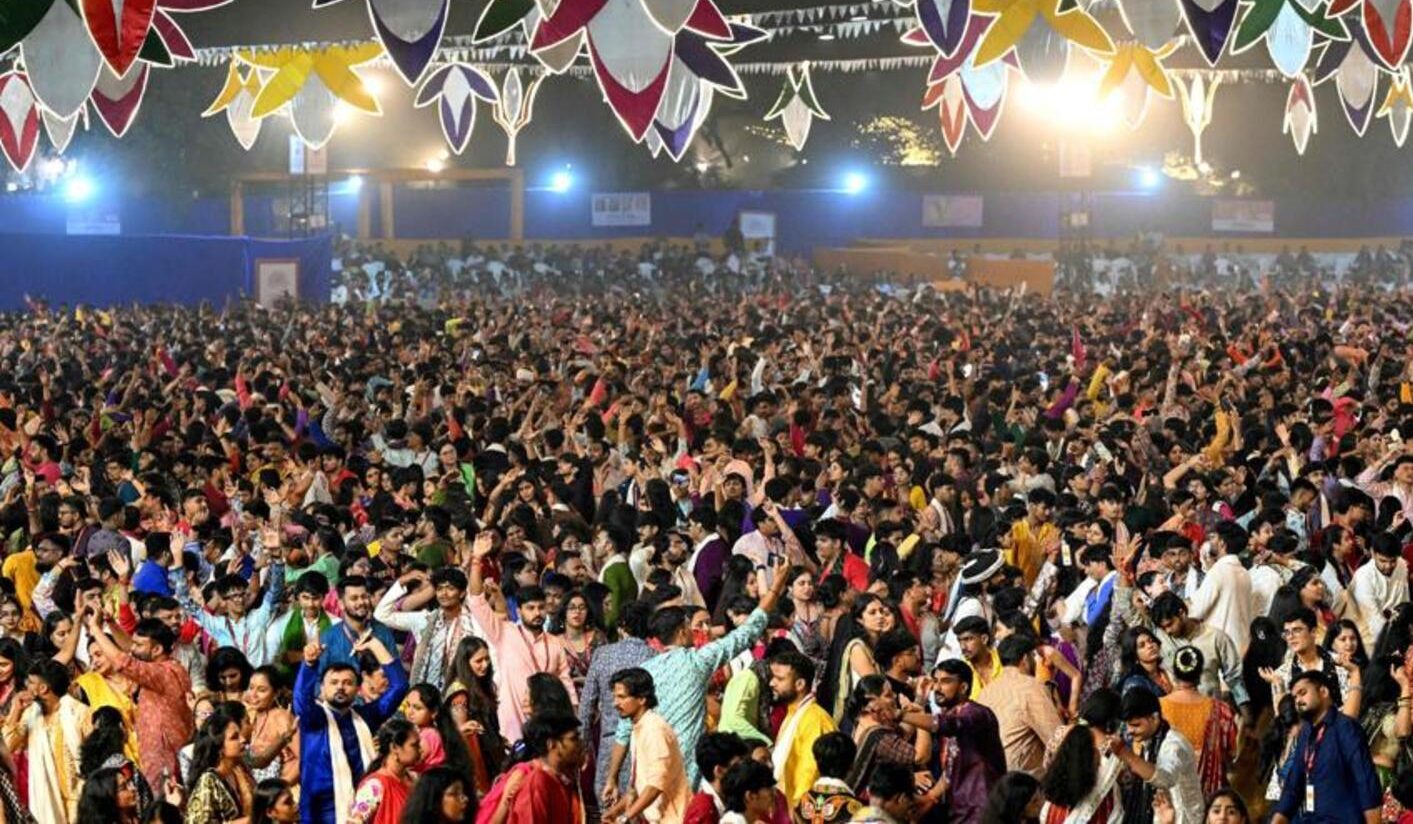
The Garba-Raas consists of two distinct dance forms: Garba, traditionally performed by women, and Dandiya Raas, which involves male participants. These dances have evolved into significant symbols of India’s rich cultural heritage, gaining international recognition. In 2023, UNESCO designated Garba as an Intangible Cultural Heritage, highlighting its importance in global cultural narratives.

As the vibrant celebrations of Navratri conclude and the dance sticks are stored away, it prompts reflection on how this harvest-time dance, originating from the village squares of Gujarat, has expanded to venues as far-reaching as Ahmedabad and New Jersey. The journey of Garba-Raas from local tradition to global stage is noteworthy.

Tracing the Origins of Garba and Dandiya

Determining the precise origins of Garba and Dandiya is complex, as historical references are scattered. Evidence of dance and celebration can be found in ancient rock paintings depicting groups of people dancing in unison to rhythmic beats. Literary sources also mention circular dances, with 11th-century scholar Abhinavagupta noting a dance called Hallīsaka, led by a single individual, akin to the figure of Krishna among shepherdesses.

Further references in texts such as Utpala Desai’s “Raas Traditions of Gujarat” indicate that the Yadavas, who arrived in Gujarat around 1500 BC, significantly influenced local dance traditions. The term ‘Garba’ is derived from the Sanskrit word for womb, while ‘Dandiya’ refers to the wooden sticks used in the dance. Initially, both forms may have roots in hunting rituals from the hunter-gatherer era, evolving into agricultural celebrations over time.

Garba is characterised by women dancing in circles around an earthen pot, symbolising creation and the cyclical nature of life. Kapila Vatsayan, in her work “Traditions of Indian Folk Dance,” notes that the songs associated with Garba are of considerable antiquity, suggesting a tribal origin that later transitioned into agricultural rites.

Evolution of Dandiya Raas

Originally linked to agrarian life, Dandiya Raas has transformed into a performance art celebrated globally, shedding its agricultural associations. This evolution reflects changes in society, as the dance, once an impromptu expression by village men, now attracts participation from both genders in urban and rural settings alike.

The transition from the Yadava dance to the Mishra Raas of the 20th century illustrates a blend of tradition and innovation, with elements such as costumes, music, and choreography adapting to contemporary influences. Today, Raas-Garba represents a shared cultural identity of Gujarat, despite each dance maintaining its unique characteristics.

Various communities have contributed their interpretations to these dances, resulting in distinct styles. Desai notes that differences in body movements, music, and costumes reflect the diverse occupational backgrounds of the performers. For instance, the Kanabi Raas is associated with farmers, while the Padhar Raas, performed by the Padhars, a Scheduled Tribe, is unique in its absence of dandiya and is performed solely by men.

The Padhars reside in 12 villages near Nal Sarovar, a natural lake in Gujarat. Their cultural practices and raas traditions suggest a historical connection to seafaring communities, with their origins tracing back to Sindh. Today, many Padhars work as farm labourers and supplement their income by providing boat rides for tourists at Nal Sarovar, reflecting the community’s adaptation to modern economic realities.

Long or Short, get news the way you like. No ads. No redirections. Download Newspin and Stay Alert, The CSR Journal Mobile app, for fast, crisp, clean updates!

App Store – https://apps.apple.com/in/app/newspin/id6746449540

Google Play Store – https://play.google.com/store/apps/details?id=com.inventifweb.newspin&pcampaignid=web_share

Latest News

Popular Videos
