


Supreme Court Rejects Petition for Hindi as Official Language
The CSR Journal Magazine

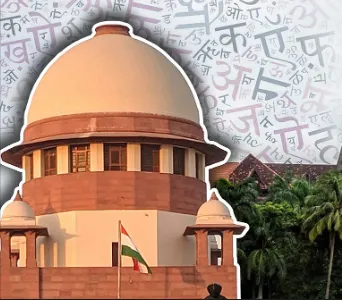
The Supreme Court of India has declined a petition that sought the establishment of a commission to explore the possibility of making Hindi an official language for court proceedings. On September 25, the court noted that any changes regarding the language of judicial processes cannot be enforced through judicial orders.

A bench led by Chief Justice Surya Kant, along with Justices Joymalya Bagchi and V Mohana, emphasised that alterations concerning the language used in the Supreme Court would need to be executed gradually as part of broader institutional reforms.

During the hearing, CJI Surya Kant explained that the court is already implementing measures related to language use incrementally. These include offering brief summaries of its judgments and reports in Hindi, with plans to expand similar initiatives to encompass other regional languages.

Proposals for Institutional Reform

The Chief Justice highlighted the importance of respecting and maintaining the diverse cultural and linguistic fabric of the country. He stated, “We are now giving a brief description of all the reports in Hindi. We will start with other regional languages. We will maintain the culture. We will respect other regional languages also.”

Moreover, he reiterated that changes concerning the language framework must occur through systematic reforms rather than by judicial directives. “These things do not happen through court orders. They happen as part of reforms, slowly and in a phased manner. Such things we are doing,” CJI Kant remarked during the proceedings.

Despite elaborating on the incremental steps being taken, the bench ultimately dismissed the petition, stating that such matters require a more comprehensive approach than immediate judicial intervention.

Legal Framework Surrounding Language Usage

The bench addressed the request for the establishment of a commission, pointing out that this could effectively necessitate a constitutional amendment. Justice Mohana questioned how the court could undertake such an action, underlining the limitations of the judiciary in constitutional matters.

The counsel representing the petition clarified that their immediate request was solely for the formation of a commission. However, the court maintained its position and dismissed the plea, reinforcing the idea that judicial processes must adhere to existing legal frameworks.

According to Article 348(1)(a) of the Indian Constitution, proceedings in the Supreme Court and High Courts are required to be conducted in English, while allowing for provisions related to the utilisation of other languages under specific constitutional guidelines. The Supreme Court’s decision reflects its commitment to gradual reforms rather than abrupt shifts in practices regarding language in judicial settings.

Long or Short, get news the way you like. No ads. No redirections. Download Newspin and Stay Alert, The CSR Journal Mobile app, for fast, crisp, clean updates!

App Store –  https://apps.apple.com/in/app/newspin/id6746449540 

Google Play Store – https://play.google.com/store/apps/details?id=com.inventifweb.newspin&pcampaignid=web_share

Latest News

Popular Videos
