


Supreme Court Balances Religious Sentiments and Public Health in Diwali Crackers Case
The CSR Journal Magazine

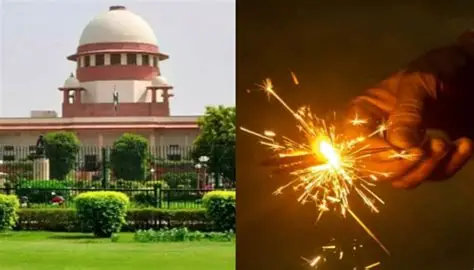
The Supreme Court convened on Monday to address the delicate balance between religious appreciation and public health regarding the use of firecrackers in the Delhi-National Capital Region (NCR) during Diwali celebrations. The bench, consisting of Chief Justice of India (CJI) Surya Kant, Justice Joymalya Bagchi, and Justice V Mohana, expressed a preference for awareness rather than outright prohibition. Instead of enforcing a ban, the court encouraged individuals to adopt safer practices voluntarily.

During the proceedings, the justices reflected on various factors contributing to air pollution, including the burning of firecrackers, agricultural residue, and waste management issues. CJI Kant emphasised that while the court is mindful of religious sentiments, there must be an initiative from the public to prioritise healthful ways of celebrating.

The comments from the bench highlighted a need for a structured response to pollution, encouraging citizens to voluntarily limit their firecracker usage while acknowledging the cultural significance of these celebrations.

Judicial Inquiry into Religious Justifications

During the session, Justice Bagchi raised a pertinent question regarding the religious justifications for bursting firecrackers. This inquiry was prompted by the amicus curiae, who brought to light the health hazards associated with air pollution and the complexities of enforcing any restrictions. Justice Bagchi asked, “What is religious about bursting crackers?” as she sought clarity on the rationale behind such practices amid significant health concerns.

The amicus responded by asserting that the dilemma lies in reconciling public health with religious customs, stating that divine beings would likely disapprove if they were aware of the suffering caused by such celebrations. This reflection pointed to the pressing health risks posed by pollution, particularly for vulnerable populations such as children, the elderly, and those with existing health issues.

Despite recognising the gravity of the situation, the amicus cautioned that imposing restrictions would be fruitless without effective enforcement mechanisms in place. He affirmed that while legal stipulations could sound appealing, actual implementation on the streets remains a challenge.

Supreme Court Advocates for Public Awareness and Practical Solutions

CJI Kant voiced concerns about issuing enforceable restrictions, suggesting that the court needs to ensure any orders are realistic and manageable. He encouraged the public to engage in celebrations that respect pollution considerations, such as limiting firecracker use to designated times, similar to measures taken in the past.

To further this goal, CJI Kant called for enhanced public awareness regarding the detrimental impacts of firecrackers on health and the environment. He proposed restricting the sale of particularly harmful varieties while allowing less polluting alternatives, to promote a more responsible approach to celebrations.

CJI Kant advocated for awareness campaigns to enlighten citizens about which firecrackers are damaging and which are relatively safer. He recommended the promotion of traditional practices such as lighting lamps and using sparklers as preferable options, further urging the dissemination of informative materials to drive home the message of reducing firecracker use.

Discussion on Stubble Burning and Air Quality Management

In addition to the matter of firecrackers, the bench addressed the critical issue of stubble burning, which exacerbates pollution during the season. Justice Bagchi mentioned proactive steps taken by some states to procure crop residues and explore commercial avenues for their use. CJI Kant noted the financial prospects stubble could provide to farmers as it transitions into a marketable resource.

Additional Solicitor General Aishwarya Bhati informed the court about existing policies designed for both the in-situ and ex-situ management of crop residues. She indicated that the Union government would submit a comprehensive affidavit detailing actions taken thus far.

The amicus confirmed that the Centre had been working on diverse strategies and financial incentives to tackle air quality issues. Bhati stated that the forthcoming status report would highlight measures already implemented, ongoing prevention efforts, and future plans to manage air pollution more effectively. The next hearing for this case is scheduled for October 15.

Long or Short, get news the way you like. No ads. No redirections. Download Newspin and Stay Alert, The CSR Journal Mobile app, for fast, crisp, clean updates!

App Store –  https://apps.apple.com/in/app/newspin/id6746449540 

Google Play Store – https://play.google.com/store/apps/details?id=com.inventifweb.newspin&pcampaignid=web_share

Latest News

Popular Videos
