


Singapore Develops Supercomputer Using Human Brain Cells
The CSR Journal Magazine

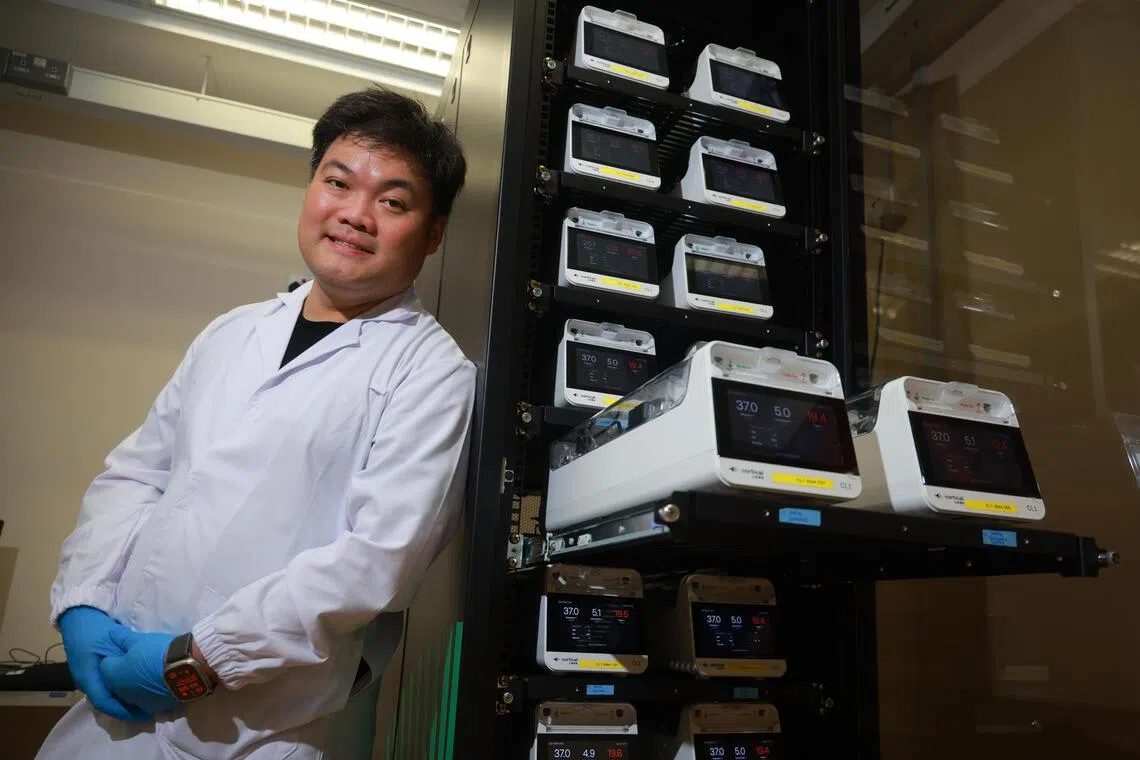
Singapore is advancing in artificial intelligence by developing a supercomputer that integrates living human brain cells. This ambitious project has been initiated by the Yong Loo Lin School of Medicine at the National University of Singapore, in collaboration with data centre provider DayOne and the Australian firm Cortical Labs. The prototype features a biological server rack containing live human neurons, which has been branded by NUS as the world’s first operational biological server rack.

The current configuration includes twenty CL1 units, each housing approximately 800,000 lab-cultivated human neurons, culminating in an estimated total of 16 million neurons across the entire rack. These neurons serve as biological processors, processing information via electrical signals similar to the methods employed by the human brain.

Mechanism of Action

The functionality of the neuron-based system hinges on the integration of human neurons with technology. Cortical Labs cultivates these neurons from human stem cells and positions them onto a silicon platform equipped with minuscule electrodes. These electrodes facilitate the transmission of electrical signals to the neurons, as well as the collection of signals they generate in response.

This unique structure connects with Cortical Labs’ biological intelligence operating system, referred to as biOS. It establishes a feedback loop whereby the computer sends data to the neurons, which then react and communicate their responses back to the computer. This interaction enables the neurons to learn and respond dynamically rather than merely executing pre-determined instructions.

In contrast to conventional computers that leverage silicon chips for data processing through electronic circuits and transistors, the biological computing system employs living neurons to undertake a portion of the processing. The intent is to harness the neurons’ capability to adapt and respond to stimuli, mirroring human cognitive functions.

Challenges and Support Systems

One significant challenge associated with this innovative technology is that the computer components, being living cells, require a sustenance system to remain viable. The CL1 units are equipped with built-in mechanisms designed to maintain the health of the neurons, with a lifespan estimated at up to six months. At the Singapore facility, technicians ensure the cells receive nourishment every three days, supplying them with essential sugar, nutrients, and pH buffers necessary for their survival.

In addition to nutrients, the system also regulates environmental conditions by supplying oxygen, carbon dioxide, and nitrogen, which are vital for maintaining cellular health. This complex life-support system is crucial for ensuring the longevity and functionality of the neurons within the data centre.

Potential Applications and Benefits

One of the primary motivations behind incorporating human brain cells into computational systems is to enhance power efficiency. The human brain is capable of managing substantial amounts of information with minimal energy expenditure. Researchers hope to evaluate whether living neurons can effectively perform certain computational tasks while consuming less power than traditional silicon chips.

Cortical Labs suggests that their CL1 systems could be particularly advantageous in scenarios where data scarcity hampers the training of artificial intelligence systems or where rapid adaptability is required. This technology holds promise for applications in fields such as humanoid robotics, cybersecurity, and fraud detection, where machines must learn and evolve swiftly.

Furthermore, the technology presents the potential for advancements in drug discovery, medical research, and understanding neurological diseases. Researchers aim to deepen insights into the learning and adaptation processes of human neurons, which may lead to significant breakthroughs in both medicine and technology.

Long or Short, get news the way you like. No ads. No redirections. Download Newspin and Stay Alert, The CSR Journal Mobile app, for fast, crisp, clean updates!

App Store –  https://apps.apple.com/in/app/newspin/id6746449540 

Google Play Store – https://play.google.com/store/apps/details?id=com.inventifweb.newspin&pcampaignid=web_share

Latest News

Popular Videos
