


Opposition March to SC Over Vote Impropriety Halted by Delhi Police
The CSR Journal Magazine

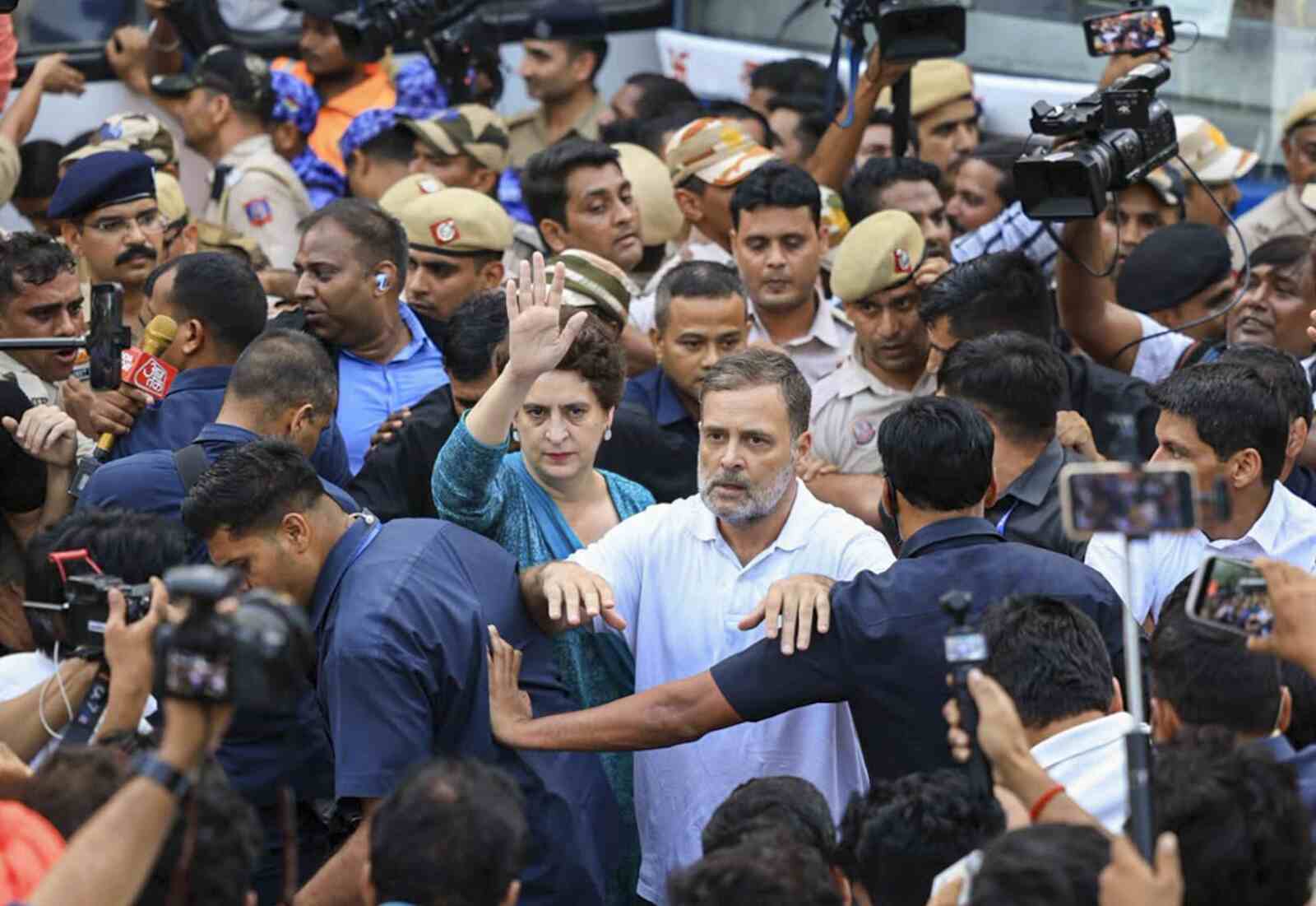
The opposition members, along with hundreds of supporters and activists, initiated a ‘March for Democracy’ on Monday, aiming to present a petition to the Supreme Court regarding their allegations of “vote chori” and to challenge the credibility of Chief Election Commissioner Gyanesh Kumar.

The march was prompted by a recent refusal from the Chief Justice of India to meet with the Leaders of Opposition from both the Lok Sabha and the Rajya Sabha. This gathering included prominent figures from multiple parties within the INDIA bloc, who protested against government-imposed prohibitory measures they claimed were designed to hinder demonstrations.

Initially assembling at the Constitution Club, the group proceeded to the Barakhamba Road junction in four air-conditioned buses and began their march towards the Supreme Court. However, the march was soon obstructed by police at Bhagwan Dass Road where barricades were established, preventing further progress. Leaders such as Rahul Gandhi and Mallikarjun Kharge faced the impediment firsthand as they were at the front of the protest.

Key Figures and Issues Raised During the March

The march featured several notable political figures, including CPI’s D Raja, CPI(M) leader M A Baby, RJD’s Tejashwi Yadav, NCP-SCP leader Supriya Sule, Shiv Sena-UBT leader Sanjay Raut, CPI-ML leader Dipankar Bhattacharya, and IUML leader E T Mohammed Basheer. Congress MPs Priyanka Gandhi Vadra, Shashi Tharoor, Sachin Pilot, and Mukul Wasnik also participated along with various activists.

At an earlier press briefing at Congress headquarters in Indira Bhawan, Rahul Gandhi articulated the purpose of their march, announcing that they would file a petition against the Chief Election Commissioner. Gandhi urged the CEC to “turn approver” and resign, indicating the pressure exerted by greater powers he alleged were behind the controversies surrounding the election process. His remarks included a call for continued protests, despite potential challenges ahead.

Rahul Gandhi highlighted the persistence of resistance historically but noted that current protests have escalated onto the streets. He expressed a commitment to the ongoing struggle, emphasizing the belief that change cannot be achieved overnight. Furthermore, he claimed that numerous government officials were allegedly supportive of their cause by providing information.

Police Response and New Protest Regulations

The police response intensified following the denotification of Jantar Mantar as an official protest site, with authority naming three alternative venues for demonstrations. These sites include Ramlila Maidan, Burari Ground, and CBD Ground in east Delhi, as per a standing order issued by Delhi Police Commissioner Anurag Kumar on October 11.

This shift in designated protest areas coincided with increased security protocols in the national capital amid rising calls for protests at Jantar Mantar. Congress general secretary Jairam Ramesh, in a statement on social media platform X, expressed concern regarding the treatment of peaceful protests in recent days, labelling it “brutal”. Ramesh contended that democracy is no longer a consideration for the current administration, referring to the situation as a matter of “Demokursi”.

The opposition’s march, which united various leaders and supporters under the charges of vote impropriety, was ultimately stymied by law enforcement before they reached the Supreme Court. As the situation unfolded, the challenges faced by the opposition underscored the ongoing tensions surrounding electoral integrity and the right to peaceful assembly in India.

Long or Short, get news the way you like. No ads. No redirections. Download Newspin and Stay Alert, The CSR Journal Mobile app, for fast, crisp, clean updates!

App Store –  https://apps.apple.com/in/app/newspin/id6746449540 

Google Play Store – https://play.google.com/store/apps/details?id=com.inventifweb.newspin&pcampaignid=web_share

Latest News

Popular Videos
