


Mumbai vs Delhi Monsoon 2026: Which City Received More Rainfall This Season?
The CSR Journal Magazine

The monsoon season has unfolded distinctly for Delhi and Mumbai, with both cities experiencing markedly different rainfall patterns. Early on, Mumbai enjoyed substantial precipitation, particularly in July, boosting its overall seasonal totals significantly. The southwest monsoon, which typically reaches Kerala around June 1, made its debut this year on June 4, slightly later than usual, before advancing across the nation.

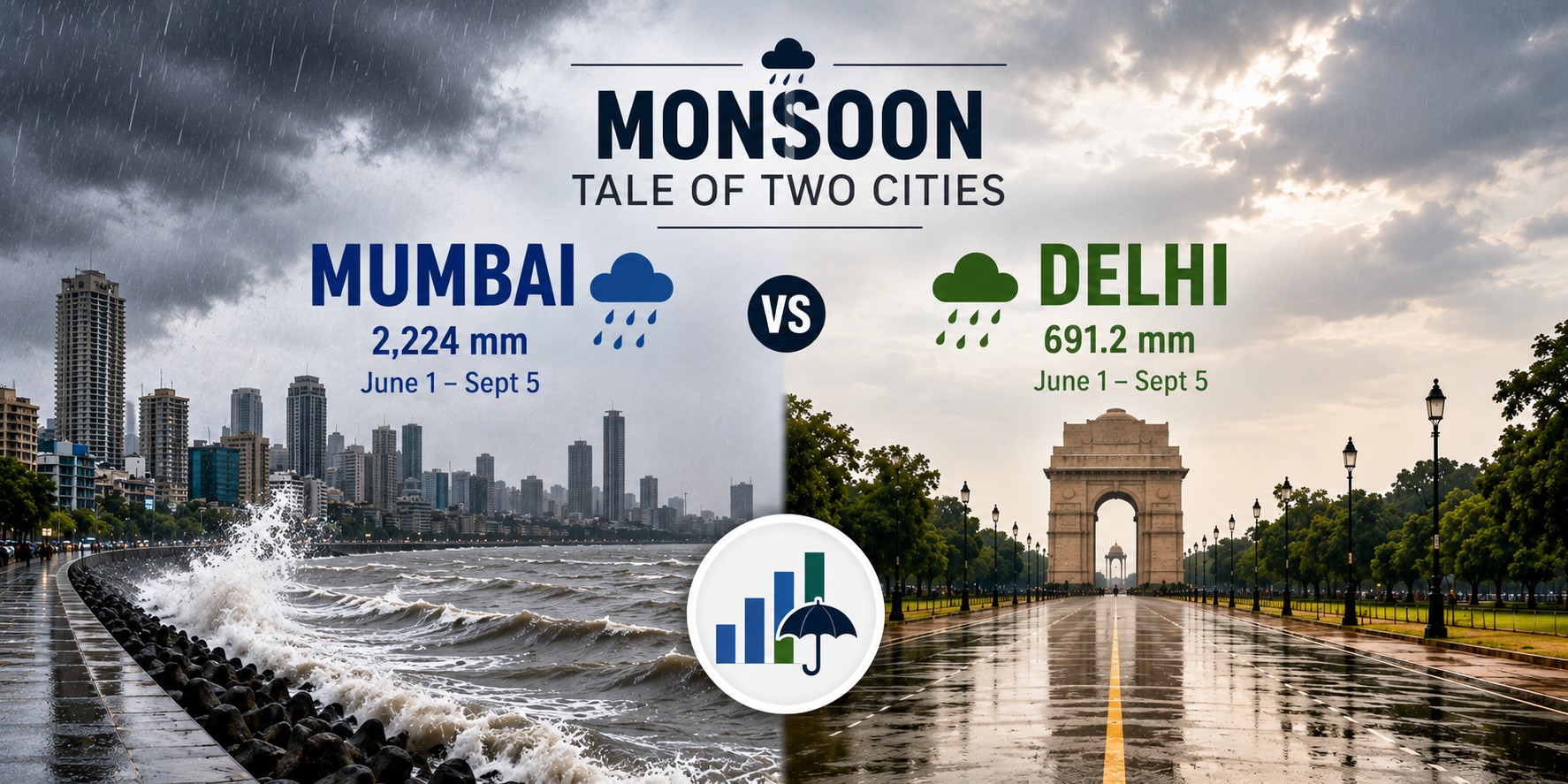
Data from meteorologist Navdeep Dahiya indicates that Mumbai’s Santacruz observatory recorded 2,224 mm of rainfall from June 1 to September 5. Despite this impressive figure, it is essential to contextualise it against the city’s historical seasonal average of approximately 2,390.5 mm, revealing a deficit despite high volumes of rain.

During the peak monsoon month, July, Mumbai experienced intense rainfall. However, it is crucial to recognise that even with heavy downpours, the city has fell short of its annual average, highlighting the complexities surrounding rainfall totals for the region.

Delhi’s Gradual Uptick in Rainfall

In contrast, Delhi’s monsoon has progressed slowly, particularly in the initial weeks. However, this trend began to improve as July and August progressed, leading to a series of widespread rainfall events. According to Dahiya’s data, Delhi’s Safdarjung observatory recorded 691.2 mm during the same timeframe as Mumbai, thus presenting a significant contrast when it comes to seasonal precipitation.

An analysis of recent rainfall patterns reveals that from late July to early September, Delhi accumulated 391.4 mm, surpassing Mumbai’s 328 mm during this same period. This shift underscores Delhi’s resurgence in rainfall during the latter stages of the season, despite its overall deficit compared to Mumbai.

The Indian Meteorological Department (IMD) reported that favourable weather systems affecting northern India played a role in these changes. The trough of the monsoon stretched through a low-pressure area affecting regions of Madhya Pradesh and Uttar Pradesh, coinciding with the increased rainfall activity observed in Delhi.

Comparative Analysis of Monsoon Performance

The question of which city experienced a more successful monsoon season hinges largely on the specific period under consideration. While Mumbai leads substantially in total rainfall received from June 1 to September 5, the dynamics shift when focusing on recent trends. Delhi’s increased rainfall of 391.4 mm in the final weeks suggests its monsoon patterns have changed significantly.

In the broader context, while Mumbai’s earlier monsoon is marked by heavy rainfall events that boosted its seasonal totals, Delhi’s delayed yet substantial rainfall could indicate a changing trend. This evolving situation highlights the necessity for a more nuanced approach when evaluating the performance of each city’s monsoon season.

Nonetheless, the overall climate picture remains concerning, as India continues to face a notable monsoon rainfall deficit. As of September 4, the country was experiencing a 13 per cent shortfall in average rainfall, signalling potential challenges ahead. Therefore, while Mumbai boasts higher overall rainfall numbers, the late rush of precipitation in Delhi showcases the complexities and variances in monsoon dynamics.

Long or Short, get news the way you like. No ads. No redirections. Download Newspin and Stay Alert, The CSR Journal Mobile app, for fast, crisp, clean updates!

App Store –  https://apps.apple.com/in/app/newspin/id6746449540 

Google Play Store – https://play.google.com/store/apps/details?id=com.inventifweb.newspin&pcampaignid=web_share

Latest News

Popular Videos
