


Mass Exodus at West Bengal’s Hakimpur Border as Detect, Delete, and Deport Policy Drives Illegal Immigrants to Return to Bangladesh

The CSR Journal Magazine

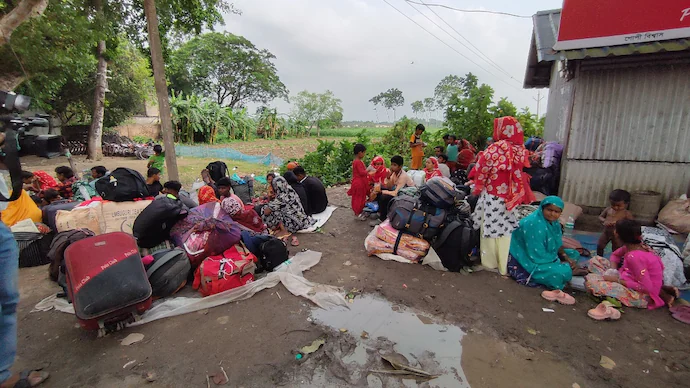
The Hakimpur Border in North 24 Parganas has gained national prominence again within a year. In August 2025, thousands of undocumented immigrants were present at this checkpost due to the implementation of the Special Intensive Revision (SIR). Currently, hundreds are congregating once more, this time choosing to return to Bangladesh. This movement is a response to a changing political and administrative landscape.

In the wake of a government transition, authorities have swiftly acted to enhance border security measures through the introduction of a stringent “3D Policy” — Detect, Detain and Deport. Each district has been directed to set up specialised “Holding Centres” to temporarily house undocumented immigrants prior to their lawful return.

The announcement of this policy has prompted immediate action, as many illegal immigrants from the Greater Kolkata area are now heading towards the Hakimpur Border. They are attempting to avoid potential detention and legal ramifications by opting to return to Bangladesh voluntarily.

Security Measures and Verification Process

Amid this rapid influx, Indian security forces have maintained strict oversight at the border, transforming a potentially chaotic situation into an organised handling of repatriations. The process includes a comprehensive multi-layer verification system. Initially, individuals are sorted into groups, after which their identities are authenticated by the Border Security Force (BSF).

Those who clear the initial verification undergo further processes that include fingerprinting and biometric registration, establishing a permanent digital record to mitigate future unauthorised entries. Once completed, the Border Guard Bangladesh (BGB) cross-verifies the records to ensure all documentation matches before allowing re-entry into Bangladesh.

So far, the process has been efficient, with reports indicating that around fifty individuals were successfully repatriated yesterday. A larger group is currently awaiting final approval at the checkpoint, illustrating the ongoing operations at Hakimpur.

Human Experiences Amidst the Policy Implementation

In another instance, Sabina Khatoon, aged thirty-six, finds herself at the border with her two young children. Having illegally entered India years ago and married an Indian citizen, she faces a painful separation as her husband cannot accompany them back to Bangladesh. Tearfully, she expressed her fears over how her children might be impacted by this forced separation.

The plight of Akhruzamman, a twenty-five-year-old who attempted to escape poverty in Khulna, is equally poignant. After barely two months of hoping for a better life in India and risking everything to cross the Sonai river, he now finds himself waiting at the border for clearance. His situation underscores the desperate measures many take, only to confront legal obstacles upon arrival.

As night descends over the Hakimpur checkpost, a complex mix of relief and sorrow permeates the atmosphere. While the enforcement of border laws continues with efficiency, the emotional weight of separated families and unfulfilled dreams remains painfully evident. For many individuals awaiting their turn to return to Bangladesh, this decision has transformed from a personal choice into a legal obligation, further complicating their emotional state and future prospects.

Long or Short, get news the way you like. No ads. No redirections. Download Newspin and Stay Alert, The CSR Journal Mobile app, for fast, crisp, clean updates!

App Store –  https://apps.apple.com/in/app/newspin/id6746449540 

Google Play Store – https://play.google.com/store/apps/details?id=com.inventifweb.newspin&pcampaignid=web_share

Latest News

Popular Videos